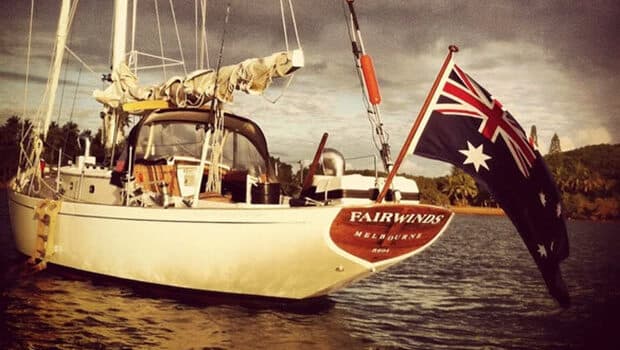
Why the Pearson Rhodes 41 still survives survey today
The Rhodes 41 survives survey because it was built like a tank, but the real project risk lives in decks, rigging, engine access, and old tankage.
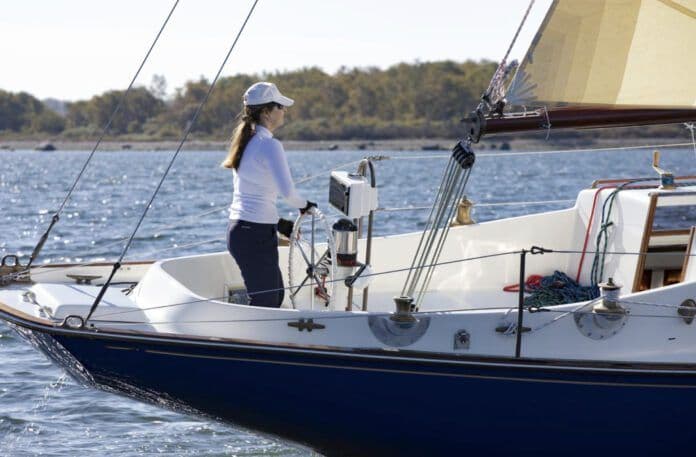
Before you step a mast or start chasing varnish on a forty-foot classic, you need to know whether you are buying a solid refit platform or a beautiful repair bill. The Pearson Rhodes 41 and its earlier Rhodes Bounty II cousin keep passing that test because their hulls were built with unusual heft, but the smart buyer still has to sort structure from age. That means looking past the lines and straight into the expensive, labor-heavy jobs that decide whether the boat is a keeper.
The lineage tells you what kind of project this is
The story starts with Phil Rhodes and his wooden masterpiece Altair, then moves into fiberglass with the Bounty II, which SailboatData identifies as Rhodes design #658. That boat was one of the first production auxiliary sailboats of its size built in fiberglass, and the Pearson Rhodes 41 grew out of the same mold and design family after the corporate path shifted from Aero Marine to Pearson when Grumman bought the tooling.
That history matters because the boat was never built as a disposable coastal cruiser. Pearson history materials place the company’s start in 1956, with the Triton becoming the turning point in 1959 and Grumman taking stock control in 1960. From there, the Rhodes 41 was produced in a small run, about 50 boats from roughly 1961 to 1968, which is exactly why it feels rare without feeling fragile.
At about 40.8 feet LOA, 10.25 feet of beam, and roughly 18,800 pounds displacement, this is a substantial cruiser, not a light-boat experiment. The Bounty II began with a fractional rig and fiberglass mast, while later boats used a masthead aluminum spar, so the exact version you are looking at matters right away. A few Bounty II boats were even finished by Palmer Johnson Yachts, which adds another layer of build variation to sort through.
Why the hull still earns respect in a survey
The reason these boats keep surviving is not romance, it is structure. Practical Sailor’s archival review points to heavy scantlings and a conservative fiberglass approach that paid off over the long run, and Sailing Magazine reports that the Bounty II hull thickness exceeded one inch in some places. That is the kind of overbuild that lets an old boat keep showing up with a sound hull after decades of use.
The Pearson version was not just a rebadged mold, either. Sailing Magazine notes that the Pearson changes included more freeboard, smaller coachroof windows, lead ballast, an aft-shifted mast, and a relocated engine behind the companionway. Rhodes himself said the Pearson changes made the boat faster, more efficient, and compliant with updated Cruising Club of America racing rules, which tells you the redesign was aimed at both performance and practicality.
Owner history reinforces the same point. Russell Gray described his 1963 boat, Valkyrie, as the well-built, bluewater-capable vintage sailboat he had been looking for, and George Dunnigan kept PR41 Lightfoot for 35 years, sailing the Chesapeake Bay and Bermuda. That kind of longevity is not marketing gloss, it is evidence that the structure can support a long ownership life if the refit is honest.
Where the DIY money goes first
The first pass should focus on the deck and coachroof, because that is where age-driven repairs usually hide on a boat of this vintage. The Pearson changes to smaller coachroof windows make those openings worth scrutinizing closely, along with every fastener, stanchion base, and chainplate area around them. If you are buying to do the work yourself, you want dry structure and clean load paths before you spend a dollar on cosmetics.
A simple triage order helps:
- Check deck and coachroof softness around hardware, windows, and high-load fittings.
- Inspect chainplates and the surrounding structure for movement, leaks, or corrosion stains.
- Look at the rig terminals and standing rigging with the same suspicion you would bring to a mast-stepping day.
- Open the engine space and judge whether real maintenance is possible without dismantling half the boat.
- Trace the tankage and plumbing before assuming the old layout is worth keeping.
That chainplate-and-rigging check is especially important on a design that moved to a masthead rig in Pearson form and had the mast shifted aft. Load paths change when the spar moves, and any old bedding failure in the chainplate area can turn into the kind of problem that only shows up when the boat is loaded and sailing offshore. For a DIY buyer, that is the difference between routine work and a structural surprise.
Engine access, tankage, and the hidden labor bill
Pearson’s decision to relocate the engine behind the companionway sounds tidy on paper, but it can be a major deciding factor in a refit. Good access makes filters, hoses, mounts, and exhaust work possible without inventing new words for frustration, while poor access turns a mechanical tune-up into a long-term obstruction. On a boat this heavy and substantial, engine serviceability is not a side note, it is part of the buy decision.
Tankage deserves the same hard look. Boats from this era often carry their age in fuel and water systems long after the hull has stopped worrying anyone, and the Rhodes 41’s long life means you should assume the hidden systems have seen multiple owners and multiple standards of workmanship. If you are planning to cruise rather than merely stage the boat, tank replacement or re-routing can be one of the biggest labor decisions in the whole project.
Parts, spars, and the real project test
Parts availability is not hopeless, but it is not commodity-simple either. The Rhodes 41 and Bounty II survived as a small fleet, not a mass-market platform, so many replacements will be custom or adapted rather than pulled from a shelf. That is where knowing whether you are dealing with a fractional-rig Bounty II, a later masthead-spar boat, or a Pearson Rhodes 41 with its revised layout saves time and money.
This is why the design still survives survey today. The hull strength gives you a real foundation, but the age-driven jobs, deck structure, rigging terminals, engine access, and tankage, decide whether classic appeal becomes a workable DIY project or a long, expensive stall. The boat’s best quality is not just that it was built heavily, it is that the structure is still strong enough to reward the buyer who opens it up honestly and fixes the right things first.
This article was produced by Prism’s automated news system from verified source data, official records, and press releases, then run through automated quality and moderation checks before publishing. The system is built and supervised by the people who set the standards it runs under. Read our full AI policy.
Did this article answer your question?