Wobbling Winches Warn of Hidden Deck Failure, Fix the Load Path
A winch that rocks under load is not a nuisance, it is a deck warning. Catch the load-path problem early and you may save the deck, the hardware, and thousands in structural repair.
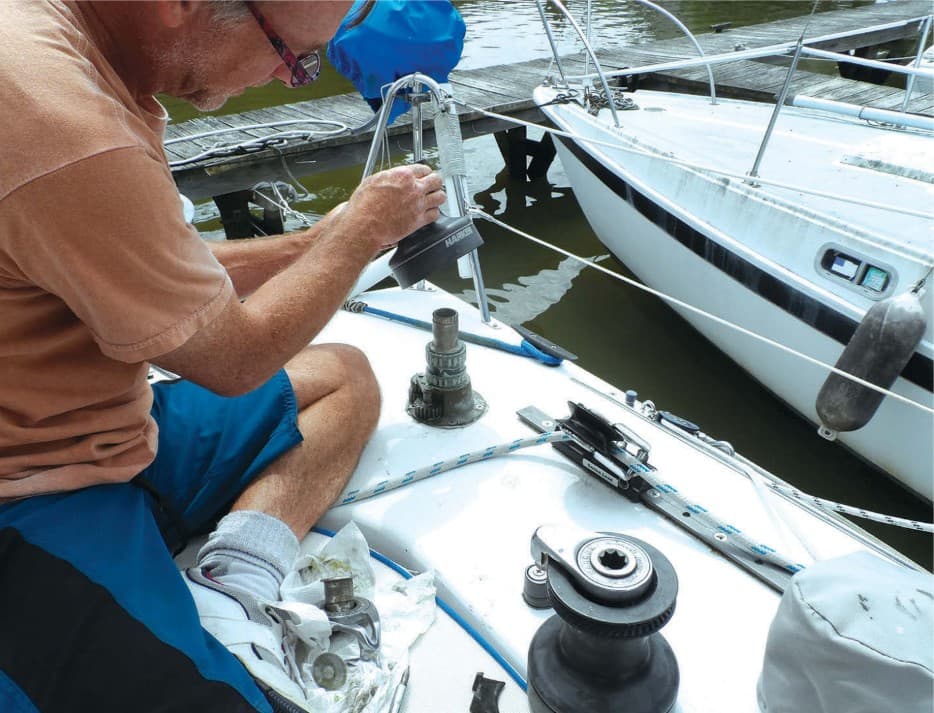
A wobble is the warning sign
If a winch starts to move when you grind on a loaded sheet, stop treating it like a loose fitting and start treating it like a structural alarm. A winch is supposed to transfer sheet load into the deck, not flex the deck until the hardware works itself free. When that movement starts, the question is not whether the winch looks fine from above, it is how far the load has already spread into the structure below.
That is exactly why the old hands talk about load paths first. Sailmakers reinforce a clew with extra layers because concentrated force has to be spread out. Deck hardware needs the same respect in fiberglass. A winch bolted to a weak spot can look tidy from the cockpit and still be one hard genoa pull away from a tear-out.
What the wobble is actually telling you
The first thing to sort out is whether you are dealing with a simple fastening problem or a deck that has started to fail. One cockpit winch described in Good Old Boat had been mounted on a cored section of deck with little more than lock washers underneath, no fender washers or plain washers to spread the load. After 18 years, it began to wiggle. Under genoa load, it nearly flew out of the deck. That is not a nuisance failure. That is the moment the boat tells you the load path is wrong.
A later secondary winch on solid glass gave a different warning. It lifted about 1/16 inch and spider cracks appeared around the bolts. That kind of movement tells you the hardware is no longer sitting on a stable foundation. The winch may be the visible symptom, but the problem is usually beneath it: inadequate reinforcement, a crushed core, or a laminate that is no longer carrying load cleanly.
How to read the damage
The first clue is movement at the base. If the winch rocks, lifts, or changes sound under load, the structure below it is likely taking more strain than it was built to handle. Spider cracks around the fasteners are another red flag, because they often mean the deck skin is flexing every time the winch is loaded.
The next clue is what you find when you pull the hardware. If the underside shows bent washers, elongated holes, wet core, or crushed laminate, the deck has already started to lose the ability to spread force. Practical Sailor has reported that washers on balsa-core decks are often bent or misshapen under load, which is a neat way of saying the hardware has been punching the load into too small an area. If the winch is mounted on a cored deck and the core is wet or degraded, the problem can extend well beyond the fastener holes.
Why cored decks make this a bigger issue
Cored decks are now the norm rather than the exception because they are lighter, stiffer, and better insulated than solid laminates. That is the upside. The catch is that a cored deck depends on the core staying dry and intact. Once water gets in through a poorly bedded fitting or cracked sealant, the deck can lose rigidity, delaminate, and suffer rot or freeze-thaw damage.
That is why a wobbling winch is not just a local hardware issue. It can be the first visible sign that the sandwich deck is breaking down around the penetration. Marine How To points out that sailboats can have hundreds of holes for cleats, stanchions, blocks, winches, and genoa tracks, and many builders do not do enough to protect the core from moisture. If the bedding fails, the deck can quietly become weaker long before the hardware pulls free.
What a proper repair looks like
The fix is rarely cosmetic, and that is the part many owners resist. In the Good Old Boat case, the repair meant dropping the overhead, replacing damaged core with solid material, laying up a new inner skin, and adding a backing plate. That is invasive work, but it is the right kind of invasive work. It restores the load path instead of pretending the old one was adequate.
If the core is dry and sound, a backing plate may be enough. If the core is wet, crushed, or delaminated, the repair has to go deeper. Dry out the area, remove compromised material, pot the penetrations, replace the core where needed, and rebuild the inner skin before the hardware goes back on. Re-bolting a winch over rotten or compressed core is how a manageable repair turns into a deck tear-out.
Backing plates are not optional decoration
Practical Sailor’s backing-plate testing makes the point brutally clear. The magazine used a balsa-cored, half-inch-thick fiberglass deck sample that replicated a 32-foot PDQ catamaran, then tested different washers and backing-plate materials. It found that plain washers and some common materials, including HDPE and Starboard, performed poorly as backing plates. For a 1/4-inch bolt, it reported proof strength of about 1,950 pounds in its testing.
That matters because a backing plate is not just a bigger washer. It is a way to spread the load across enough structure that the deck skin and core are not overloaded at the bolt holes. For highly loaded fittings, the goal is to move the force into thick, solid fiberglass and distribute it into surrounding structure. Practical Sailor’s conclusion was blunt: critical items that see large shear forces, such as chain plates and mooring cleats, belong in solid fiberglass with force spread widely. Winches deserve the same kind of thinking when the loads are high.
Where upgrades create new failures
One of the easiest mistakes to make is assuming a modification is harmless because the hardware itself is not bigger. Add a new genoa track, change a lead angle, or start using a winch harder than the original layout expected, and you can expose a mounting that was already marginal. A winch that held up for years can start to protest once the loading changes.
That is why a wobble after an upgrade should never be dismissed as settling in. It may be the first sign that a previously acceptable installation is now under-designed for the way you are actually sailing the boat. The hardware did not suddenly become defective. The load path became insufficient.
Installation guidance from the hardware maker and the standards world
Lewmar’s winch manual is not subtle about this. Winches are for line control in marine applications, and correct installation and maintenance are essential to avoid injury or boat damage. The manual also says every winch should have adequate means of manually cleating or stopping loaded ropes. In other words, the hardware is part of a system, and the system has to be able to handle load safely even when things go wrong.
ABYC makes the same point from the standards side. Its safety standards for boat design, construction, repair, and maintenance are used across the marine industry and updated annually. That matters because attachment points are not an afterthought in modern boatbuilding. They are part of the safety structure, and they have to be treated that way during repair as well as during original installation.
The practical habit that saves decks
The right response to a wobbling winch is to inspect, reinforce, and re-bolt before the deck lets go. Pull the hardware, check the underside, probe for wet core, inspect for spider cracks, and be honest about whether the structure is still distributing load or simply hiding damage. If the deck flexes under the winch, the problem is already bigger than the visible hardware.
That is the payoff for catching it early: you preserve the deck, avoid a catastrophic pull-out, and keep a repair bill from turning into a structural rebuild. On a boat, the difference between a loose fitting and a failing load path is often the difference between an afternoon fix and a season lost to core replacement.
This article was produced by Prism’s automated news system from verified source data, official records, and press releases, then run through automated quality and moderation checks before publishing. The system is built and supervised by the people who set the standards it runs under. Read our full AI policy.
Did this article answer your question?