Antlers reveal deer diets, but seasonal clues are complicated
Every shed antler is a diet-and-habitat record, but deer movement and feeding habits blur the seasonal clues.
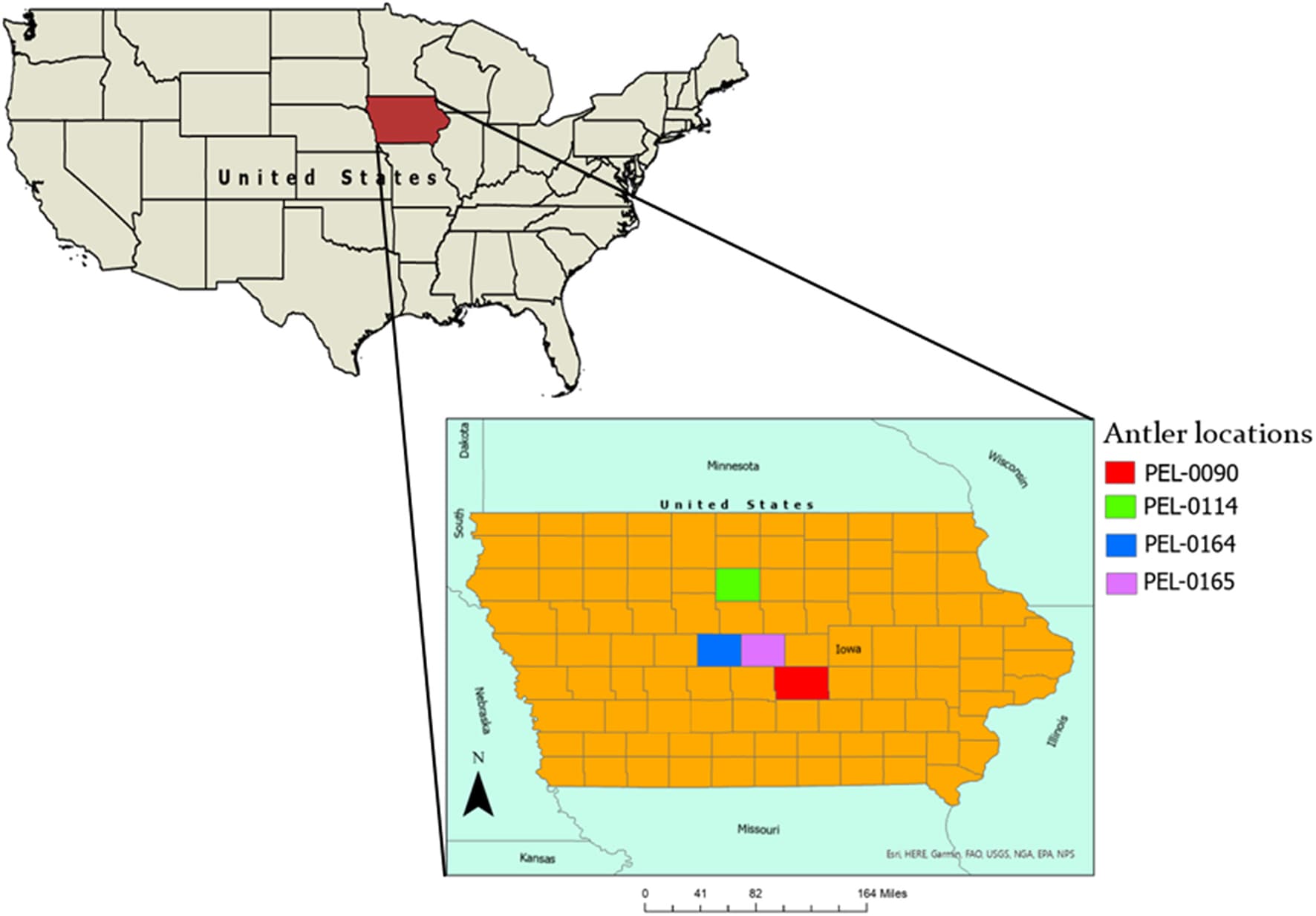
A 2023 Frontiers study sampled four modern white-tailed deer antlers from central Iowa from the proximal end to the distal end and showed how quickly feeding habits, movement, and habitat choice can muddy the chemical record inside a shed. As a white-tailed deer grows antlers from spring into fall, it lays down a record of what it ate and the conditions it lived through. That makes sheds useful to wildlife scientists and to hunters trying to read a property, but the record is not always clean.
Antlers are built on a seasonal clock
White-tailed deer begin growing antlers in the spring and shed them in the winter months, and bucks grow a new set every spring. That growth window is what makes antlers interesting to wildlife scientists and useful to shed hunters: the material was formed while the deer was moving through a specific season, feeding in specific places, and dealing with whatever the habitat offered.
In the 2023 Frontiers study, the researchers measured carbon and nitrogen isotopes in collagen, along with carbon and oxygen isotopes in bioapatite, then compared those patterns with local precipitation and temperature. They were asking whether the chemistry changed in a way that matched the season as the antler grew from base to tip.
Why the chemistry is useful, and why it gets messy
The antlers did not show a clean, consistent seasonal signal across all variables, a result shed hunters and habitat managers need to hear before they overread a single antler. The authors pointed to individual feeding behavior, mobility, and habitat preference as the main reasons interpretation gets complicated.
A deer that shifts from one food source to another, or one that uses different cover during the antler-growing months, will carry that movement in its antler chemistry.
What other deer studies say about antlers and diet
The bigger body of research backs up the idea that antlers can hold real nutritional signals. A 2011 U.S. Forest Service study in Alaska found that the 15N value of collagen deposited in reindeer antler bone from spring until ossification was significantly correlated with the 15N signature of the diet. That same work also found calf weight related to isotopic signatures in antler and soft tissue, tying antler chemistry to animal condition.
A 2021 Paleobiology study argued that cervid antlers are a rare opportunity to study seasonal ecology because they are grown and shed each year. Together with the Alaska work, it shows that antlers can preserve seasonal dietary data from individual animals, especially when scientists sample them in sequence and compare the patterns against what the deer likely had available.
What the antlers can say about herd health and habitat quality
The biological signal is not limited to lab studies. Earlier spring green-up resulted in heavier fawns and larger antlers among adult males in USDA Forest Service research in Wisconsin. Penn State Extension ties antler size to age, health, and nutrition. The antlers you find can hint at forage quality, herd condition, and how well a property is supporting deer through the growth season.
That does not mean one big set equals perfect habitat or one small set equals a poor one. Repeated finds across the same ground can help you read the country with more confidence. If antlers from a property consistently carry size and weight, you are probably looking at good nutrition and a deer herd that is finding what it needs. If the sheds are smaller or more variable, the clues may point toward tougher forage, heavier browse pressure, or less stable habitat use.
- Look at sheds as part of a pattern, not as a one-off answer.
- Compare what you find from one drainage, field edge, or timber block across multiple seasons.
- Treat unusual antlers as clues about movement and feeding shifts, not automatic proof of poor habitat.
Management, access, and disease rules shape shed hunting too
The National Park Service has found overabundant white-tailed deer are damaging forests in National Capital Parks - East, and at Valley Forge National Historical Park managers have worked to keep deer density at 20 to 25 deer per square mile after a 2009 estimate of 241 deer per square mile.
Montana Fish, Wildlife & Parks warns that carcass parts can transmit chronic wasting disease for at least two years. Nevada Department of Wildlife restricts some public-land shed-antler collection from January 1 to April 30 in certain counties.
This article was produced by Prism’s automated news system from verified source data, official records, and press releases, then run through automated quality and moderation checks before publishing. The system is built and supervised by the people who set the standards it runs under. Read our full AI policy.
Did this article answer your question?