Shed hunter’s gear and strategy, from refuge rules to ElkFest cash to collectants
The smartest shed kit is built for miles, weather, and refuge rules. Drake’s glassing setup and ElkFest numbers show why legal, light, and steady wins.
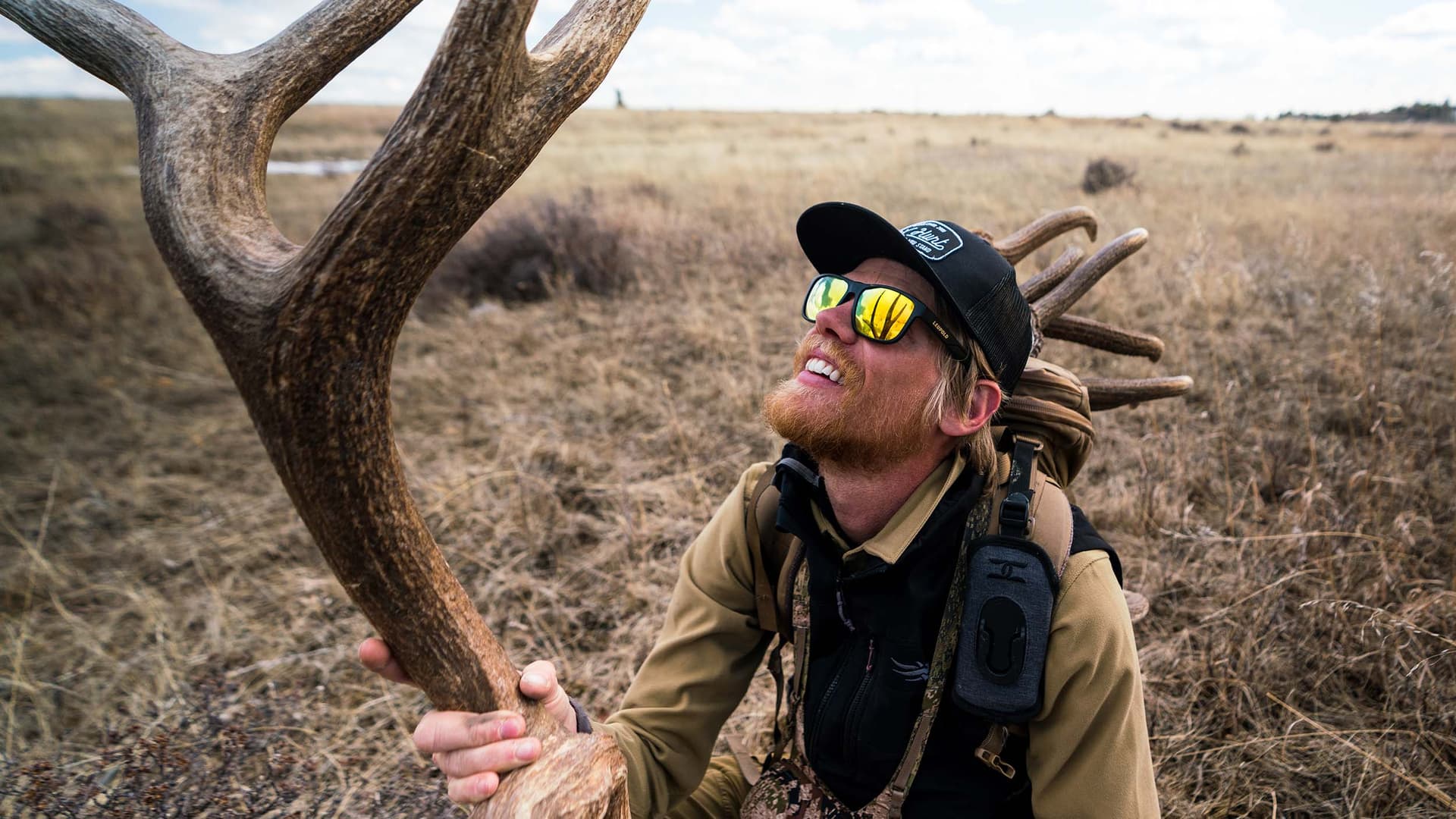
The U.S. Fish and Wildlife Service generally prohibits collecting shed antlers on national wildlife refuges without a special permit. The job starts with the rules, the weather, and how much ground you can cover without wrecking your legs before the day is half over. On refuge land, shed antlers are a natural resource, not a free pickup.
Know the ground before you ever bend down
The U.S. Fish and Wildlife Service treats shed antlers as an important source of nutrients for other animals, which is why they stay on the landscape in the first place.
On the Upper Mississippi River National Wildlife and Fish Refuge, white-tailed deer shed antlers in late winter and early spring, then regrow them in spring. Visitors there may collect antler sheds for personal use only, and they may not sell or trade them.
The National Elk Refuge in Wyoming is the big exception that every serious shed hunter knows. The Jackson District Boy Scouts collect naturally shed elk antlers there under permit for the annual ElkFest auction, which dates to 1968. About 200 scouts and adult leaders spend roughly 2,000 volunteer hours, with about 8,000 pounds of antlers collected in an average year. The 2024 auction raised $218,421.
Glass first, walk second
Professional hunting photographer Steven Drake scouts winter ranges for multiple days, then spends 30-plus days on the ground in late spring looking for sheds. You spend more time looking than picking up antlers. It is a mileage problem, so the optics have to earn their place.
His baseline tool is the BX-5 Santiam HD 10x42 binoculars, which are the right kind of middle ground for shed hunting country. Ten-power glass lets you scan hillsides, cutlines, and openings without hauling a monster optic all day. The Quick-Stem binocular tripod adapter adds stability and uses an Arca-Swiss compatible base and aircraft-grade aluminum. In plain terms, that means less shake and less fiddling when you are trying to pick apart a ridge line or winter range from one good overlook.
When the country opens up, the SX-5 Santiam HD 27-55x80 angled spotting scope becomes the long-distance answer. The angled body matters when you are parked on a slope or glassing from awkward ground, because you do not need to crane your neck to stay on target. Leupold’s Alpine CF-425 tripod, which weighs 32 ounces and extends to 58 inches, gives that glass a steadier platform without turning your load into a gym session.
If you are choosing what deserves space in the pack, the glassing setup belongs in the must-have pile.
- Must-have: BX-5 Santiam HD 10x42 binoculars
- Must-have: Quick-Stem binocular tripod adapter
- Must-have: Alpine CF-425 tripod for stable glassing on rough ground
- Nice-to-have, but often worth it in open country: SX-5 Santiam HD 27-55x80 angled spotting scope
Carry systems and layers decide whether you still like the hike at 4 p.m.
The pack matters because shed hunting rarely stays a quick in-and-out loop. Drake uses a Mystery Ranch Metcalf for both single-day and multi-day shed trips. You need room for glass, water, a shell, snacks, and eventually a set of antlers that will change the balance of the pack as the day goes on.
Layering is where a lot of shed hunters overpack or underthink the forecast. The Sitka Vapor SD jacket weighs 5.6 ounces. It is the shell you carry for rain, sleet, and snow without feeling like you are dragging a tent through the drainage. The Sitka Kelvin Aerolite jacket uses synthetic Primaloft insulation and keeps loft when wet, which is exactly what you want when a warm start turns into a damp, exposed finish.
Eye protection is part of the comfort system too. Becnara sunglasses are in the kit for a reason, especially when snow glare, ridge-top sun, and wind all hit at once. If you are out there for 30-plus days like Drake, boots and hydration are not side notes either. You want enough support to keep you stable on sidehills and enough water carried in a way that does not force you to dump the whole pack every time you take a drink.
Why the antler pile matters beyond the pickup
The Jackson District Boy Scouts’ work on the National Elk Refuge sends money back into Scouting programs in western Wyoming and supports the refuge itself.
This article was produced by Prism’s automated news system from verified source data, official records, and press releases, then run through automated quality and moderation checks before publishing. The system is built and supervised by the people who set the standards it runs under. Read our full AI policy.
Did this article answer your question?