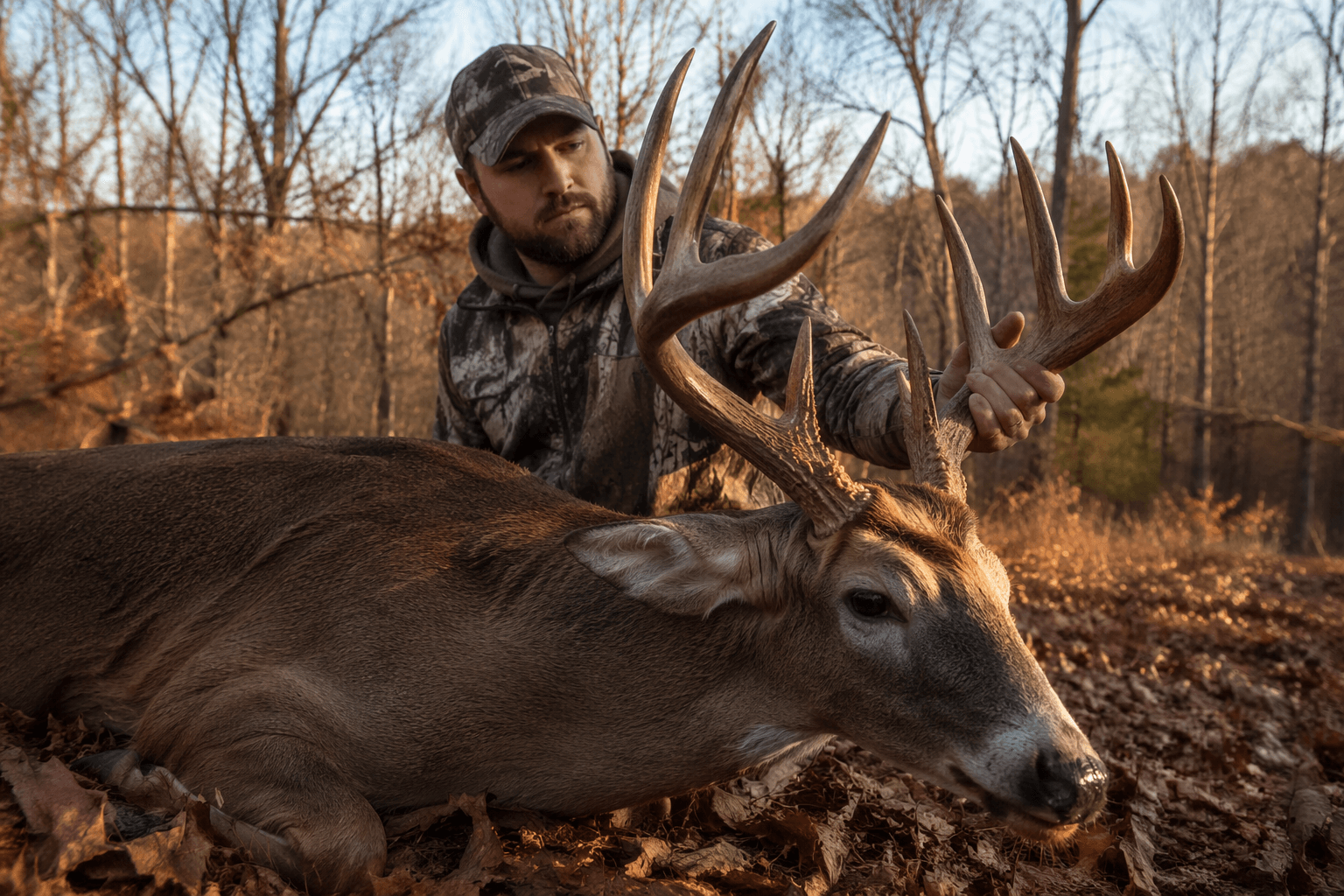
How to spot shed antlers by reading the landscape
The smartest shed hunters don’t hunt randomly, they train their eyes to catch a tine-down flash, then work the same ground from more than one angle.
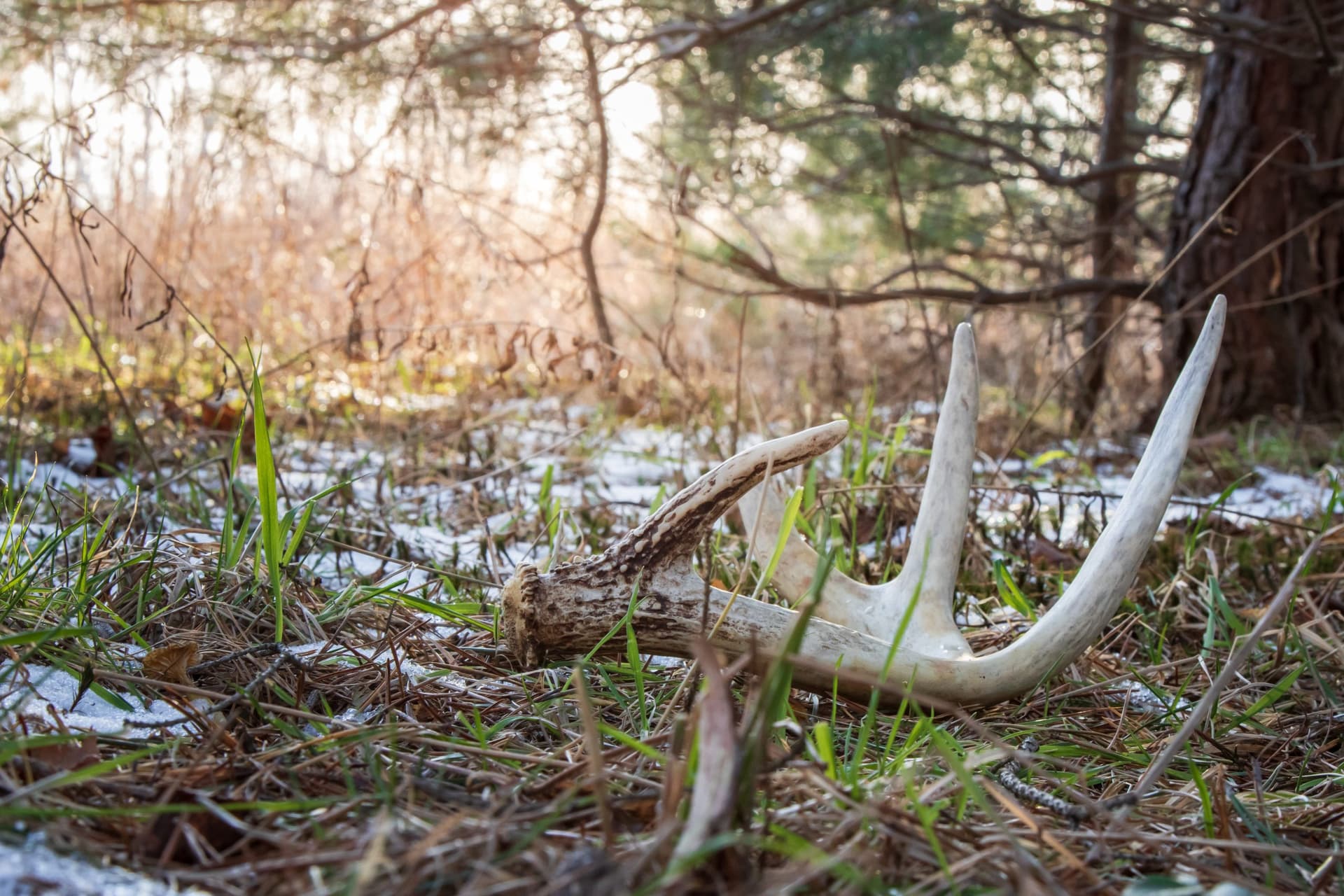
Binoculars matter before walking in. You do not find most sheds by covering more ground. You find them by teaching your eyes what a shed looks like before your boots ever touch the spot. The best hunters read a hillside the way a whitetail wrote it, looking for the narrow white crescent of a beam, the odd tine-down angle, and the places where cover, travel, and winter pressure make an antler more likely to land and stay hidden.
Build the search image first
Bill Healy’s simplest field cue is also the one that changes the way a patch of woods looks. When a shed lies tine-down, the main beam often shows as a bright crescent above the ground; when the tines point up, you may only catch the bleached tips. From a distance, binoculars help sort antler from the false positives that eat time in the field: sticks, bones, stones, and broken brush.
Sheds are easier to see once you have trained yourself to expect one very specific shape, color, and angle.
Work the ground twice, not once
The other habit that pays off is changing your angle before you call an area empty. If you hike 10 miles while searching a 50-foot-wide strip, you have still covered just over 60 acres, which is less than one-tenth of a square mile. That math makes the hunt a visibility contest, not a speed contest.
A small dip, a log, or a change in slope can hide an antler from one direction and expose it from another. That is why deer trails are worth looping back and forth instead of marching one straight line and moving on. The best pattern is deliberate: scan first, walk second, then revisit the same strip from a different lane.
Let habitat tell you where to start
High-value terrain includes bedding areas, food sources, travel routes, creek crossings, fence gaps, field corners, waterways, cedar thickets, CRP patches, edge habitat, and south-facing slopes. Illinois Learn to Hunt flags those places because they concentrate deer movement or hold deer where winter energy matters most. They are the places where antlers are more likely to come off and more likely to stay within reach of a patient search.
Deer trails, thick brush where antlers can snag, and feeding sites are also prime places to look. Michigan State University Extension points to the same pattern: winter concentrates deer movement, so sheds often show up where animals are already moving, pausing, or squeezing through tight cover. If you are deciding where to spend your first hour, start with the places deer already use, not the places that simply look pleasant on a map.
Time the hunt to the season, not just the drop
The best window is shaped by visibility as much as biology. Michigan State University Extension places the sweet spot between mid-January and March, and almost all bucks and bulls have dropped by mid- to late March. That is why many shed hunters get serious in late winter instead of waiting for spring green-up to do the hiding for them.

The biology behind the season is straightforward. Day length drives the antler cycle. After breeding season, shortening days cause testosterone to drop, osteoclasts are activated, and those cells weaken the pedicle, the antler base, until the antlers fall off.
Handle the finds with a little care
Deer sheds pose very little risk in spreading chronic wasting disease. Michigan State University Extension advises wiping off organic material and washing your hands after handling antlers.
Read the antler as a clue about the herd
Antler sheds can reveal age structure, nutrition, and genetics in the local herd, Michigan State University Extension says. A heavy beam in one drainage, a matched set in a bedding pocket, or a small shed in a feed corridor all add to the picture of what deer are doing in that country.
The North American Shed Hunters Club, founded in 1991, serves as the official scoring and record-keeping authority for North American big-game shed antlers.
Know where the rules change the hunt
In some places, shed hunting is a wildlife-management issue. Idaho Fish and Game set a public-land antler-gathering closure in the Upper Snake and Southeast regions from January 1, 2024 through April 14, 2024. It was the first closure for antler hunting in the state since 2002. During the public comment period, 1,913 people weighed in.
That closure covered searching for, locating, gathering, transporting, or possessing antlers. It also included caching, GPS marking, and the use of unmanned aircraft systems to locate antlers. The closure was meant to reduce stress on wintering big game after a harsh winter and give eastern Idaho mule deer a better shot at recovery.
Colorado, Wyoming, and federal land managers make the same basic calculation in different ways. Colorado Parks and Wildlife warns that movement and displacement from shed antler hunters can add to mule deer physiological strain and potentially reduce survival to spring. Bureau of Land Management seasonal closures in Colorado are meant to reduce disturbance during the most stressful time of year. Wyoming Game and Fish Department keeps many sections of public land, state land, and wildlife habitat management areas closed to shed antler and horn hunting in western and southern Wyoming, while a separate regulation governs public land west of the Continental Divide.
This article was produced by Prism’s automated news system from verified source data, official records, and press releases, then run through automated quality and moderation checks before publishing. The system is built and supervised by the people who set the standards it runs under. Read our full AI policy.
Did this article answer your question?