The General sheds: Nebraska find that shook whitetail record books
A pair of Nebraska sheds turned into a million-dollar whitetail mystery, with score, provenance, and missing sticker points still driving the debate.
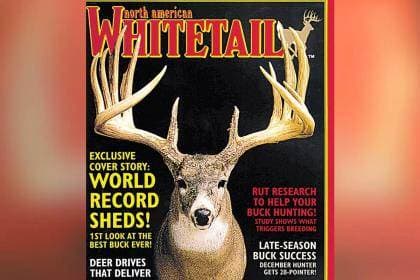
Two antlers picked up in Nebraska pastureland became one of the most argued-over sheds in whitetail history. The General’s racks have traveled from a barn corner to a million-dollar conversation, and the story now sits at the crossroads of record-book lore, collecting fever, and hard questions about proof.
A Nebraska shed story that outgrew the woods
The General begins in Sargent, Nebraska, in 1959, when rancher Ben Barnhart spotted a giant shed while tending a calf and then found the matching side nearby. That simple find is the kind of moment every shed hunter knows by heart, but in this case the antlers did not stay a local curiosity for long. They were eventually stored in a barn corner for years, then later mounted on a board after part of the bases were sawn off so they would fit.
That physical history matters because the antlers themselves show the life of the story as much as the deer did. Rodent chewing and years of rough storage damaged the sheds, yet those same battered antlers became the centerpiece of a legend that keeps getting retold. For shed hunters, the lesson is clear: the first pickup is only the beginning, and condition, handling, and chain of custody can shape the story as much as beam length.
How a set of sheds became “the General”
Hook & Barrel revisited the General as part of a June 26, 2026 feature that treated the sheds as both a whitetail mystery and a marker of how deer culture turns objects into icons. The framing around America’s 250th anniversary sharpened the contrast between ordinary ground finds and the kind of antlers that become part of national hunting folklore. By 2025, the General sheds were being discussed in million-dollar terms, a price tag that says as much about the myth around them as it does about the bone on the board.
That kind of value does not come from size alone. Famous deer names carry weight because people remember them, argue over them, and pass the stories along until the rack becomes larger than the actual evidence. The General now sits in that rare company, alongside names such as the Hanson Buck, Jordan Buck, Hole in the Horn Buck, Missouri Monarch, and Mel Johnson Buck, all of them reminders that some antlers become symbols long before anyone agrees on exactly what they prove.
Why the score keeps the argument alive
Outdoor Life reported that the General sheds were later owned by Cabela’s and carried an estimated net score of 218 1/8 inches, a figure that puts them above the Hanson buck’s 213 5/8-inch typical world record. That gap is a big reason the General stays in the conversation. A rack that measures that large, even as a shed set with a messy backstory, naturally invites record-book comparisons and renewed scrutiny.
But size does not settle every question in whitetail history. The debate around the General has also centered on authenticity, missing sticker points, and possible deception, with former Oklahoma outfitter Tim Condict later becoming part of the story as the sheds moved deeper into the world-record conversation. Once a rack reaches that level, every nick, cut, and absent point starts to matter, because the difference between a legendary deer and a disputed one is often found in the details.

That is the practical reality for shed hunters who collect, buy, or trade notable antlers. A big side is not enough on its own. Provenance, condition, and documentation all determine whether a set of sheds remains an impressive find or becomes a contested artifact with a price attached to the legend.
What Boone and Crockett’s rules reveal about the folklore
Boone and Crockett’s records program helps explain why the General story keeps circling without landing in a clean official listing. The club says shed antlers do not qualify for entry in its records program, and it also scores typical and non-typical whitetails differently. That distinction is crucial, because whitetail record talk is never just about gross inches. It is about symmetry, abnormal points, and the scoring framework that turns one deer into a benchmark and another into a sidebar.
The Hanson buck remains the key reference point in that system. Boone and Crockett says the Hanson buck was declared the world’s record typical whitetail at the 22nd Big Game Awards Program in Dallas, Texas, with a final score of 213 5/8 points. The club’s records work is not a side project either. Its database contains nearly 60,000 trophy records, and the data collection system dates back to the 1920s before being refined by club members in 1950.
Those details matter because they show why documentation is the real currency in big-antler folklore. A shed set can be huge, famous, and widely discussed, but without the kind of records that fit the club’s system, it stays outside the official book. That gap between oral legend and documented record is exactly where the General lives.
What the General teaches every shed hunter
The General is a reality check wrapped in a whitetail mystery. A pair of Nebraska sheds found in 1959 became more valuable, more controversial, and more famous as the story moved from a ranch pasture to barn storage, board mounting, and record-book debate. The antlers gained their force not just from inches, but from the way their history was told, retold, questioned, and measured against a system built to keep score.
For shed hunters, that is the lasting lesson. The woods may produce the antler, but documentation decides whether it becomes a trophy, a collectible, or folklore. The General endures because it sits right on that fault line, where a real set of sheds can shake whitetail record books without ever losing the mystery that made them legendary.
This article was produced by Prism’s automated news system from verified source data, official records, and press releases, then run through automated quality and moderation checks before publishing. The system is built and supervised by the people who set the standards it runs under. Read our full AI policy.
Did this article answer your question?