A zero-waste sourdough starter method cuts discard and saves flour
The starter on your counter probably does not need to be that big. A smaller feed-and-use loop cuts discard, saves flour, and keeps the culture strong.
The small-starter reset
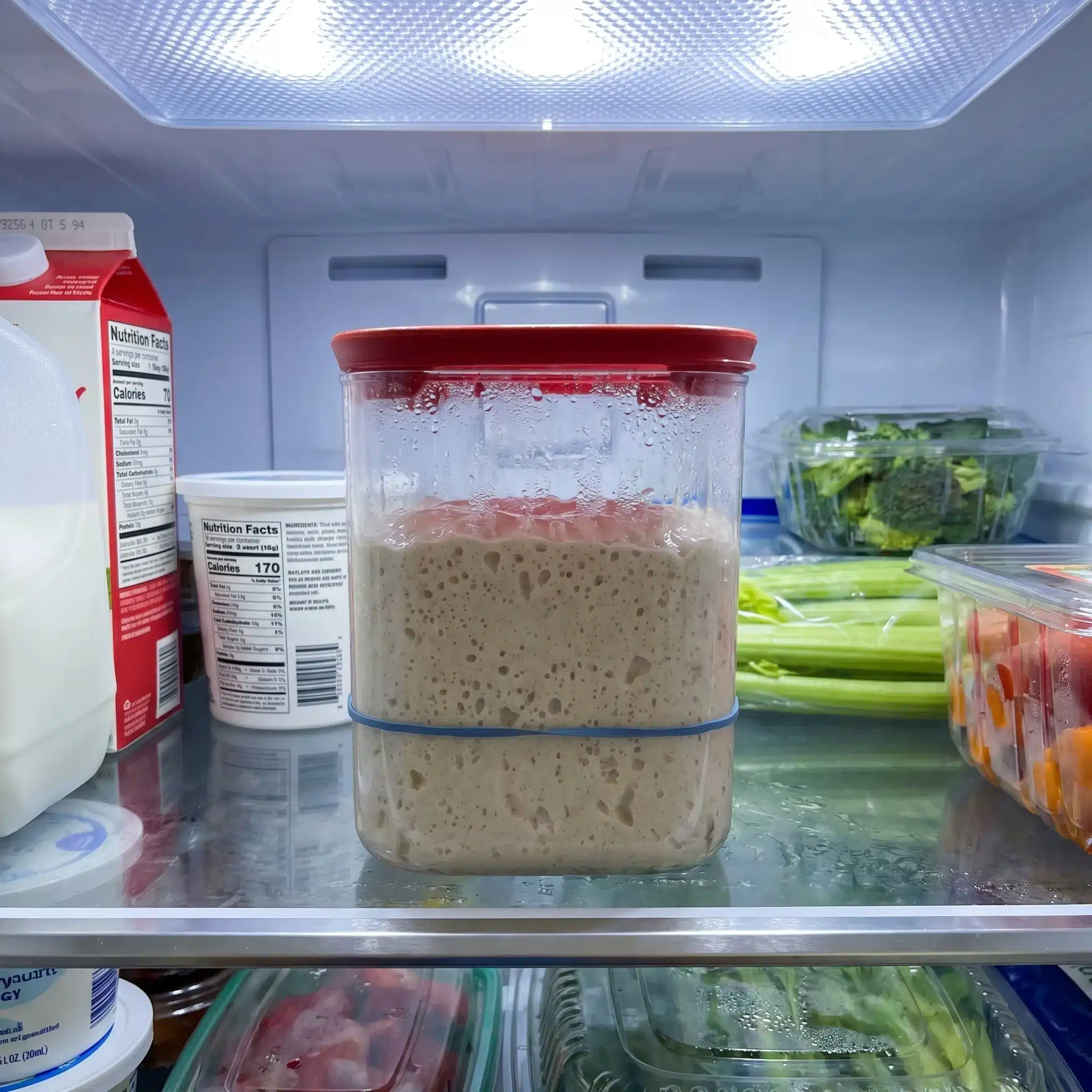
The starter sitting on your counter is probably too big. That is the simple fix behind this zero-waste sourdough method: keep only the amount you actually need, feed it to recipe size, then return the remainder to the same total amount again. The result is less discard, less flour down the drain, and a routine that feels easier to keep up with when sourdough is part of weekly life instead of a full-time project.
King Arthur Baking’s guidance supports the basic logic. Regularly discarding part of a starter and refreshing it with flour and water keeps the microorganisms healthy, happy, and thriving. The point is not to eliminate feeding, but to stop overfeeding and stop making more starter than you can use.
How the zero-waste workflow works
The method is built around a simple rule: use exactly what the recipe calls for, then rebuild the starter back to a small maintenance amount. King Arthur Baking gives a clear benchmark for larger bake days. If a recipe needs more than 227g, about 1 cup, of starter, feed without discarding until you reach the amount needed, plus 113g to keep and feed again. That turns what looks like a hack into a measured workflow.
For home bakers, the benefit is immediate. You are no longer maintaining a big jar just in case, and you are not making a mountain of discard every time you feed. Instead, the starter becomes a tool sized to the bake in front of you.
Room temperature or refrigerator, choose the lighter load
King Arthur Baking identifies two basic maintenance paths for sourdough starters. You can keep it at room temperature and feed it daily, or store it in the refrigerator and feed it weekly. For bakers who do not want sourdough to dominate the weekly routine, the refrigerator option usually fits the lower-waste approach best.
That matters because frequency drives waste. A room-temperature starter needs more regular attention, which often leads to more flour use and more discard. A refrigerated starter is easier to keep small, easier to forget for a short stretch, and better suited to a workflow where baking happens when you want it, not when the jar demands it.
What to do with discard instead of throwing it away
This method is called zero-waste, but it does not require pretending discard never exists. King Arthur Baking says sourdough discard can be used in other recipes and explicitly warns never to put it down the drain. That is a practical boundary, not a moral one: if you have excess starter, cook with it.
King Arthur’s discard recipe collections show how common this has become in home kitchens. One roundup includes 20 recipes and another has 15 more, with pancakes, muffins, cookies, crackers, cakes, pizza crust, and biscuits among the options. That makes discard a usable ingredient, not a problem to hide, and it gives bakers two valid choices: repurpose the extra starter, or reduce the extra in the first place.
Keeping the culture healthy with less mess
A smaller starter is not a weaker starter if it stays active and predictable. King Arthur Baking emphasizes that starter vigor, hydration, recipe choice, and even weather all affect rise and flavor. In other words, you are managing a living culture, not measuring out a dry ingredient.
The company also explains that the yeast and bacteria become active after feeding and then double in volume before exhausting themselves. That is why many bakers aim to use starter when it has doubled or shortly after. The practical takeaway is clear: the goal is not bulk for its own sake, but reliable activity at the right moment.
If a refrigerated starter sits too long, King Arthur says it may develop liquid on top and become sluggish. The fix is straightforward: stir it in, discard all but 113g, then feed with 113g water and 113g flour. That is a useful reset for bakers who want the low-maintenance route without letting the culture drift.
Why the flour savings matter beyond one jar
The appeal of this system is not only convenience. It also cuts unnecessary flour use, which connects sourdough maintenance to a much larger waste conversation. The US Environmental Protection Agency says wasted food is a major environmental, social, and economic challenge, while the US Department of Agriculture has set a national goal to halve food loss and waste by 2030.
The USDA National Institute of Food and Agriculture puts a sharper number on the cost, estimating that food loss and waste costs U.S. farmers, manufacturers, households, and others approximately $408 billion annually. A home sourdough starter will not solve that on its own, but a smaller feeding routine does push in the same direction. Less discard means less flour wasted on maintenance, and that is an easy win for any baker who feels the pinch of rising pantry costs.
A very old culture, managed a new way
Sourdough has always depended on stewardship. Britannica describes it as a leaven made from flour, water, and wild yeasts by fermentation, which is why the starter is less like a shortcut and more like a living kitchen habit. That long arc helps explain why there are so many ways to maintain it without losing what makes it special.
Modern sourdough culture has its own landmarks too. Smithsonian Magazine has reported that Boudin Bakery opened in 1849, describing that year as the official beginning of San Francisco sourdough. And in St. Vith, Belgium, the Puratos Sourdough Library reportedly keeps more than 120 starter jars in refrigerated cabinets to slow fermentation and preserve flavor. The message is the same in each case: the culture survives because bakers find workable ways to care for it.
The weekly decision for home bakers
This is the real fork in the road for anyone keeping sourdough at home. You can keep feeding a larger starter, making extra discard, and treating maintenance like an obligation. Or you can move to a smaller, refrigerator-based system that uses only what the recipe calls for and returns the rest to a manageable amount.
That is what makes this zero-waste method so useful right now. It cuts flour use, lowers mess, and removes some of the guilt around discard without weakening the starter itself. The jar on the counter does not have to be oversized to stay healthy, and for many home bakers, that smaller routine is the difference between sourdough as a chore and sourdough as a habit that actually sticks.
This article was produced by Prism’s automated news system from verified source data, official records, and press releases, then run through automated quality and moderation checks before publishing. The system is built and supervised by the people who set the standards it runs under. Read our full AI policy.
Did this article answer your question?