Blueberry Lemon Sourdough Sweet Rolls Blend Brunch Indulgence and Protein
Blueberry lemon sourdough sweet rolls are leaning into the protein trend without losing their brunch appeal. The real question is whether the extra protein changes the bake, or just the way you justify a second roll.

Why this roll fits the moment
Blueberry lemon sourdough sweet rolls land in a sweet spot that a lot of home bakers are chasing right now: they feel festive enough for a weekend table, but just structured enough to pass as a smarter breakfast. The formula brings together blueberry lemon compote, a lemon cream cheese glaze, and 12 grams of protein per roll, which instantly separates it from the usual cinnamon-roll copycat. That protein number is doing more than decorating the page. It signals a baked good that wants to sit inside the modern breakfast conversation, where people still want the sugar hit, but also want the package to feel a little more functional.
That positioning matters because sourdough has quietly outgrown the boule. It now shows up in enriched doughs, breakfast pastries, and brunch bakes that are easier to share, easier to photograph, and frankly more appealing to make on a Saturday morning than another tightly controlled loaf. This roll is exactly that kind of pivot: familiar enough to feel comforting, different enough to feel fresh.
The flavor profile is doing a lot of the work
Blueberry and lemon are not subtle partners, and that is the point. The blueberry lemon compote gives the rolls a bright, spring-to-summer profile that keeps the sweetness from collapsing into dessert overload. Lemon cream cheese glaze finishes the job with the kind of tangy richness that makes a sweet roll feel celebratory instead of routine. You get fruit, acidity, and creaminess all in one bite, which is why this kind of roll travels so well in brunch content.
The sourdough element is the quiet glue here. It adds tang and depth, but it also slows the whole recipe down just enough to feel crafted. That slower-bake identity is part of the appeal for sourdough people who want starter to do more than produce another sandwich loaf. This is starter used for tenderness, aroma, and a little drama, which is exactly where sourdough content has been heading.
What the protein claim actually changes
The protein-forward angle is the most interesting part of the recipe, because it changes the way the roll is sold as much as it changes the way it tastes. Food and bakery makers are increasingly building protein into breads, cookies, crackers, and other baked goods to meet consumer demand, and protein is clearly one of the most active product themes in the bread aisle. That means this roll is not an outlier. It is part of a broader push to make bakery items feel more aligned with breakfast and wellness habits.
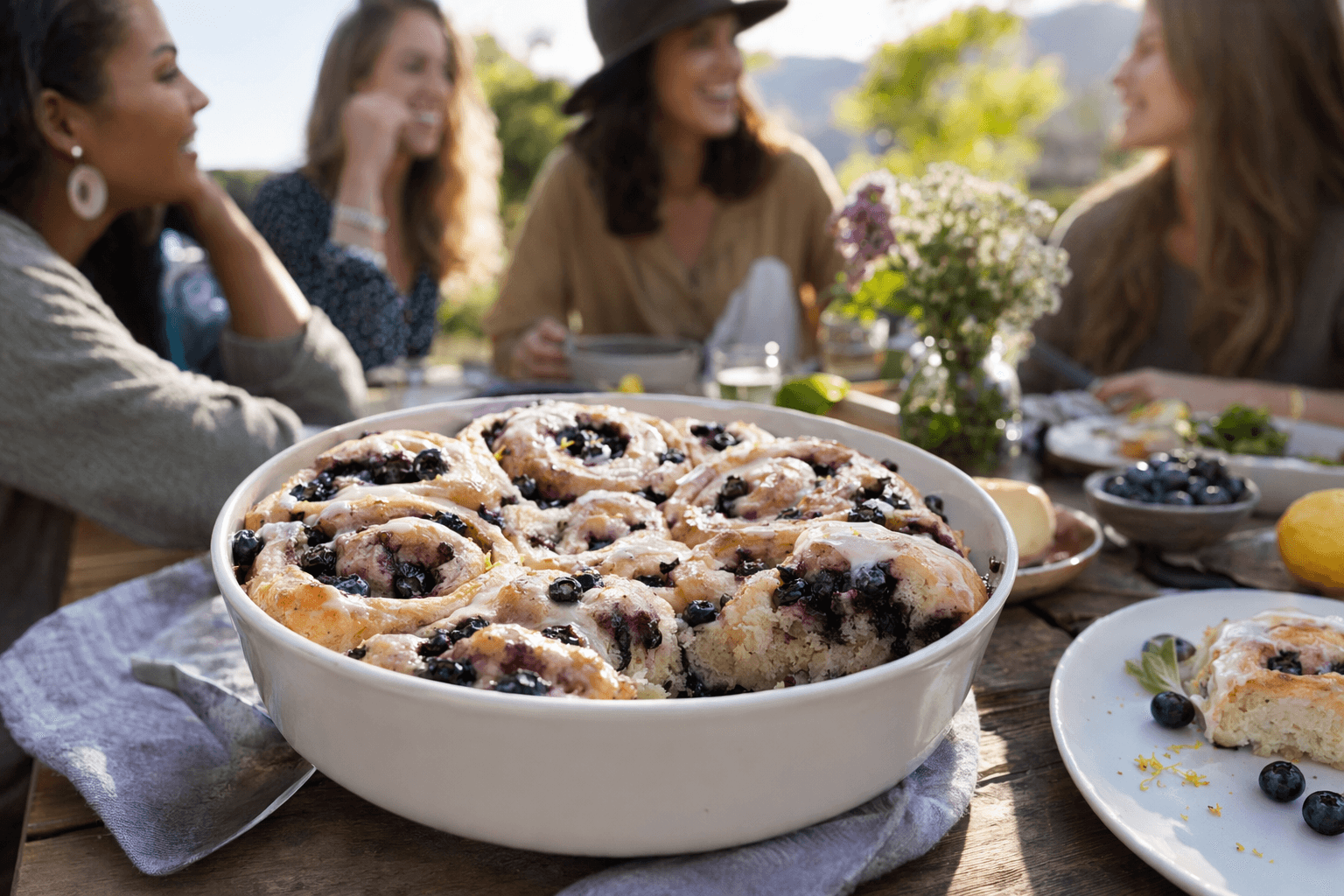
Whether the protein meaningfully changes texture depends on how it is built into the dough, and that detail is the one bakers always need to watch. In general, the more a formula leans on added protein, the more likely it is to affect softness, tenderness, and moisture balance. A roll with 12 grams of protein can absolutely be satisfying, but if the dough gets too stiff or dry, the whole point of a pillowy sweet roll disappears. The best version of this category keeps the crumb tender first and lets the protein claim come second.
Who this hybrid bake is really for
This is not a single-audience recipe. It makes sense for dessert bakers, breakfast meal-preppers, and sourdough experimenters, but each group comes to it for a different reason.
Dessert bakers will love the glaze, the fruit filling, and the built-in sense of occasion. The blueberry lemon combination gives the roll enough lift to feel more polished than a basic sweet dough spiral, especially when the glaze is thick and creamy.
Breakfast meal-preppers are here for the protein number and the portability. A roll with 12 grams of protein is easier to justify as a morning bake than a standard frosted pastry, especially when the sourdough base gives it a little more staying power.
Sourdough experimenters will care most about the hybrid logic. This is starter pushed into enriched dough, fruit filling, and a glazed finish, which is exactly the kind of boundary-pushing that keeps sourdough from feeling repetitive.
The fruit filling adds more than flavor
Blueberries are not just there for color. USDA Agricultural Research Service materials describe blueberries as an excellent source of vitamins C and K and manganese, and a good source of dietary fiber. That does not turn a sweet roll into a health food, but it does help explain why the blueberry-lemon pairing feels more nutrient-aware than a standard sticky bun filling. The fruit brings brightness, some fiber, and a fresher visual identity that fits the way people talk about breakfast now.

Lemon also helps keep the flavor profile from going flat. The acidity cuts through the cream cheese glaze and keeps the compote lively, which matters in a rich dough. Without that acid, the roll could easily slide into heavy and one-note. With it, the whole bake reads more like brunch than dessert.
Why protein branding lands so well right now
Protein has become familiar enough in mainstream food culture that it no longer feels niche or gimmicky when used carefully. The Centers for Disease Control and Prevention reports mean protein intake for U.S. adults age 20 and older at 16.0 percent of kilocalories for men and 15.7 percent for women, so the nutrient already has a real place in everyday eating patterns. That helps explain why a recipe like this can call itself high-protein without sounding strange.
The label language also matters. The U.S. Food and Drug Administration distinguishes nutrient content claims, health claims, and structure/function claims on food labels, which is a reminder that “high protein” is not just casual foodie chatter. Even in a blog recipe, that phrase carries weight because it speaks in the same language as packaged food marketing, breakfast cereals, and better-for-you bakery cases. Here, the claim broadens the audience without fully changing the emotional promise of a sweet roll.
How to read the bake before you commit
The smartest way to think about this recipe is as a test of balance. If the sourdough stays tender, the compote stays bright, and the glaze stays creamy without going cloying, the protein addition earns its place. If the texture gets tough or the roll starts feeling like a compromise, then the protein is just a marketing layer pasted onto a pastry that wanted to be simpler.
That is why this recipe is more interesting than a standard sweet-roll variation. It is not trying to replace indulgence. It is trying to reframe indulgence so it fits the way people actually eat now: a little more breakfast, a little more wellness, and still enough pleasure to feel worth making. For the sourdough baker who wants something tender, seasonal, and just ambitious enough to feel current, this is exactly the kind of hybrid worth keeping in rotation.
This article was produced by Prism’s automated news system from verified source data, official records, and press releases, then run through automated quality and moderation checks before publishing. The system is built and supervised by the people who set the standards it runs under. Read our full AI policy.
Did this article answer your question?