Breadtopia guide challenges sourdough rules, opens up home baking
Breadtopia's roundup turns sourdough into a set of choices, not commandments, with the biggest gains coming from starter management and temperature control.

Breadtopia's real trick is stripping sourdough down to decisions
The useful thing about Breadtopia's latest guide is not that it hands down another sacred formula. It does the opposite: it shows where home bakers actually have room to move, and where the usual sourdough rules are more flexible than people think. That makes the piece feel less like a sermon and more like a working map for anyone trying to get better bread out of a normal kitchen.
Instead of centering one recipe, the guide breaks the craft into five practical lanes: fermentation variables, gluten development, shaping and scoring, working with whole wheat flour, and troubleshooting. That structure matters because it tells you what to control, what to ignore, and where your own setup can bend without breaking.
Starter management is less rigid than the old lore says
Breadtopia's strongest message is that starter care is not a one-size-fits-all ritual. The guide says it has challenged the idea that a sourdough starter must always be refreshed before use, and it also pushes back on the claim that stretch-and-fold alone is what creates an open crumb. For home bakers, that is a useful reset: the point is to understand fermentation and dough strength, not to worship one method as the only path to good bread.
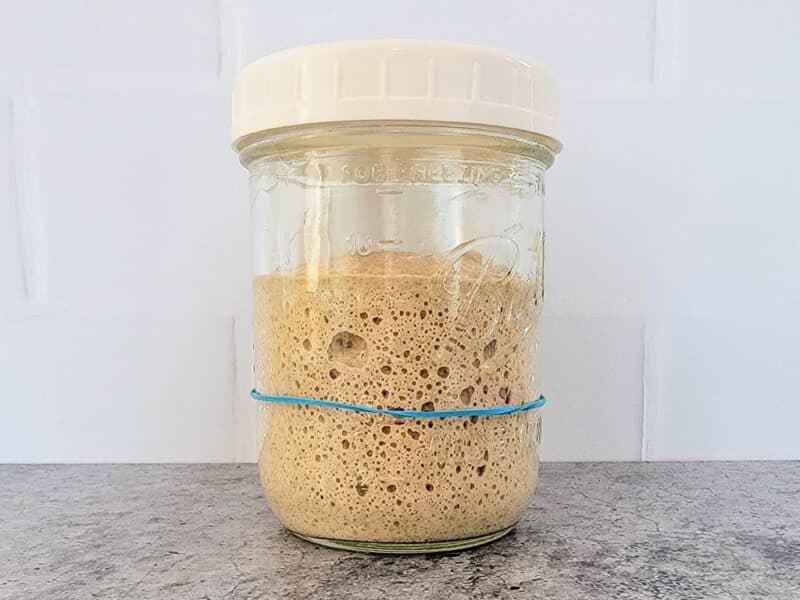
That same flexibility shows up in Breadtopia's starter advice. It says there are many effective ways to manage a sourdough starter, and the best one is the one that fits your needs and desires. One of its cleaner workflows is a zero-discard method, which is exactly the sort of practical choice that helps when you do not want a jar full of waste every week.
Breadtopia also makes an important distinction between live and dried starter. Its guidance says reviving a live starter is simpler and faster than reactivating a dried or dehydrated one, which is the kind of detail that saves time before you even mix dough. If your starter is already alive, the job is usually recovery and routine, not resurrection.

Temperature is the hidden control knob most kitchens overlook
If the starter section lowers the intimidation factor, the fermentation section gives you the real control panel. Breadtopia spells out the basic truth clearly: warmth speeds fermentation and cold slows it down. That sounds obvious until you are in a summer kitchen staring at dough that has gone sticky and unruly before you expected it to.
The guide's fixes are refreshingly concrete. It points to cold water, a proofing box, an oven with the light on, a cool basement, or the refrigerator as ways to steer fermentation back into range. That is the kind of advice that actually helps because it gives you a set of tools, not a vague warning to "watch the dough."
The refrigerated-proofing angle is especially useful for busy schedules. Breadtopia says final proofing in the fridge can work for 24 hours or longer, which means the cold can be a timing strategy, not just a backup plan. Its proofing box product, with a built-in timer and a 70-113°F range, shows how much temperature control can matter once you stop treating dough like it lives on a fixed clock.
Gluten, shaping, and scoring are about setup, not mystique
The middle of the guide keeps the same practical tone. Gluten development is not presented as a magical transformation but as another variable you can influence with attention, hydration, and handling. Breadtopia's challenge to the stretch-and-fold dogma is useful here because it reminds you that dough strength can be built in more than one way.
Shaping and scoring follow the same logic. These steps matter, but they are not isolated tricks you can memorize without understanding the dough underneath them. A well-managed fermentation schedule and enough gluten structure make shaping easier; scoring then becomes a finishing move, not a desperate rescue.
That is why the guide lands better as workflow advice than as a technique roundup. It keeps pulling you back to the same question: what does this loaf need right now? For a lot of home bakers, that is a more valuable frame than chasing the one "correct" fold, score, or shape.
Whole wheat and troubleshooting are where the guide gets especially real
The whole wheat section gives the roundup some grit. Whole-wheat dough behaves differently, and Breadtopia does not pretend otherwise. Its forum even includes a 2025 discussion about the difficulty of getting 100% whole-wheat sourdough to rise, which is exactly the sort of problem a serious home baker wants addressed without sugarcoating.
That matters because whole grain is where a lot of beginner confidence gets tested. The grain is thirstier, the dough can be denser, and the rise can be less forgiving, so the same fermentation instincts you use on a white loaf may need adjustment. Breadtopia's troubleshooting frame is useful because it treats those failures as calibration problems, not proof that you did everything wrong.
The broader context helps explain why this guide resonates now. Industry coverage from British Baker and Lesaffre still points to sourdough's appeal through flavor, artisanal cachet, and health-conscious demand, and Breadtopia has long aimed its teaching at people baking at home from basic equipment. That combination, a durable audience and a craft that rewards observation, makes a guide like this more useful than another recipe that assumes every kitchen behaves the same.
Breadtopia's forum history backs that up. A 2019 discussion about using an oven light as a proofing space and the newer whole-wheat troubleshooting thread show a community that wants solutions, not slogans. That is exactly where this guide earns its keep: it does not tell you sourdough has one correct rulebook, it shows you how to work the variables until the bread starts cooperating.
This article was produced by Prism’s automated news system from verified source data, official records, and press releases, then run through automated quality and moderation checks before publishing. The system is built and supervised by the people who set the standards it runs under. Read our full AI policy.
Did this article answer your question?