Bughouse Bakery turns sourdough into cookies, s’mores treats, and community sales
Sourdough is moving from loaf to dessert, and The Bughouse Bakery shows how cookies and s’mores treats can still feel handmade.
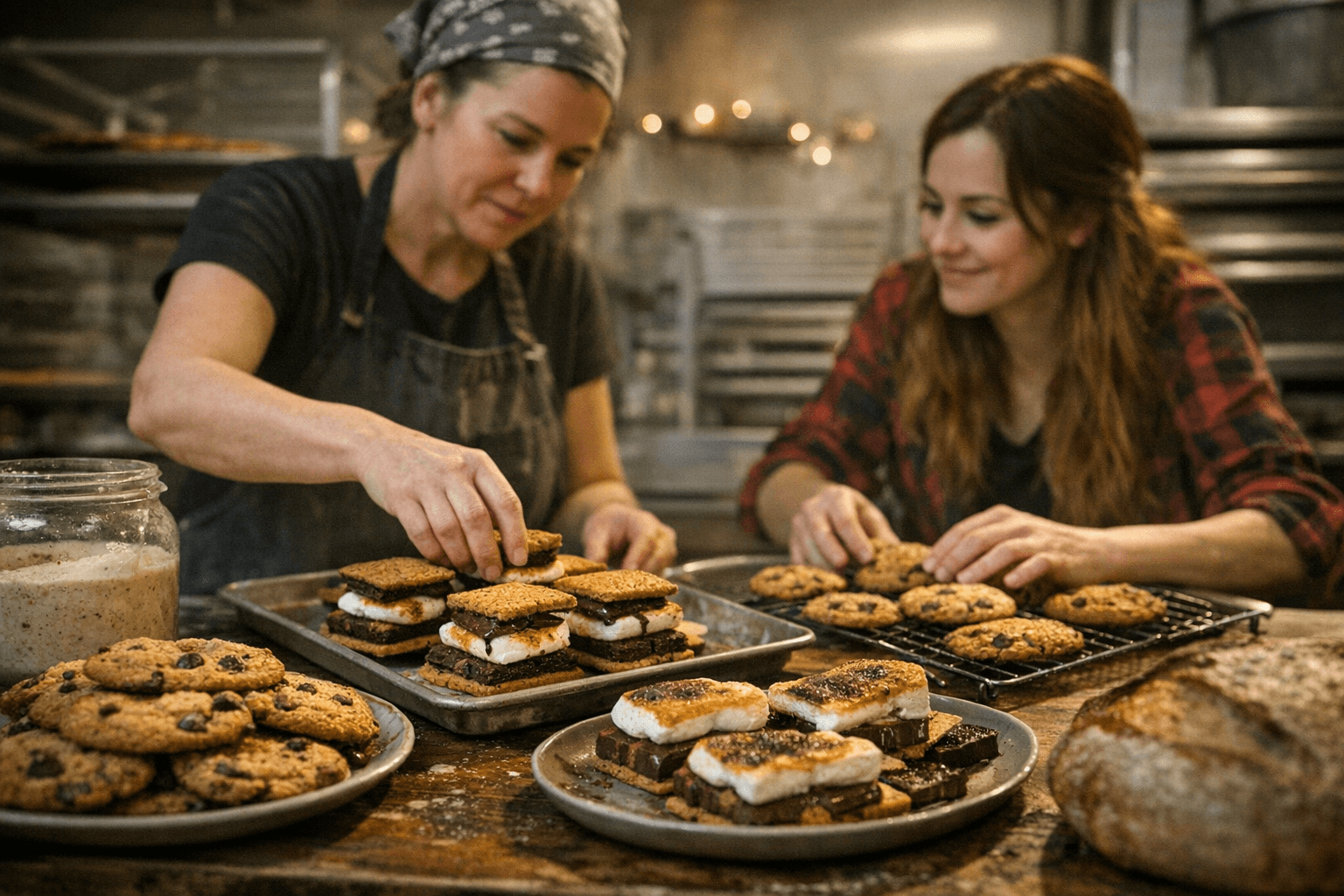
Sourdough is slipping out of the loaf pan and into dessert cases, and The Bughouse Bakery makes a convincing case for why that move is working. In KREM 2’s April 17 baking special, Gonzaga University student Delaney Carr showed how a sourdough microbakery can turn cookies into a real business without losing the handmade feel that draws people to artisan baking in the first place.
Dessert is where sourdough gets playful
The clearest sign of the trend came in the KREM 2 Kitchen, where Laura Papetti and Vincent Saglimbeni joined Carr to bake chocolate chip cookies and s’mores cookies. That setup matters because it takes sourdough out of its usual lane and places it in treats people already know how to buy, share, and crave. Instead of asking customers to think about bread in a new way, Carr is meeting them where they already are, then giving them a sourdough twist.
That is the practical lesson for home bakers and small-batch sellers alike: a starter does not have to stay loyal to a boule. When sourdough shows up in cookies, it becomes easier to imagine as an everyday ingredient, something that can move from breakfast to dessert without feeling gimmicky. The Bughouse Bakery’s appeal comes from that balance of novelty and familiarity, which is exactly what makes the story travel beyond the bakery case.
A microbakery model built around direct connection
The Bughouse Bakery describes itself as a sourdough microbakery based in Spokane, Washington, serving artisan bread and cookies. That microbakery label is doing a lot of work. It signals a small, focused operation that leans on personality, regular customers, and direct communication rather than a traditional storefront with a long list of overhead costs.
KREM 2 points viewers toward the bakery’s Instagram and order form, which shows how the business actually runs in the real world. The path from post to order is part of the experience, and it tells readers something important about where sourdough businesses are headed: the strongest ones often thrive on direct-text ordering, social media, and a customer relationship built one batch at a time. For a home baker considering a side hustle, that model is far more accessible than opening a shop.
Carr’s approach also keeps the brand local in a way that feels personal rather than polished. A bakery that sells through its phone and social feed can respond quickly, test new items, and stay close to the people buying the cookies. That flexibility is one reason sourdough treats are becoming such a strong fit for microbakeries.
Carr’s campus background gives the bakery its backbone
Carr’s baking venture started in August 2021, according to Gonzaga University, and she has described it as a way to apply what she learned in class to something she could call her own. That detail helps explain why The Bughouse Bakery feels rooted in more than trend-chasing. It grew from campus learning, then turned into a working business that connects Carr with people she otherwise might never have met.
Gonzaga identifies Carr as a recipient of its Environmental Studies and Sciences Environmental Stewardship Award, which adds another layer to the story. She was also described in a 2020 Gonzaga Q&A as a junior environmental studies major with a sustainable business minor, and she was part of Rethink Waste and Food Recovery Network. Those pieces fit together neatly: Carr’s bakery is not only a food project, it is part of a larger way of thinking about sustainability, waste, and community responsibility.
Gonzaga says environmental stewardship is tied to its Jesuit mission and sustainability commitment, and that context makes Carr’s business feel especially on-brand. The bakery is not presented as a separate passion project floating away from her studies. It looks like an extension of the same values, translated into something edible, social, and small-scale enough to stay nimble.
What the Bughouse model teaches home bakers
The biggest payoff for readers is simple: sourdough can become more than bread without losing its artisan identity. Carr shows that the leap into sweets does not require a mass-market makeover. It requires a tight menu, a clear voice, and a format that lets people see the baker behind the product.
A few takeaways stand out:
- Keep the menu focused. Chocolate chip cookies and s’mores cookies are recognizable enough to sell, but still flexible enough to carry a sourdough signature.
- Use the starter creatively. If you already bake bread, the same culture can anchor desserts and help widen what you can offer.
- Treat social media like a storefront. The Bughouse Bakery’s Instagram and order form show how a microbakery can function without a conventional retail space.
- Let your story do some of the selling. Carr’s student role, sustainability background, and campus ties make the bakery feel local, purposeful, and easy to root for.
That combination of clarity and creativity is why The Bughouse Bakery lands as more than a one-off feature. It points to a bigger shift in sourdough culture, one where the most interesting bakers are not only shaping loaves, but also building dessert lines, community ties, and small businesses around what a starter can do next.
For anyone keeping a jar of starter on the counter, the message is immediate: the next good sourdough bake does not have to be another loaf. It can be a cookie that sells, a treat that travels, and a microbakery idea that feels both homemade and ready for more.
This article was produced by Prism’s automated news system from verified source data, official records, and press releases, then run through automated quality and moderation checks before publishing. The system is built and supervised by the people who set the standards it runs under. Read our full AI policy.
Did this article answer your question?