Can a cast-iron pan improve sourdough crust and oven spring?
A sister-in-law who sells sourdough every weekend put this pan on my radar, and the bake showed why serious bread people keep paying attention. The payoff is less about hype and more about steam, heat, and a crust that behaves.

A good sourdough pan only matters if it changes the loaf, not the marketing. That is the real test here, because the recommendation came from someone who bakes fresh sourdough every week, taught baking classes in college, and now sells loaves out of a family farmstand on weekends. When that kind of baker says the Challenger Bread Pan is worth a look, the question stops being whether the pan is cool and starts being whether it actually improves oven spring, crust, and shape.
What this pan is supposed to change
The Challenger Bread Pan is built around one job: create the kind of sealed, hot environment that a freestanding loaf needs to expand cleanly before the crust sets. Challenger Breadware says the pan traps steam with a tight seal, and that steam is what helps produce crackling crust, rich color, open scores, and full volume. In plain sourdough terms, that means you are trying to give the dough enough moisture and heat early in the bake to stretch upward before the outside locks in too soon.
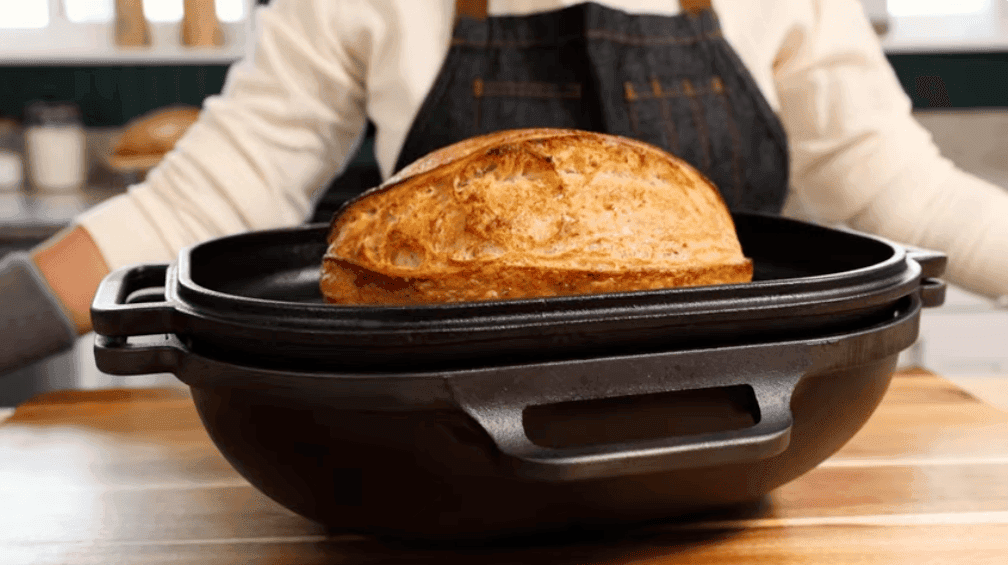
That is why the pan is not just another cast-iron vessel. Challenger Breadware describes it as thick cast iron designed for steady high heat, with a domed lid and a shallow base that work together differently than a standard Dutch oven. The company also says the pan is designed by bakers for bakers, with patented side handles meant to make handling easier and the whole setup safer than a traditional Dutch oven. For anyone who has wrestled a blazing-hot lid off a heavy pot, that detail is not cosmetic.
The design details that matter in real baking
The current version has a few changes that matter in the hand. Challenger Breadware says the product now has an improved handle design and placement, and it is 10 percent lighter than before. That is not a trivial tweak when you are moving a hot, oversized cast-iron pan in and out of the oven, especially if you are doing it on a weekly baking schedule rather than as an occasional project.
The size also tells you what kind of loaf this pan is built for. In the AOL test, the pan measured 15.5 inches long and 10.5 inches wide, with a domed lid about 5 inches high. That footprint is clearly aimed at serious bread baking, not a tiny countertop experiment. It is a premium tool with a specific job, and the price makes that impossible to ignore, which is why it belongs in the category of considered purchases rather than impulse upgrades.
What happened in the test bake
The test bake was grounded in real use, not a showroom demo. The writer had not baked sourdough in several months, got fresh starter from the sister-in-law, followed her top-secret bread recipe, mixed the dough the night before, shaped it in the morning, and baked it in the Challenger pan. That workflow matters because it mirrors how a serious home baker actually works: starter, long fermentation, shaping, and a final bake in a vessel that can handle the steam and the heat.
The result was better than expected, especially on crust quality and baking performance. That is the key takeaway for anyone asking what changes in the loaf: the pan is not making a different dough, but it is changing the environment around the dough enough to make the bake look and feel more finished. The practical expectation is stronger rise, better expansion through the score, and a crust that has more snap and color than you get from a looser, less controlled setup.
Who the pan is really for
This is where the recommendation gets honest. If you bake sourdough frequently, or if you are moving from occasional home loaves into something closer to a weekly production rhythm, the Challenger Bread Pan starts to look like a meaningful upgrade. It is especially appealing if you care about repeatability, because the pan’s tight seal and thick cast iron are both aimed at giving you the same steam and heat profile loaf after loaf.
But it is still a luxury tool, not a requirement for good bread. Great sourdough is still possible without it, and the best advice in this story comes from the person selling loaves out of a family farmstand, not from a gear catalog. That distinction matters. The pan can improve conditions, but it does not replace good starter, good timing, or a recipe you trust.
Why the brand pitch fits the bake
Challenger Breadware’s own story makes the product feel less like a gadget and more like a baker’s solution. The company says it was founded by Jim Challenger, who discovered baking as a hobby, and its recipe page features his KIS, or Keep It Simple, Sourdough Bread recipe. That lines up neatly with the product’s broader pitch: practical design, minimal fuss, and a focus on the part of baking where the pan can actually make a difference.
The company also says the pan is hand-seasoned in the United States, and Amazon listings describe it as made in the USA and pre-seasoned. Those details matter to buyers who want a tool that is ready to work and built with a specific kind of bread routine in mind. Challenger Breadware further frames the pan as a safer alternative to a traditional Dutch oven, which is exactly the kind of claim that resonates once you have moved a screaming-hot lid around enough times.
How to judge whether it is worth it
The easiest way to think about this pan is to ask whether your current bake already gives you the crust and lift you want. If your loaves are good but you keep fighting weak oven spring, pale crust, or uneven handling, the Challenger Bread Pan gives you a more controlled setup built specifically for those problems. If you are baking only now and then, or you are still dialing in starter and fermentation, the money may be better spent elsewhere first.
The broader sourdough market is growing because more people want naturally fermented bread and the health halo that comes with it, but the gear only earns its keep when it changes the loaf in a visible way. This one appears to do that by tightening the steam environment, holding heat more steadily, and making the bake more manageable for a serious home routine. That is the real story here: not that cast iron is magical, but that in the right hands, and for the right baker, it can turn a decent sourdough bake into one that looks more finished from the first crack of the crust to the last slice.
This article was produced by Prism’s automated news system from verified source data, official records, and press releases, then run through automated quality and moderation checks before publishing. The system is built and supervised by the people who set the standards it runs under. Read our full AI policy.
Did this article answer your question?