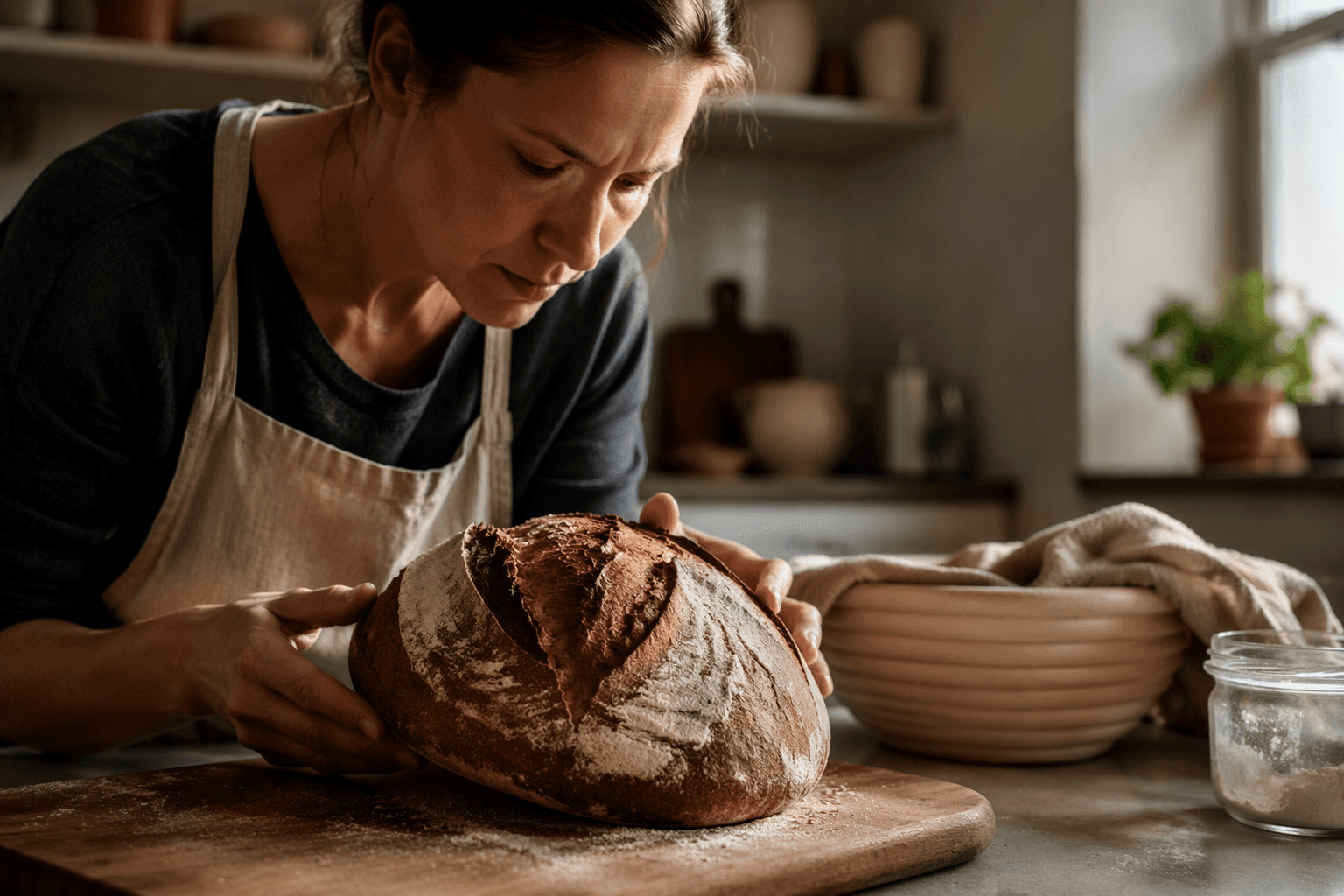
Coffee and chocolate sourdough bread delivers rich flavor, crisp crust
Coffee, cocoa, and chocolate make a bold sourdough loaf, but balance is what keeps it light. The right starter and bulk ferment turn dessert flavor into a crisp-crusted bread.
What makes this loaf work
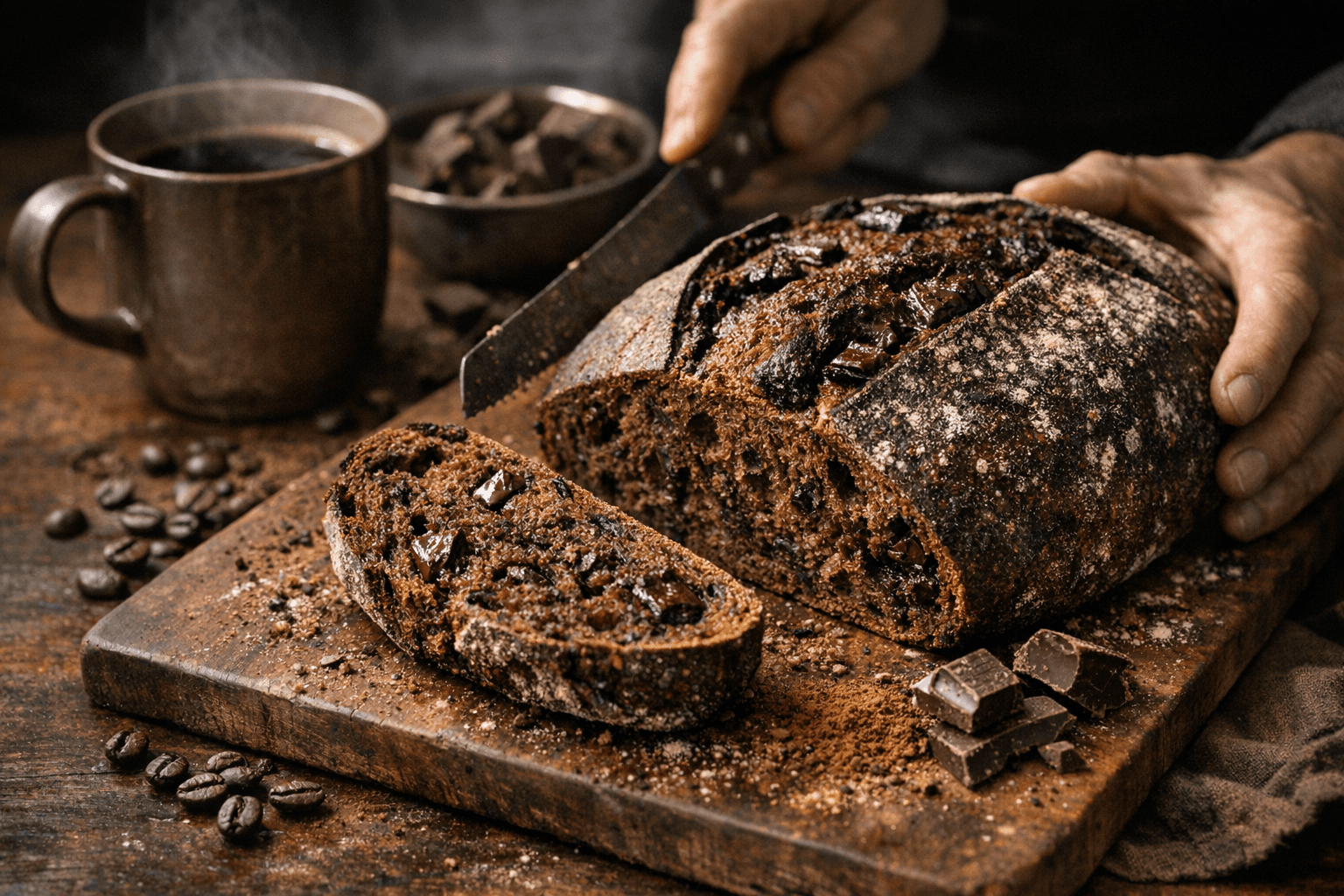
This bread succeeds because it treats dessert flavors like part of the dough formula, not as a shortcut around real sourdough structure. The flavor base is rich and deep, with cocoa, brewed coffee, maple syrup, semi-sweet chocolate chips, and white chocolate chips working together to create a loaf that still bakes like artisan bread, not cake.
That balance starts with the experiment behind the recipe: the original idea was to replace all the water with coffee. That kind of test can push flavor hard, but it also shows how quickly the dough can drift off course if the liquid load gets too heavy. The finished version keeps the coffee note, but reins it in so the loaf can hold a soft, tender crumb and a crisp crust.
Coffee changes the dough in two important ways. First, it adds liquid, so the dough can feel looser than a standard sourdough. Second, it sharpens the cocoa, giving the bread a darker, more bittersweet profile instead of a flat sweetness. Cocoa does the opposite in a different way: it absorbs liquid and can make the dough feel drier and tighter, which is why a dough that looks rich on paper still needs careful mixing and enough fermentation to open up.
The chocolate chips are there for pockets of melt and contrast. Semi-sweet chips reinforce the chocolate flavor, while white chocolate softens the edges and keeps the loaf from tipping into harsh bitterness. Maple syrup rounds out the flavor too, but the recipe keeps it limited for a reason: too much extra sugar can make the dough too wet and harder to manage.
How the sourdough structure stays intact
A dessert-leaning loaf only works if the sourdough backbone is strong enough to carry it. That is where the starter matters most. The recipe calls for an active, bubbly starter, which is non-negotiable when the dough already contains cocoa, coffee, and added sweetness. If the starter is sluggish, the loaf will bake up heavy before the chocolate flavor ever has a chance to shine.
The process reads like a dependable sourdough workflow: mixing, autolyse, salt incorporation, stretch-and-fold sets, then a bulk ferment of four to six hours until the dough looks puffy and visibly bubbly. Each stage matters. Autolyse gives the flour time to hydrate, salt tightens the dough once it is added, and stretch-and-folds build strength without knocking out all the gas that the starter creates.
That structure is especially important because sourdough itself is one of the oldest forms of leavened bread, built on natural fermentation from wild yeasts and lactic acid bacteria. A loaf like this keeps that tradition intact even while leaning into a modern flavor profile. It is still real sourdough, just one dressed for breakfast, brunch, or a sweet snack.
The broader community context fits too. National Sourdough Bread Day, observed in the United States on April 1, underscores how deeply rooted sourdough still is in home baking culture. A bread like this shows how easily that old method adapts to new flavors without losing its identity.
When the dough gets gummy
Gumminess is the most frustrating failure in a loaf like this because the bread can smell rich and look beautiful, yet still slice wet. The main fix is patience. Cocoa, chocolate, and a sweetened dough hold onto moisture, so the loaf needs to be fully baked and fully cooled before the first cut.
If the crumb still seems sticky, look first at the formula balance. The recipe already limits maple syrup because extra sugar can make the dough too wet, and the coffee was adjusted down from that original all-coffee experiment for the same reason. A dough that starts too loose will struggle to set cleanly, no matter how good the flavor is.
When the rise feels weak
A weak rise usually starts at the starter, not the oven. If the starter is not active and bubbly, the dough will never develop the airy lift needed to support the chocolate chips and cocoa. The loaf depends on that fermentation engine to build volume before it goes into the heat.
The bulk ferment window, four to six hours until puffy and visibly bubbly, is also doing real work here. Cutting it short leaves the loaf dense; pushing too far can leave the dough slack. The goal is not just time on the clock, but a dough that has clearly come alive and gained enough strength to hold its shape.
When the flavor turns too bitter
Bitterness is the easiest note to overplay in coffee-chocolate sourdough. Coffee can sharpen cocoa into something sophisticated and earthy, which is exactly why this pairing keeps showing up in recent sourdough bakes. But if the brew is too intense, or the cocoa too heavy, the bread can lose the soft dessert feel and become sharp on the finish.
The recipe’s use of semi-sweet and white chocolate chips helps keep that in check. If the loaf tastes too dark, the first adjustment is not more sugar everywhere, but better balance: cooled brewed coffee, restrained maple syrup, and enough white chocolate to soften the edges. That keeps the bread rich without making it harsh.
Why this flavor combination keeps spreading
Coffee and chocolate are showing up together in more than one sourdough formula, and that is not an accident. Bakers are drawn to the way the pairing creates a bittersweet, earthy profile that still feels like bread. It is a flavor that works because sourdough already brings acidity and complexity to the table.
There is even scientific support for the pairing. A 2025 study looked at yeasts and lactic acid bacteria isolated from cocoa mucilage and coffee pulp as possible sourdough starter co-cultures for improving bread quality. That does not turn the loaf into a laboratory project, but it does explain why coffee and cocoa fit so naturally into a fermented dough system.
In the end, the appeal of this bread is simple: it gives you a rich, chocolate-forward slice with structure, not collapse. When the starter is lively, the coffee is cooled, the maple stays restrained, and the bulk fermentation is allowed to fully develop, the result is a loaf that feels indulgent while still baking like serious sourdough.
This article was produced by Prism’s automated news system from verified source data, official records, and press releases, then run through automated quality and moderation checks before publishing. The system is built and supervised by the people who set the standards it runs under. Read our full AI policy.
Did this article answer your question?