Hybrid Sourdough Bread Blends Wild Yeast Flavor with Reliable Rise
Hybrid sourdough keeps the flavor and gives back the schedule, with a steadier rise that makes weeknight baking feel doable.
Why hybrid dough belongs in your sourdough rotation
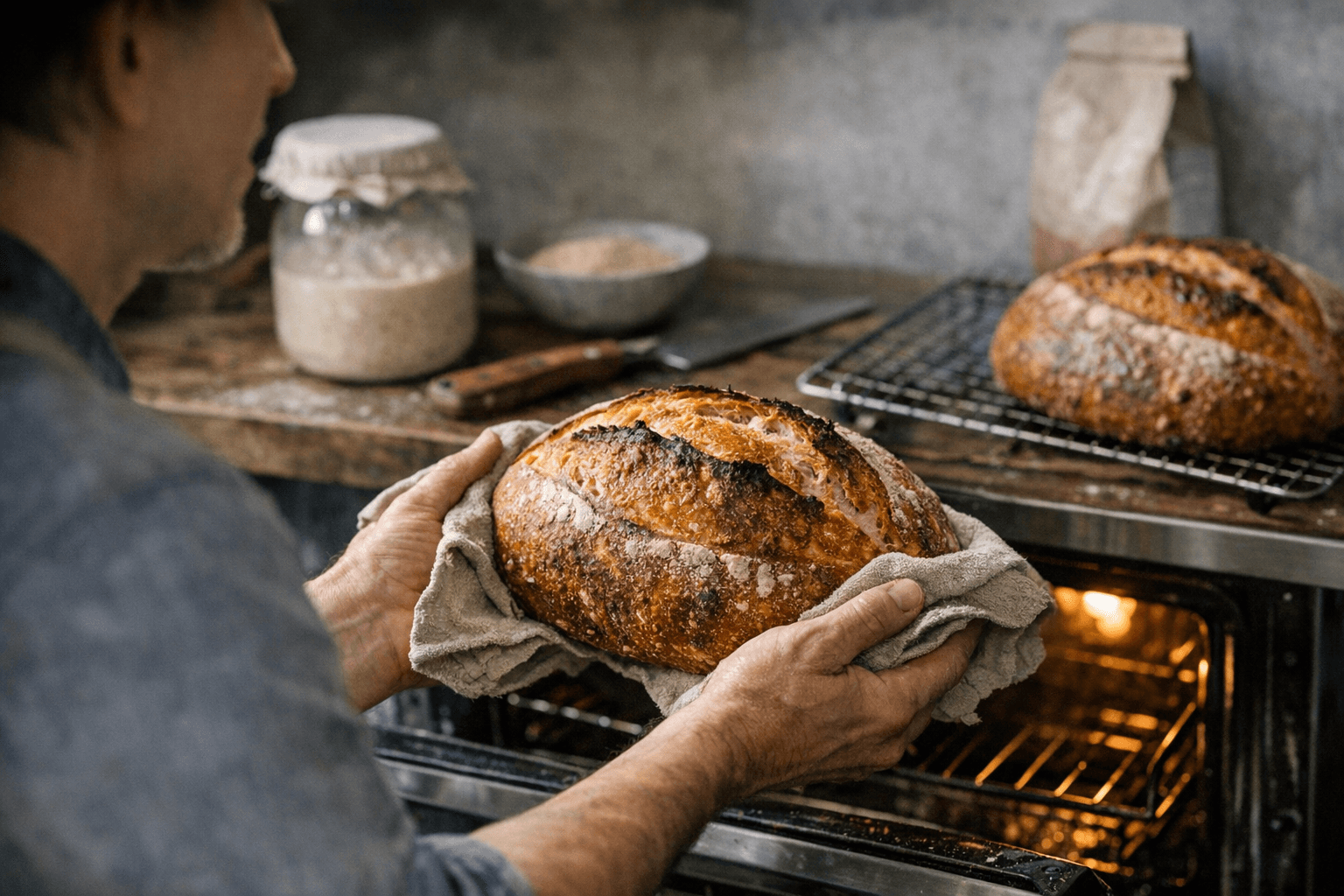
Hybrid sourdough is the quiet relief valve in a category that can otherwise feel unforgiving. You still build bread on a starter, so the loaf keeps the lactic and acetic notes that give sourdough its signature depth, but a small amount of commercial yeast takes the pressure off the fermentation clock. King Arthur Baking sums up the idea neatly as “flavor + reliability,” and that is exactly why this formula has become such a useful bridge between ambition and reality.
That practical instinct is not a shortcut in disguise. It is a bread-baker’s answer to a very old problem: how to keep the character of wild fermentation without making the baker’s entire day revolve around it. The result is a loaf that feels artisan, tastes like sourdough, and behaves more like a bread you can actually plan dinner around.
How it compares with fully wild sourdough
A fully wild sourdough loaf asks more from both the starter and the baker. The payoff can be wonderful, but the timing is less forgiving, and that is where hybrid dough earns its place. King Arthur Baking calls timing one of the biggest deterrents to making sourdough bread, and hybrid formulas are built to soften that hurdle instead of pretending it does not exist.
Here is the head-to-head difference in practical terms:
- Schedule flexibility: hybrid dough fits a normal rhythm better. One representative hybrid formula uses a bulk fermentation of about three to four hours, then a final proof of eight to eighteen hours, usually overnight in the refrigerator.
- Flavor depth: fully wild sourdough can push farther into complex fermentation character, but hybrid still delivers real sourdough flavor because the starter remains part of the dough. You get the familiar tang and aromatic depth without having to depend on starter strength alone.
- Proofing reliability: hybrid dough is more predictable. King Arthur Baking notes that the added yeast helps guarantee a strong rise, even if the starter is not quite up to snuff.
- Beginner error rate: hybrid lowers the odds of the classic sourdough mishaps, especially underproofing because the starter lagged or overproofing because the dough sat too long. That makes it a calmer entry point for newer bakers and a smarter backup for anyone with a busy week.
That is why baking writers often frame hybrid sourdough as a long tradition rather than a compromise. In professional bread baking, a small amount of commercial yeast has long been used to improve oven spring and stabilize the result, and that mindset has filtered naturally into home baking. Voices such as Dan Lepard, Peter Reinhart, Ken Forkish, and PJ Hamel all sit comfortably in that practical, flavor-first corner of the bread world.
What sourdough flavor still looks like in a hybrid loaf
Hybrid bread is not a plain yeast loaf with a starter cameo. The starter still does the flavor work, and the bread still develops the familiar sourdough character that comes from friendly bacteria and yeast producing lactic and acetic acids. What changes is the level of uncertainty around the rise.
That difference matters if you have ever stared at a bowl of dough and wondered whether it is almost ready, not ready enough, or already too far gone. A hybrid loaf gives you more room to breathe. It keeps the bread recognizable as sourdough, but it trims back the anxiety that comes from depending entirely on wild fermentation to deliver both flavor and structure on cue.
How to read the dough before it goes into the oven
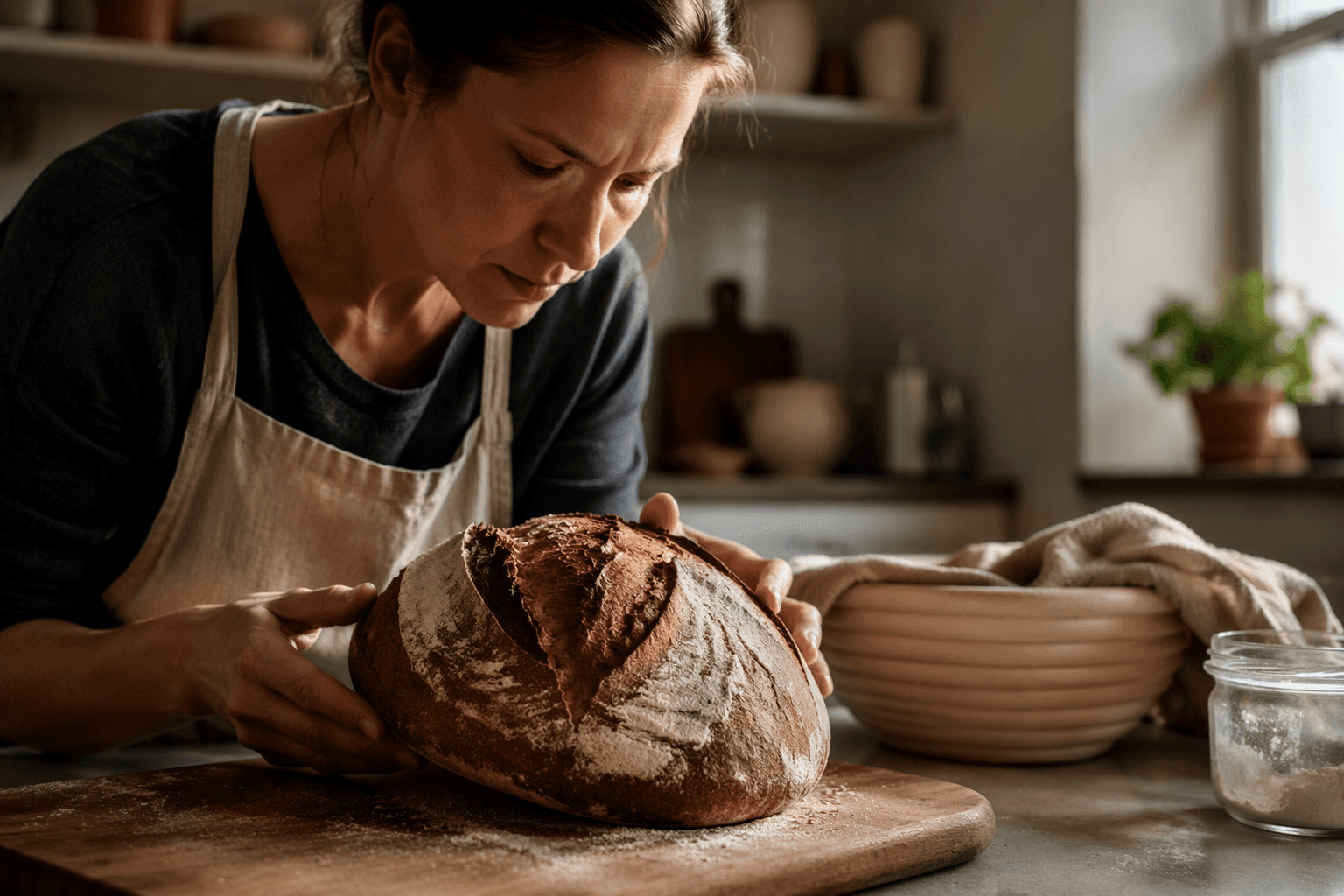
The most useful part of a good hybrid recipe is not just the ingredient list. It is the visual and tactile cues that tell you whether the dough is where it should be. King Arthur Baking points bakers toward a slightly domed surface, visible bubbles, airy elasticity, and a dough that feels light and jiggly.
Those signs matter more than trying to force the clock into doing all the work. If the dough still feels dense, it needs more time. If it collapses when scored, it has likely gone too far and is overproofed. That kind of troubleshooting is especially valuable for newer sourdough bakers because it turns fermentation from mystery into something you can actually read with your eyes and hands.
Why this method is especially friendly to beginners
King Arthur Baking is unusually direct about this: if you are a beginning sourdough baker, start with its Rustic Sourdough Bread, which offers the added security of commercial yeast. That advice makes sense because the yeast acts like a safety net, giving the dough a strong rise even when the starter is weak or inconsistent.
This is also where hybrid dough cuts down on the emotional churn that sends many people back to store-bought sandwich bread. Instead of asking you to manage a perfectly peppy starter, an exact temperature, and a long stretch of free time, it gives you a more forgiving path. For a first-timer, that means fewer false starts and a much better chance that the loaf you bake on Sunday or Tuesday actually looks like the bread you imagined.
When hybrid can beat a fully wild loaf
Hybrid sourdough is not just the easier version. In some kitchens, it is the better version. It can outperform a fully wild loaf when you need a dependable weeknight bread, when your starter is running sluggish, or when your kitchen temperature makes fermentation drift in unpredictable ways.
It is especially strong for everyday bread, toast, and sandwiches, because those are the loaves that reward consistency as much as character. If you want a bread that can move from mixing bowl to dinner table without taking over your evening, the hybrid route is hard to beat. The overnight refrigerated final proof makes it easy to shape one day and bake the next, which is exactly the kind of schedule a home baker with work, family, or just a life can actually keep.
That is the real appeal here: hybrid sourdough lets you keep the good part of sourdough, the flavor, the texture, the sense of craft, while removing the part that scares off so many bakers, the uncertainty. For anyone who wants a loaf that feels handmade but behaves on a human schedule, this is the sweet spot.
This article was produced by Prism’s automated news system from verified source data, official records, and press releases, then run through automated quality and moderation checks before publishing. The system is built and supervised by the people who set the standards it runs under. Read our full AI policy.
Did this article answer your question?