Connecticut Baker Shares Sourdough Secrets on National Sourdough Bread Day
New Milford cottage baker Danielle Ramos showed WTNH viewers that a shower cap, stretch-and-folds, and an overnight fridge chill are the real keys to a sour, open crumb.
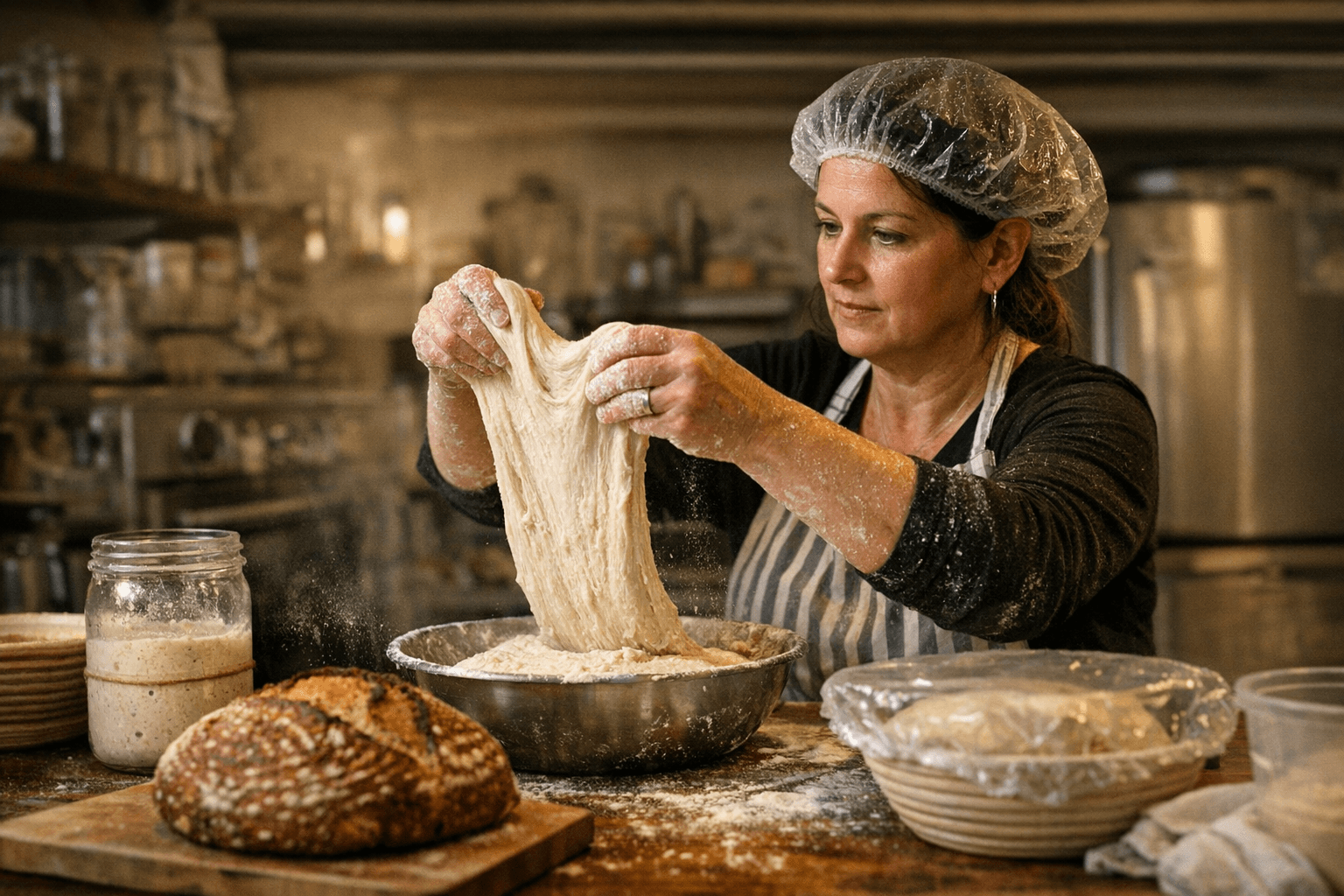
Danielle Ramos, owner of New Milford's Olive Branch Baking Co., walked a statewide television audience through the essentials of sourdough on National Sourdough Bread Day, translating fermentation science into three adjustments any home baker can make without specialty equipment.
Ramos joined Good Morning Connecticut co-anchor Alyssa Taglia on April 1 in a segment produced by Bella Gerber. Olive Branch Baking Co. operates as a licensed cottage bakery in New Milford, and the WTNH appearance gave Ramos a platform to reach viewers whose sourdough ambitions often outpace their troubleshooting knowledge.
The segment grounded everything in context: sourdough dates back more than 5,000 years and works through wild yeasts and beneficial bacteria collaborating in natural fermentation. That distinction matters because the bacteria, not the yeast, are responsible for the characteristic tang. Wild yeast provides lift; lactic acid bacteria produce the acidity that gives sourdough its flavor profile and also extends its shelf life. Understanding this separates a baker who gets a reliably sour loaf from one who wonders why their bread tastes more like a dinner roll.
From there, Ramos laid out a practical sequence. Cover bulk-fermenting dough with a shower cap: the elastic band seals out airborne contaminants while the cap's dome keeps condensation from dripping back onto the surface. Every 30 minutes during bulk fermentation, perform a stretch-and-fold, pulling one side of the dough up and over itself, rotating the vessel, and repeating around the full circumference. Done consistently over several hours, this builds the gluten network that creates an open crumb without the punching and kneading that would degas a well-fermented dough. After shaping, the loaf goes into the refrigerator overnight for a cold retard, slowing fermentation and allowing organic acids to accumulate, which deepens the sour note that many home bakers chase but rarely achieve on a same-day schedule.
The segment also addressed a common point of panic: the dark liquid that sometimes pools on top of an unfed starter. Known as hooch, it is simply alcohol produced by wild yeast once it has burned through available sugars. It signals a hungry starter, not a dead one. Stir it back in for a more pungent loaf, or pour it off before feeding if the flavor profile is already where you want it.
A related misconception gets less airtime on television but deserves equal correction: the portion of starter removed before each feeding is not waste. This so-called discard is active, living culture that carries complex fermentation flavor no commercial yeast can replicate. Pancake batter, crackers, flatbreads, and pizza dough are all improved by it.
Olive Branch Baking Co. offered hands-on workshops for viewers ready to move beyond the segment's quick overview, with details available through the bakery's website. For a licensed cottage business built around sourdough, that kind of broadcast exposure connects a local artisan directly with the spring wave of home bakers ready to stop second-guessing their starter and start trusting the dough.
This article was produced by Prism’s automated news system from verified source data, official records, and press releases, then run through automated quality and moderation checks before publishing. The system is built and supervised by the people who set the standards it runs under. Read our full AI policy.
Did this article answer your question?