Easy ciabatta sourdough guide demystifies sticky dough and open crumb
Ciabatta rewards sticky, high-hydration dough with the open crumb bakers chase. A 76% hydration biga formula shows why gentle folds beat aggressive shaping.
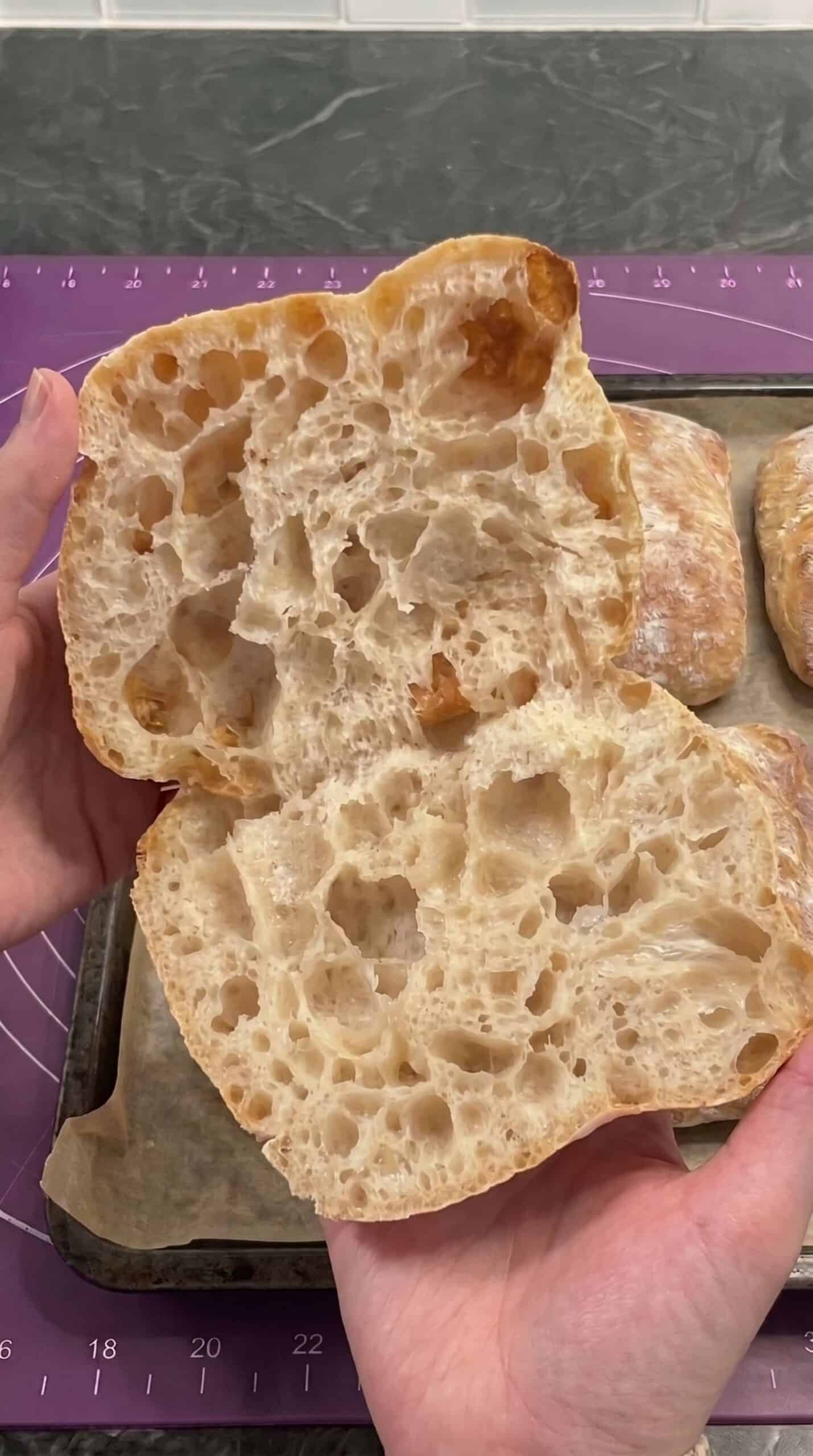
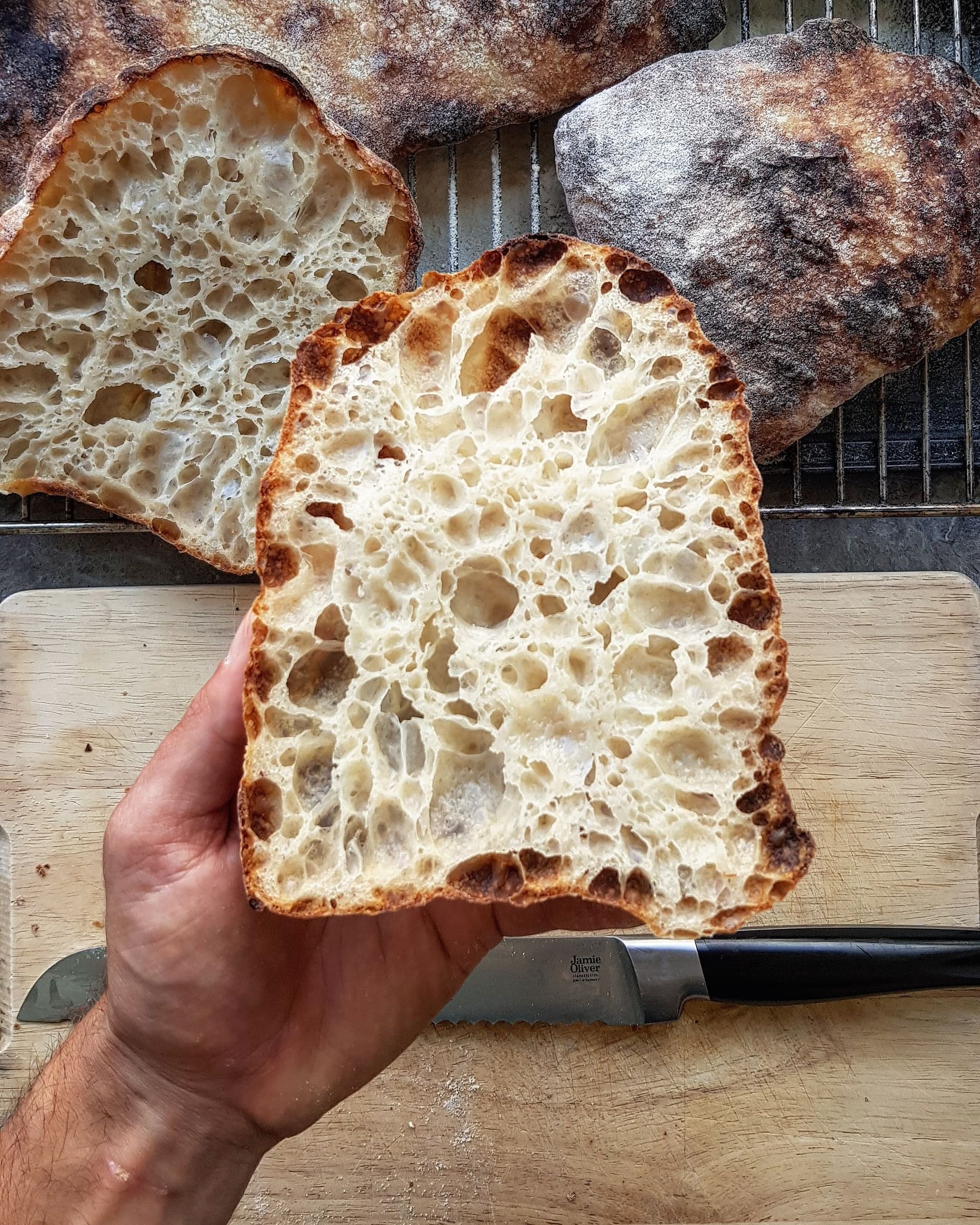
Ciabatta dough is supposed to be sticky, loose, and a little unruly. That slackness builds the big, irregular holes, the chewy center, and the lightly crisp edges that make the loaf so satisfying to slice into. Instead of fighting for a tight boule, you get the best result by letting fermentation do more of the work and handling the dough just enough to keep the gas inside.
Why ciabatta feels different from standard sourdough
Ciabatta has a very specific personality, and it starts with where it came from. The bread was invented in 1982 by Arnaldo Cavallari in Adria, in Italy’s Veneto region, and its name means “slipper,” a nod to the loaf’s flat, broad shape. It was first called ciabatta polesana, and Cavallari created it in response to the popularity of French baguettes in Italy.
Ciabatta was built to be flatter, softer, and more open than a standard country loaf, so it is not meant to be kneaded into a smooth ball and proofed like a classic boule. The structure comes from a different logic: a wetter dough, gentle strength-building folds, and enough fermentation time for the interior to inflate with airy pockets.
The formula that creates the open crumb
The hydration is the headline. King Arthur Baking’s ciabatta formula uses 76% water, with 30% of the flour pre-fermented in a biga that ripens at room temperature for about 16 hours. That long, slow head start is part of why ciabatta develops both flavor and structure without needing forceful shaping.
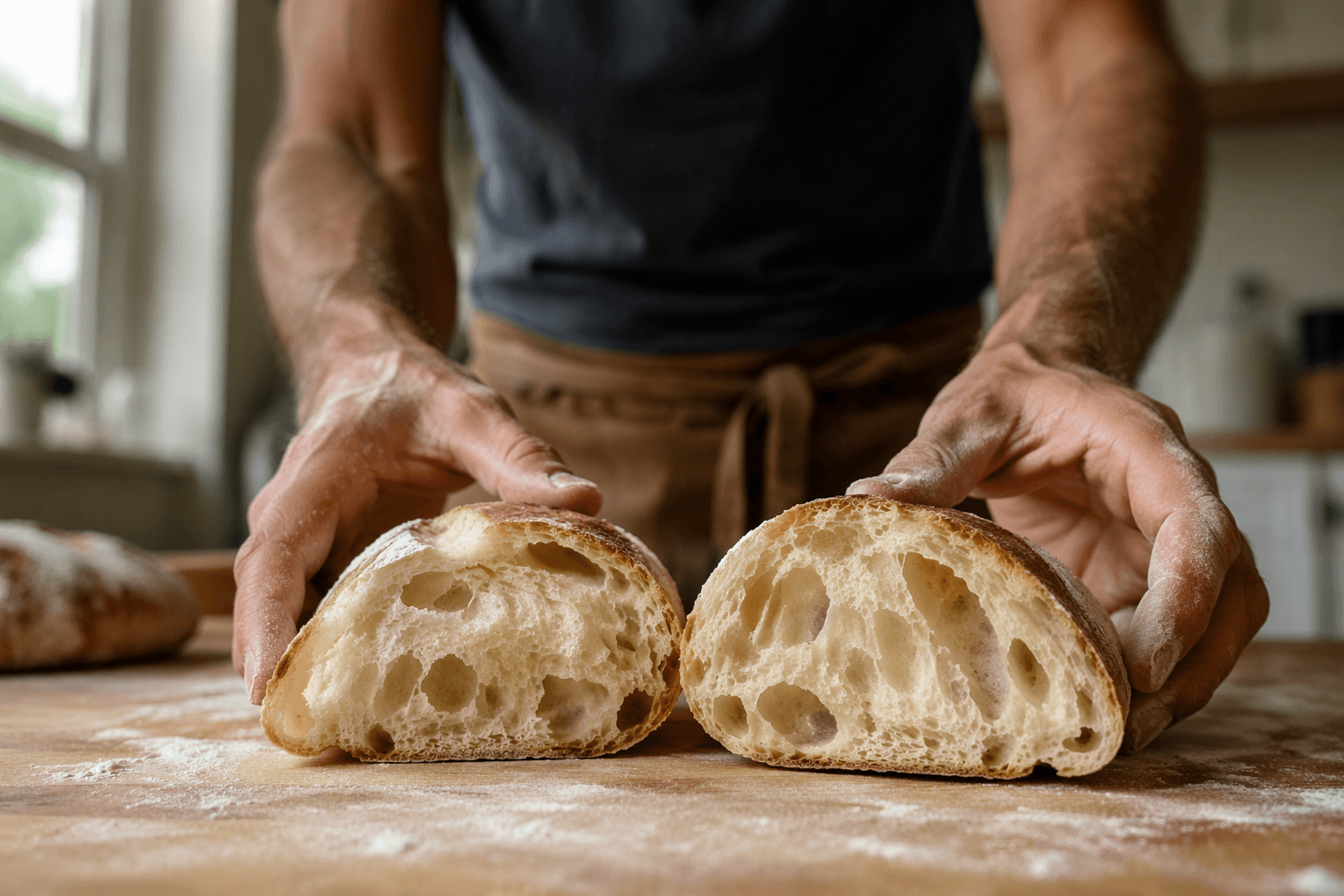
Across ciabatta formulas, the dough usually sits in the high-hydration range, commonly around 75% to 82%. The wetter the dough, the more open and irregular the crumb tends to be. That is not a flaw to correct, it is the design of the bread. The dough needs enough looseness to expand freely, and enough strength from fermentation and folding to hold onto the bubbles that form inside it.
Handling sticky dough without overworking it
The hardest mindset shift is accepting that sticky does not mean failed. In ciabatta, stickiness is often a sign that you are on the right track, because that wet texture is what allows the loaf to spread, rise, and bake into those trademark holes. If you try to turn it into a neat, dry mass, you risk losing the very structure that gives the bread its character.
What matters is careful handling. Coil folds are a better fit than aggressive kneading because they strengthen the dough while preserving the gas building up inside. The goal is not to polish the surface until it looks smooth and taut, but to give the dough enough backbone to rise in a more open, irregular way. You also shape minimally, often into a rectangle rather than a tight round, which keeps the loaf true to its ciabatta form.
A few cues matter more than perfection:
- The dough should feel slack and extensible, not stiff.
- It should gain strength between folds without being manhandled.
- It should keep visible bubbles and volume as fermentation moves along.
- It should be handled just enough to move it, not so much that you press out the air.
Why the loaf works so well at the table
The same irregular crumb that makes ciabatta look dramatic also makes it practical. Those irregular holes help trap olive oil, which is why the loaf is so good alongside a shallow bowl of good oil and so useful for Italian-style sandwiches. The interior stays chewy, while the edges bake up lightly crisp, so each bite gives you both structure and lift.
That versatility is part of the appeal for newer sourdough bakers. You can split the loaf and eat it warm with butter, dunk it into soup, or stack it with fillings that benefit from a bread with some chew and some air. It gives you an artisan result without demanding a Dutch oven, a scoring blade, or advanced shaping skills.
This article was produced by Prism’s automated news system from verified source data, official records, and press releases, then run through automated quality and moderation checks before publishing. The system is built and supervised by the people who set the standards it runs under. Read our full AI policy.
Did this article answer your question?