Fresh sourdough pizza crust recipe brings weeknight ease and tangy crunch
This sourdough pizza crust turns starter into a weeknight dinner habit: simple ingredients, flexible timing, and a tangy, crisp crust with almost no fuss.
Why sourdough pizza belongs in your weeknight rotation
Fresh sourdough pizza crust is the kind of recipe that makes starter feel useful, not ornamental. Instead of committing to a full boule, you get chewy, lightly tangy dough with a crisp outside and a soft inside, and you can move it through the oven on a regular dinner schedule. That is the real appeal here: a reliable way to turn fermentation into repeat dinner, especially if you are a busy home baker trying to use starter more often.
The workflow is what sets it apart. The dough is forgiving, the ingredient list is short, and the timing can flex around your day. You can build flavor with an active bubbly starter for a same-day or overnight bake, or use discard if you want a milder rise and taste. Either way, you are not waiting for a perfectly timed levain to make dinner happen.
What goes into the dough
The formula stays beautifully plainspoken: starter, warm water, flour, salt, and olive oil. That simplicity matters, because it keeps the focus on texture and fermentation instead of a long ingredient list or fussy add-ins. The dough is meant to be practical, not precious.
That practicality also gives you room to work with what is already in the fridge. If your starter is active and bubbly, you can lean into a faster schedule. If you have unfed starter or extra discard, you can still turn it into pizza dough, adjusting flour and liquid as needed to account for starter hydration. That flexibility is one reason sourdough pizza has become such a dependable part of home baking culture.
How to make it without overcomplicating the process
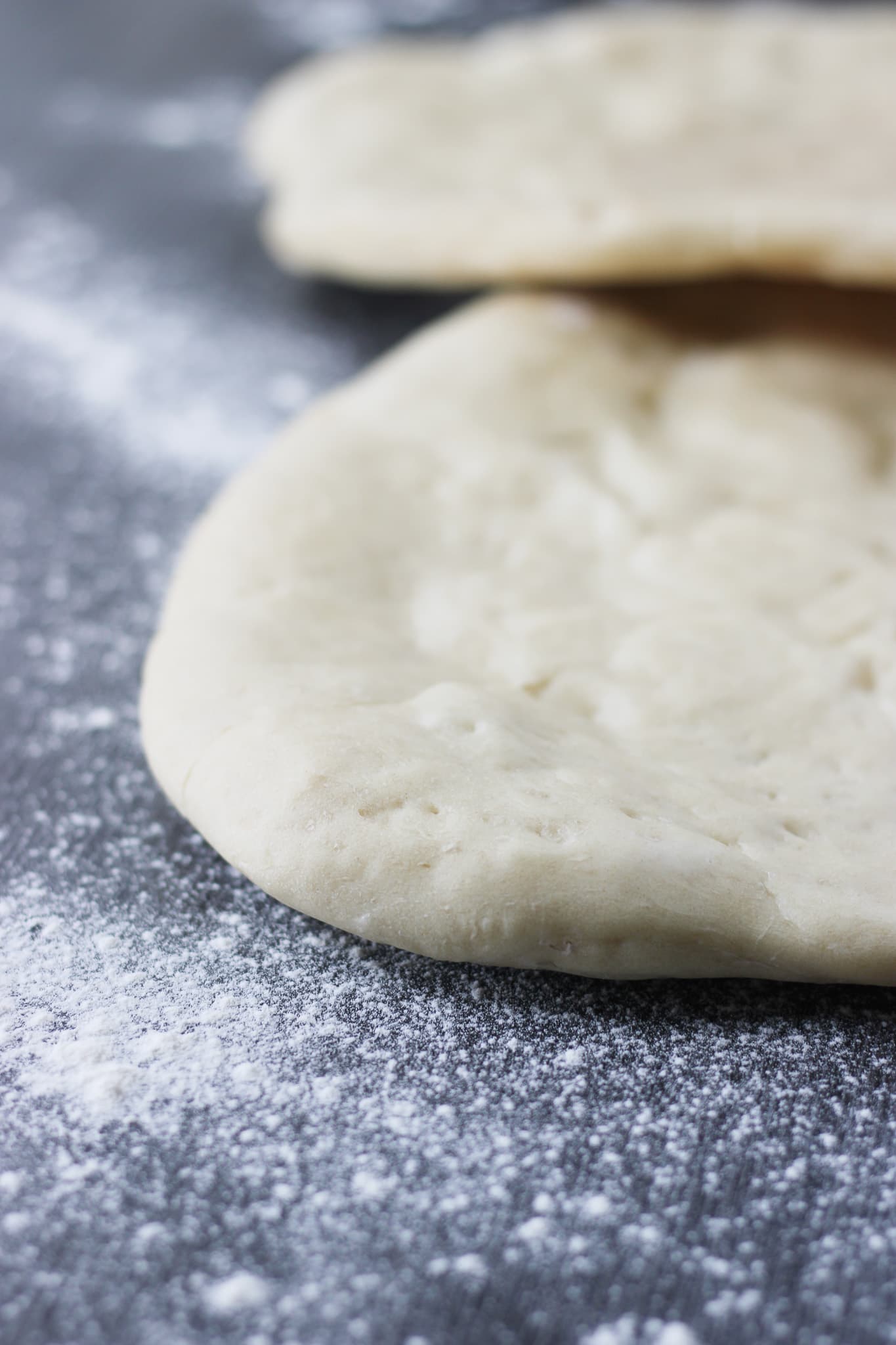
Start by mixing the dough into a shaggy mass. It does not need to look polished at this stage, and in sourdough that is usually a good sign. Then knead for about 8 to 10 minutes, until the dough feels smooth and elastic.
1. Build the dough
Mix starter, warm water, flour, salt, and olive oil until the dough comes together. If it looks rough and uneven at first, keep going. The goal is a dough that can hold its shape and stretch without tearing.
2. Knead until supple
Work the dough for about 8 to 10 minutes. By the end, it should feel smoother and more elastic, which gives the crust structure without making it tough.
3. Let fermentation do the work
Give the dough a bulk rise of roughly 4 to 6 hours, or refrigerate it overnight for deeper flavor and a more flexible schedule. The overnight path is especially helpful when dinner needs to fit around work, errands, or a crowded evening.
4. Shape and top
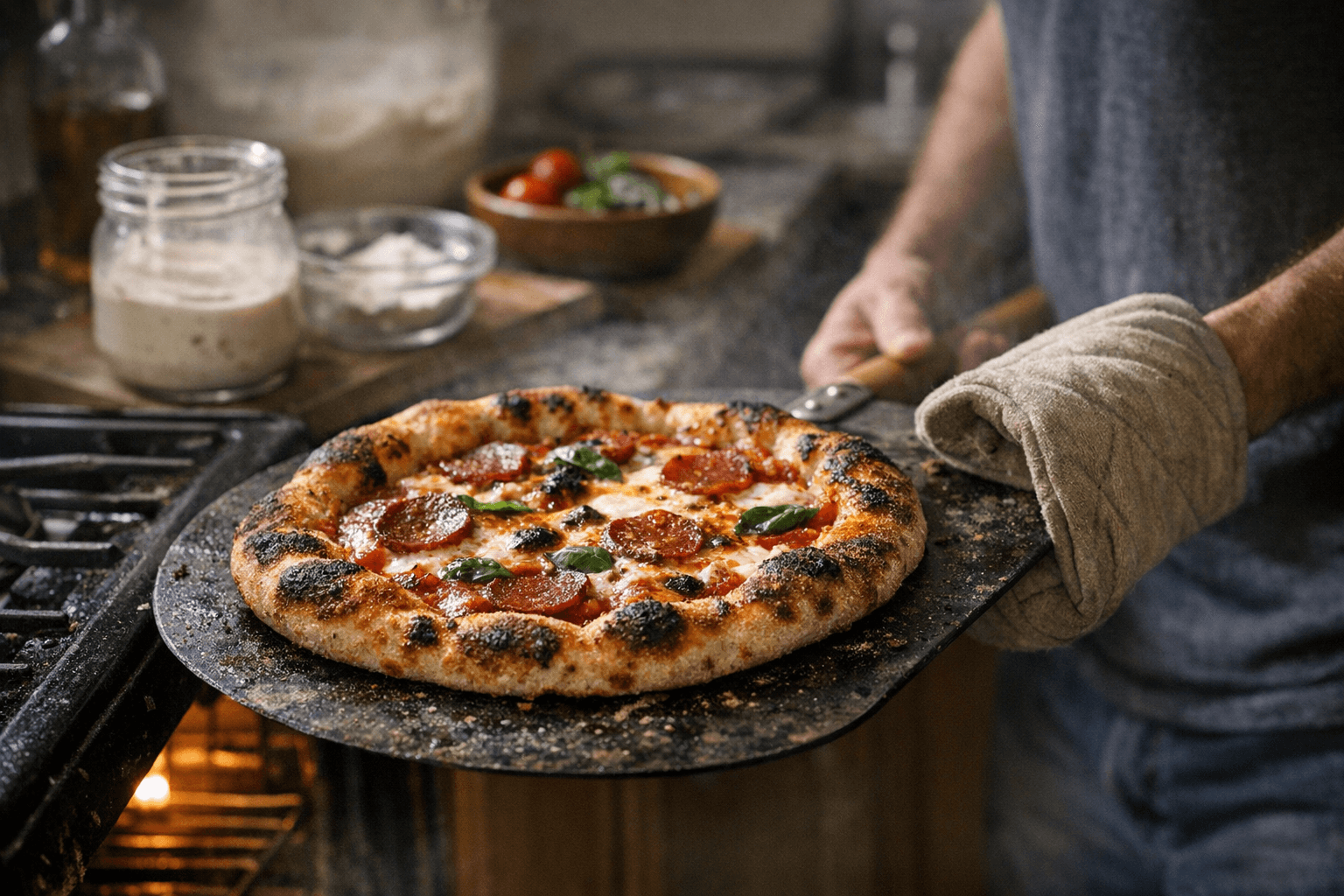
Once the dough has doubled, shape it, top it, and get it into the oven. This is the point where pizza wins over a boule for ease. You are not shaping a lofty loaf or managing scoring; you are spreading dough into a round, which is much easier to fit into a weeknight routine.
5. Bake hot
Bake at 475 to 500 degrees Fahrenheit, ideally on a preheated stone or steel for a blistered, crisp crust. If you want extra crunch, a short pre-bake before the toppings go on can help lock in that texture.
Starter, discard, and the schedule that fits your life
The starter-versus-discard distinction matters because it lets you cook from real life rather than from an ideal schedule. A lively starter gives you a stronger rise and a more assertive fermentation profile, while discard can still produce a satisfying pizza crust with a gentler tang. That means less waiting for the exact right moment and more flexibility on the night you actually want pizza.
King Arthur Baking has leaned into that flexibility in several ways. Its sourdough guide describes sourdough as a “snapshot of American culinary history” and notes that starter is a living ingredient made from flour, liquid, wild yeast, and lactobacilli. Its sourdough pizza recipe by Bryan Ford chills the dough for up to two days to build flavor and fit the baker’s schedule, while an older pizza post says starter straight from the fridge can be used with no feeding necessary. The same post also noted that a more recently fed starter rose faster than an older neglected one, which is useful if you want a little more lift without overplanning.
King Arthur even renamed one recipe in 2025 from “Sourdough Pizza Crust” to “Sourdough Discard Pizza Crust” to reflect that it uses unfed sourdough starter and yeast. That naming shift says a lot about how home bakers now think about starter: not as a single narrow pathway to bread, but as a flexible ingredient that can move through dinner in more than one way.
Why this recipe fits the way people actually cook now
There is also a bigger food-waste story underneath all this. The USDA estimates that U.S. food waste makes up 30% to 40% of the food supply, and it notes that consumers contribute when they buy or cook more than they need and throw out the extras. The USDA and EPA set a goal in 2015 to cut U.S. food waste by 50% by 2030. Turning excess starter into pizza dough is a small, practical way to work in that direction while making dinner.
The timing is right, too. Mintel reported that baking mixes and ingredients dollar sales rose 24.7% in 2020 during the pandemic baking surge, and nearly a third of U.S. adults said in January 2021 that they were baking more often than before the pandemic. In April 2026, WBEZ Chicago reported that some bakers who started sourdough during the pandemic have kept going, and many have moved beyond the basic boule into creative uses that fit the way they like to cook and share food at home.
That is the promise of sourdough pizza crust in one pan-sized package. It gives you the flavor of fermentation, the convenience of a weeknight dough, and a real reason to keep starter on hand. Instead of waiting for a special occasion loaf, you get a repeatable dinner that makes sourdough part of everyday life.
This article was produced by Prism’s automated news system from verified source data, official records, and press releases, then run through automated quality and moderation checks before publishing. The system is built and supervised by the people who set the standards it runs under. Read our full AI policy.
Know something we missed? Have a correction or additional information?
Submit a Tip