How flour choice changes sourdough starter speed, aroma, and consistency
Rye and whole wheat usually wake a starter faster, while white flour can make it steadier once established. Watch the first 5 to 7 days for bubbles, smell, and rise.
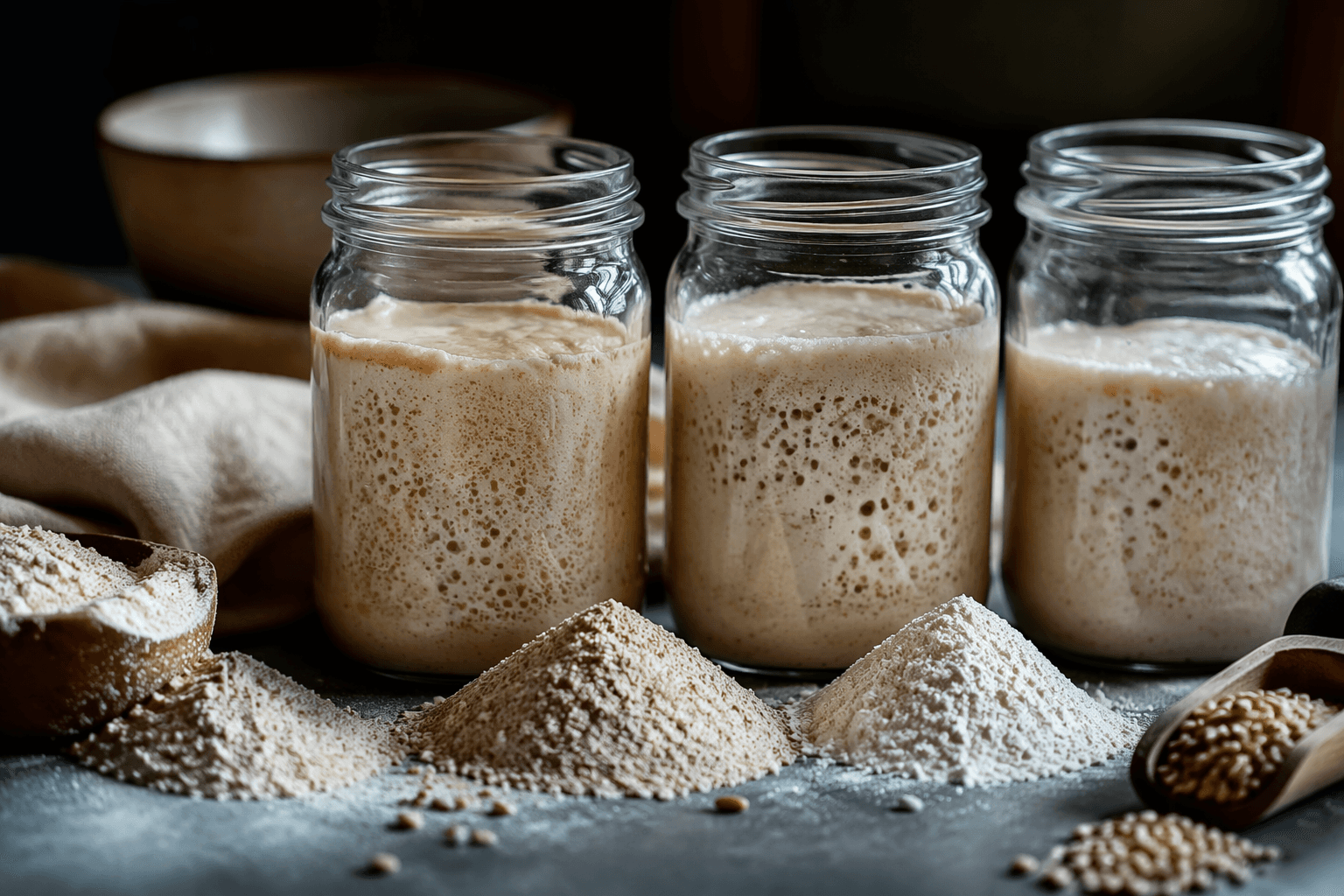
Rye and whole wheat usually wake a new starter faster in the first 5 to 7 days than white all-purpose or bread flour. They tend to produce faster activation and more obvious bubbling, while white all-purpose or bread flour tends to be easier to keep consistent once the culture settles. The trick is not finding one perfect flour, but matching the flour to the stage your starter is in.
What flour is doing inside the jar
A sourdough starter is a living culture of wild yeast and lactic acid bacteria, and flour is not just food for it, it is habitat. That matters because different flours bring different amounts of minerals, bran, germ, enzymes, and fermentable sugars into the mix, and those ingredients change how quickly the culture wakes up and how it smells while it is doing it. Colorado State University Extension traces sourdough’s deep roots to early human societies; it remains a staple around the world.
That microbiome view explains why two starters fed on different flours can behave so differently even when they sit in the same kitchen. A peer-reviewed sourdough microbiome review treats the culture as an ecosystem. Discussion on The Fresh Loaf also turns on the fact that yeast and lactic acid bacteria do not share the same lag phase. In plain terms, one part of the starter may appear active before the other has fully caught up, which is why flour choice can change the look, smell, and rise pattern of the first few days.
What to expect in the first 5 to 7 days
Rye usually gives the fastest visual feedback. It tends to be rich in nutrients and enzymatic activity, which can make an early starter look lively sooner, and that is why rye-fed starters often develop a sharper, fruitier aroma. Weekend Bakery calls its rye starter a “trusty, fruity rye sourdough starter culture.”
Whole wheat is the next strong mover. Because it retains more of the grain than white flour does, it often encourages activity and can create more visible bubbling, which is why King Arthur Baking has advised, “Sluggish starter? Add a little whole grain flour.” In the first 5 to 7 days, that can mean a starter that rises a little earlier, smells fuller, and shows a more textured surface than a starter fed only white flour.
White flour, including the all-purpose and bread flour most bakers keep on hand, often behaves differently. It may look slower at the beginning, but once the culture is established it can be easier to keep predictable and clean to maintain. A white-flour starter usually shows smaller, tighter bubbles at first, a milder aroma, and a smoother, paste-like texture, then gradually settles into a steadier rise rhythm as the microbes adapt.
How the four flours differ in practice
All-purpose flour is usually the most approachable place to start if you want one bag that can do a lot of jobs, but it is not the fastest starter fuel. In a starter jar, it acts more like a steady baseline than a turbo button, which makes it useful if you want a culture that behaves in a familiar, repeatable way while you build routine.
Bread flour sits in the same white-flour lane for starter care. The big practical difference is not that it turns a starter into a rocket, but that it can help you keep the culture aligned with the flour you already bake with later, especially if your routine loaf formula leans that way. Once the starter is mature, many bakers feed it the flour that matches their usual bread, because the jar then becomes part of the same system as the dough.
Whole wheat is the most forgiving choice when your starter needs encouragement. Since it keeps more of the grain intact, it gives the microbes more to work with, and that can show up as more bubbling, more aroma, and a more obvious rise pattern in the first week. If a starter looks sleepy, whole grain feed is one of the most reliable ways to get it moving again.
Rye is the most dramatic early signal. The peer-reviewed work on wholemeal rye starter cultures connects rye fermentation with improved functionality, nutritional value, taste, appearance, and safety for rye bread, which helps explain why rye behaves like more than a booster.
The signs that your flour choice is helping
The cleanest sign of progress is not just bubbles, but the pattern of those bubbles. A flour that is helping will usually give you a starter that expands more consistently after feeding, smells less raw and more tangy or fruity, and develops a lighter texture instead of staying dense and gluey. With rye and whole wheat, that often appears sooner, while white flour may need a little more patience before the rise becomes obvious.
If the flour is holding the culture back, the starter tends to stay flat after feeding, smell dull or harsh for too long, or separate into a wet layer with little rise in the mass below. Temperature can be the hidden culprit here. King Arthur Baking reminded bakers in January 2024 that starter activity depends on temperature. If the jar is in a cool spot, even the best flour will look sluggish.
Hydration matters too. King Arthur Baking’s dough-hydration guidance covers the same point: a starter that feels thick, loose, or hard to judge may be reacting to water balance as much as flour type. If the same flour looks different from one feeding to the next, temperature and hydration are usually the first two variables worth checking.
Which flour fits which goal
If your priority is faster activation, rye is the strongest first buy, with whole wheat close behind. If your priority is a starter that is easier to keep on a routine and less fussy once established, white all-purpose or bread flour is usually the calmer long-term choice. If your priority is a more forgiving starter for the first week, a blend with whole wheat or rye gives you a better chance of seeing movement early, then you can shift toward your regular white flour once the culture is established.
This article was produced by Prism’s automated news system from verified source data, official records, and press releases, then run through automated quality and moderation checks before publishing. The system is built and supervised by the people who set the standards it runs under. Read our full AI policy.
Did this article answer your question?