How to store sourdough so it stays fresh for days
Cool it fully, then choose storage by timing: breathable for today, a little more protection for tomorrow, and the freezer for anything longer.
Cool first, or you trap the problem inside
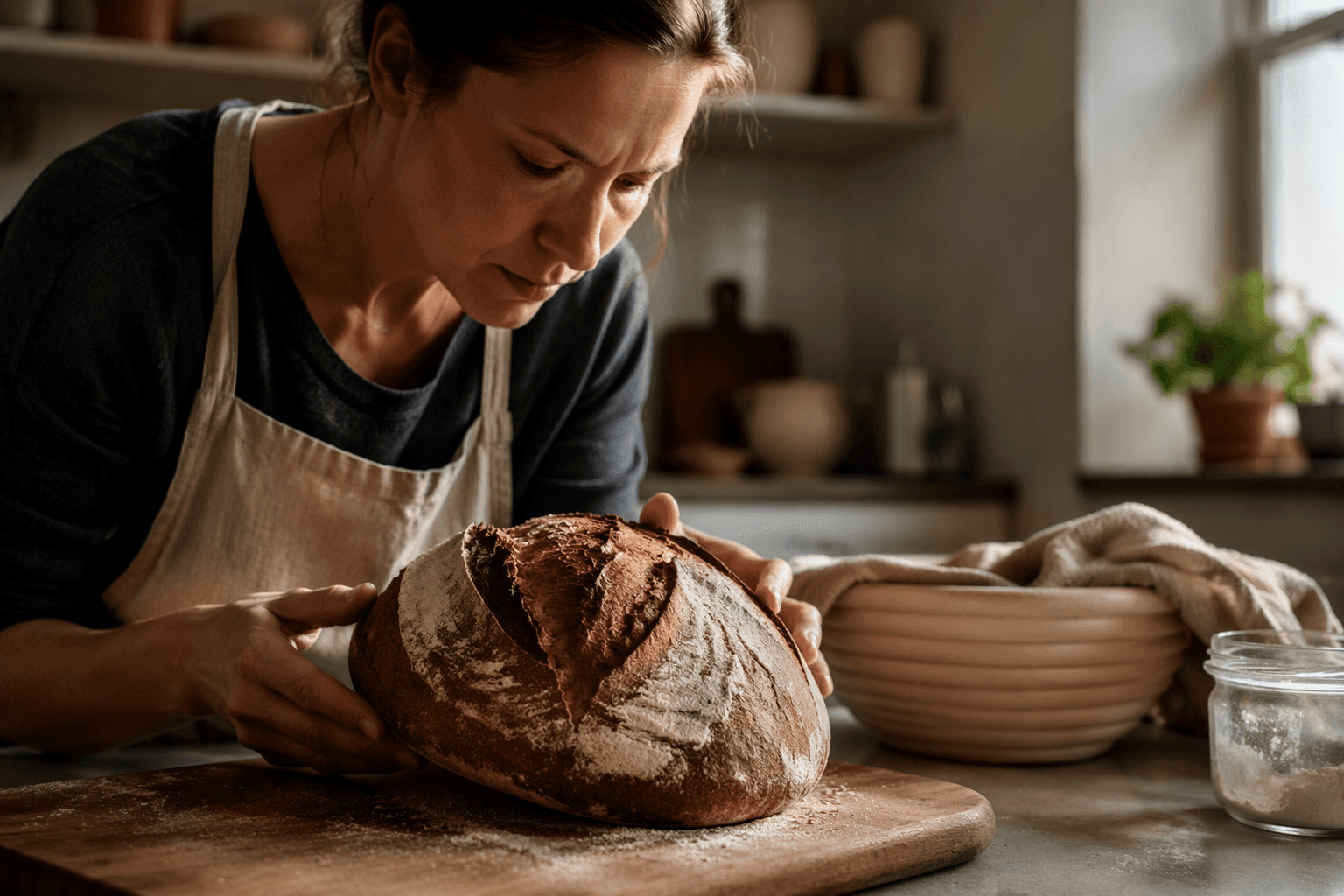
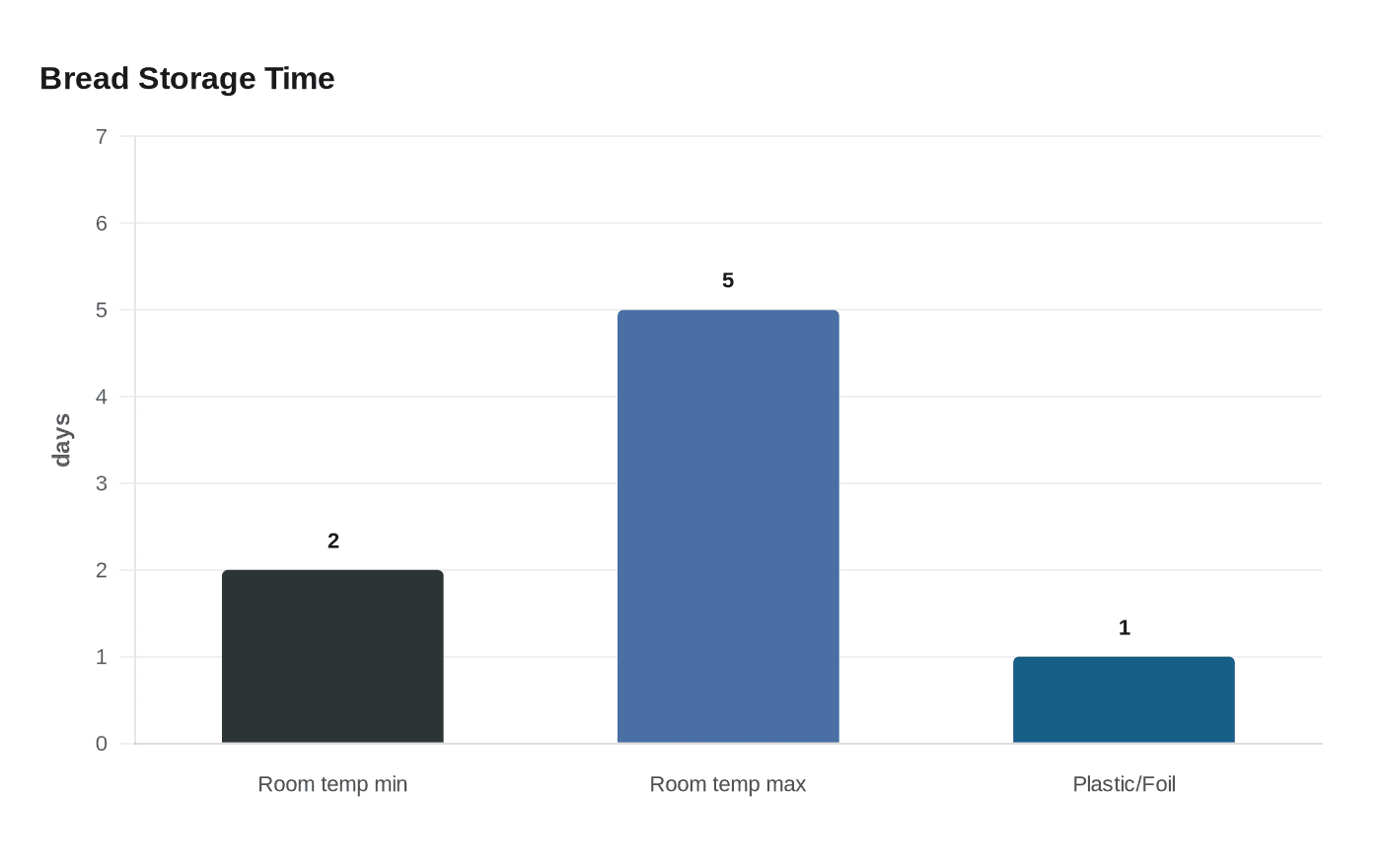
A great sourdough loaf does not fail because of the bake alone. It usually loses its edge when heat, steam, and storage all work against the crust and crumb at the same time. King Arthur Baking says sourdough generally stays fresh at room temperature longer than standard breads, often for two to five days when handled well, but the first move matters most: let the loaf cool completely before you wrap, slice, or freeze it.
That cooling step is not busywork. Jamie Saechao, founder of Ginger Homemaking, warns that trapping heat and steam inside a loaf creates sweat, which can leave bread damp and more likely to mold. King Arthur Baking gives the same advice in plainer language: hot bread should go on a cooling rack, uncovered, so air can move all the way around it until it is fully cool. If you rush this part, you are not preserving freshness, you are sealing in moisture that softens the crust and shortens the loaf’s useful life.
If you are eating it today, protect the crust without suffocating it
For a loaf that will be finished the same day or by the next morning, room temperature storage is the sweet spot. Sourdough’s natural acidity helps it resist mold better than many supermarket loaves, which is one reason it usually outlasts ordinary bread on the counter. The challenge is not mold so much as drying, so the goal is to slow air exposure without turning the crust leathery.
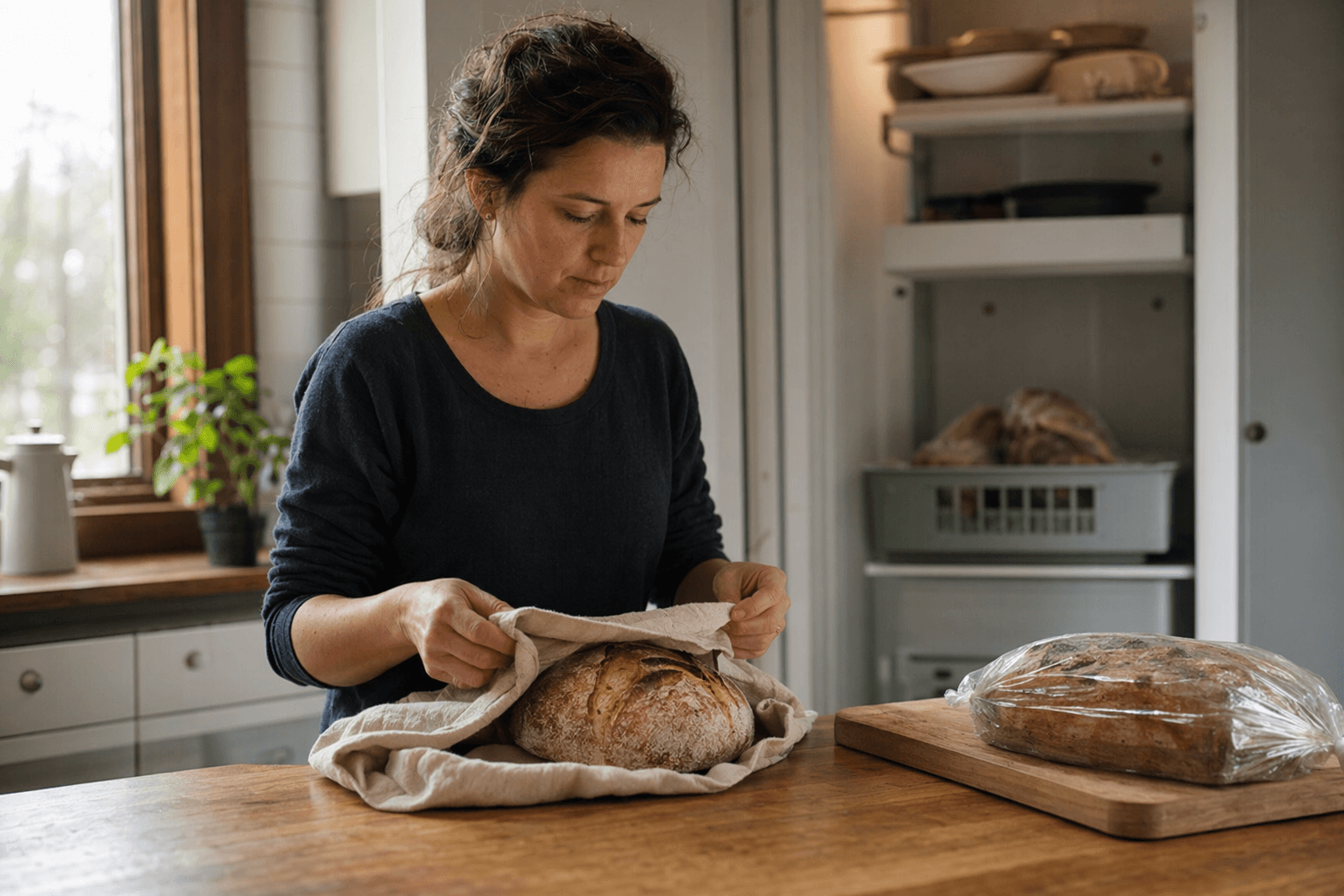
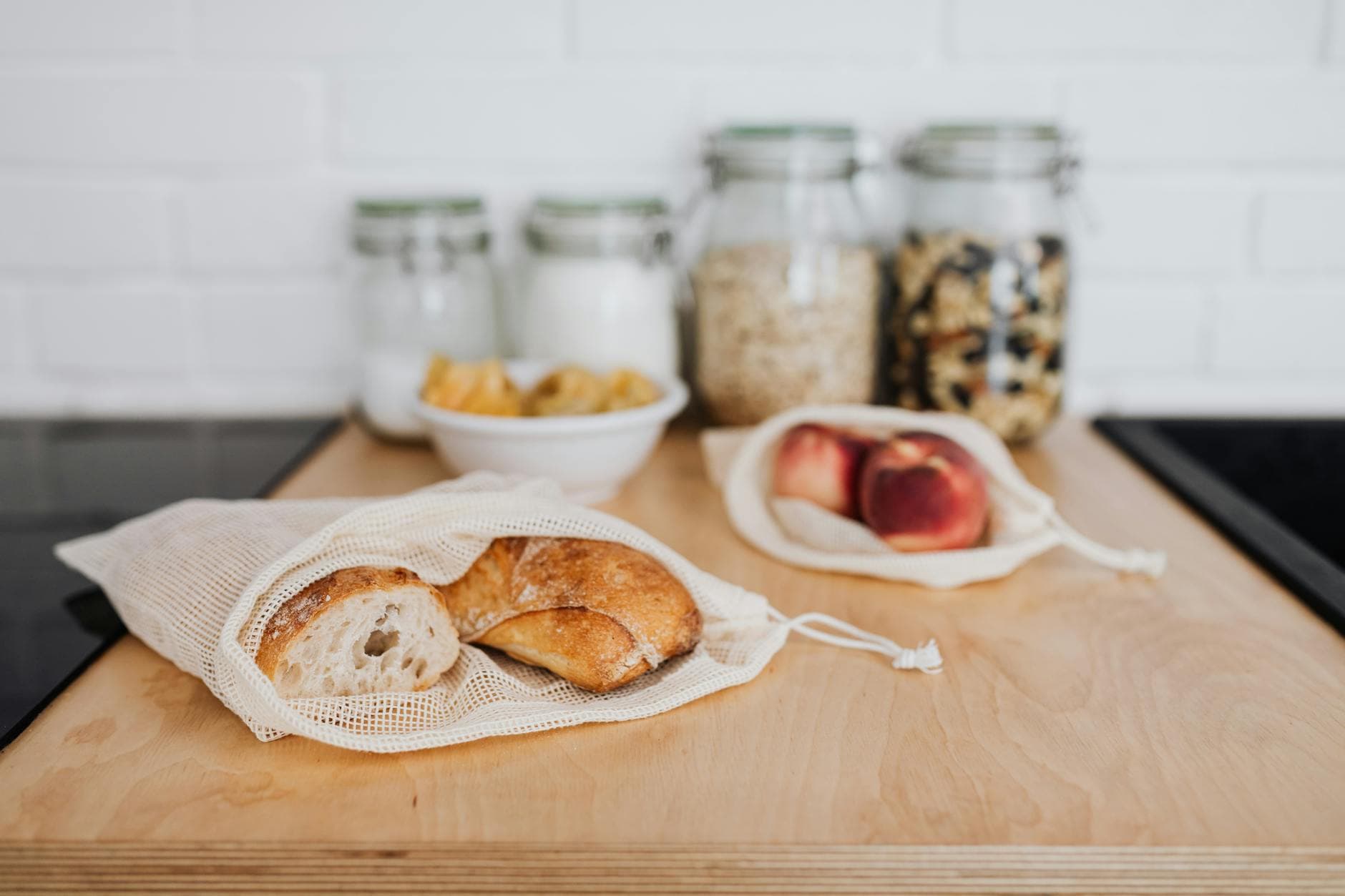
That is where breathable storage earns its place. Paper or linen bags let some air circulate, which helps the crust stay closer to its baked state. Some bakers also tuck a cooled loaf into a Dutch oven because it protects the bread without compressing it, which is useful if you want the loaf covered but not crushed. The tradeoff is simple: more airflow means a better crust, but also a greater chance the interior dries a little faster.
Airtight storage works in the opposite direction. Plastic or foil will preserve softness for about a day at room temperature, but that softness comes at the expense of crust. Cloth storage does the reverse, helping airflow but tending to harden the crust and dry the interior. If your household loves a crackly exterior, breathable storage wins. If you care more about keeping slices supple for sandwiches, the sealed approach has the edge for a short stretch.
Once it is sliced, the cut side becomes the weak point
The moment you cut into sourdough, the open crumb starts losing moisture faster than the crust does. That does not mean you have ruined the loaf, but it does mean the exposed face deserves the most protection. If you are leaving the bread out for a few hours, keep the cut side sheltered as much as possible, because that is where staling shows up first.
This is also where the tradeoffs become more obvious. A bag or container can shield the cut side, but every extra layer that reduces airflow also softens the crust. For a loaf you expect to finish quickly, that is usually a good deal. For a loaf you want to keep tasting like it just came off the bench, the less aggressive option, such as a paper or linen bag, is usually the better compromise.
Skip the refrigerator, because it works against freshness
The refrigerator looks convenient, but it is the wrong home for sourdough. King Arthur Baking says refrigeration accelerates bread staling, and food scientists describe staling as starch retrogradation, a process that continues even when the loaf is sealed. In practice, that means cold storage can make bread feel dry and rubbery faster than room-temperature storage does.
Yes, refrigeration may slow mold a little, but that does not solve the bigger problem. A loaf that is safe but unpleasant to eat is still a failed loaf in a sourdough kitchen. If the bread will not be eaten soon, freezing is the better move, because it preserves quality far more effectively than the fridge ever will.
For later, freeze it before it fades
Freezing is the right answer when you know the loaf will outlast a few days. King Arthur Baking recommends cooling bread completely before freezing it, then wrapping it well so air cannot dry it out. One straightforward method is to place the whole loaf in a plastic bag with the air squeezed out; another is to slice it first and separate the pieces with parchment so the slices do not stick together.
The timeline here is generous. King Arthur Baking says tightly wrapped bread can be frozen for several months, and sourdough stored that way can last up to three months with good quality. FoodSafety.gov adds an important distinction: freezer guidance is about quality, not a hard safety deadline, and food kept continuously frozen at 0°F, or -18°C, can be kept indefinitely from a safety standpoint. The loaf may not taste perfect forever, but the freezer buys you time without the drying that comes from cold storage.
Why sourdough behaves this way in the first place
Sourdough has a built-in advantage over many loaves because of its natural acidity, which helps explain why it does not mold as quickly as standard bread. That same character does not stop staling, though, and it does not protect the loaf from bad storage. The best sourdough routine is still a simple one: cool it fully, store it according to when you plan to eat it, and keep the fridge out of the equation.
That care fits the bread itself. University of Illinois Extension material notes that sourdough breadmaking dates back thousands of years, long before industrial baker’s yeast became common. The process has always asked for patience, from starter maintenance to shaping to baking. Storage is just the final stage of the same discipline, and it is often the stage that decides whether a loaf still tastes lively on day two or turns disappointing before you get there.
This article was produced by Prism’s automated news system from verified source data, official records, and press releases, then run through automated quality and moderation checks before publishing. The system is built and supervised by the people who set the standards it runs under. Read our full AI policy.
Did this article answer your question?