How to thaw frozen sourdough without losing crust or crumb
Frozen sourdough can come back with a crackly crust and tender crumb if you thaw it by loaf size, then finish with heat only when needed.
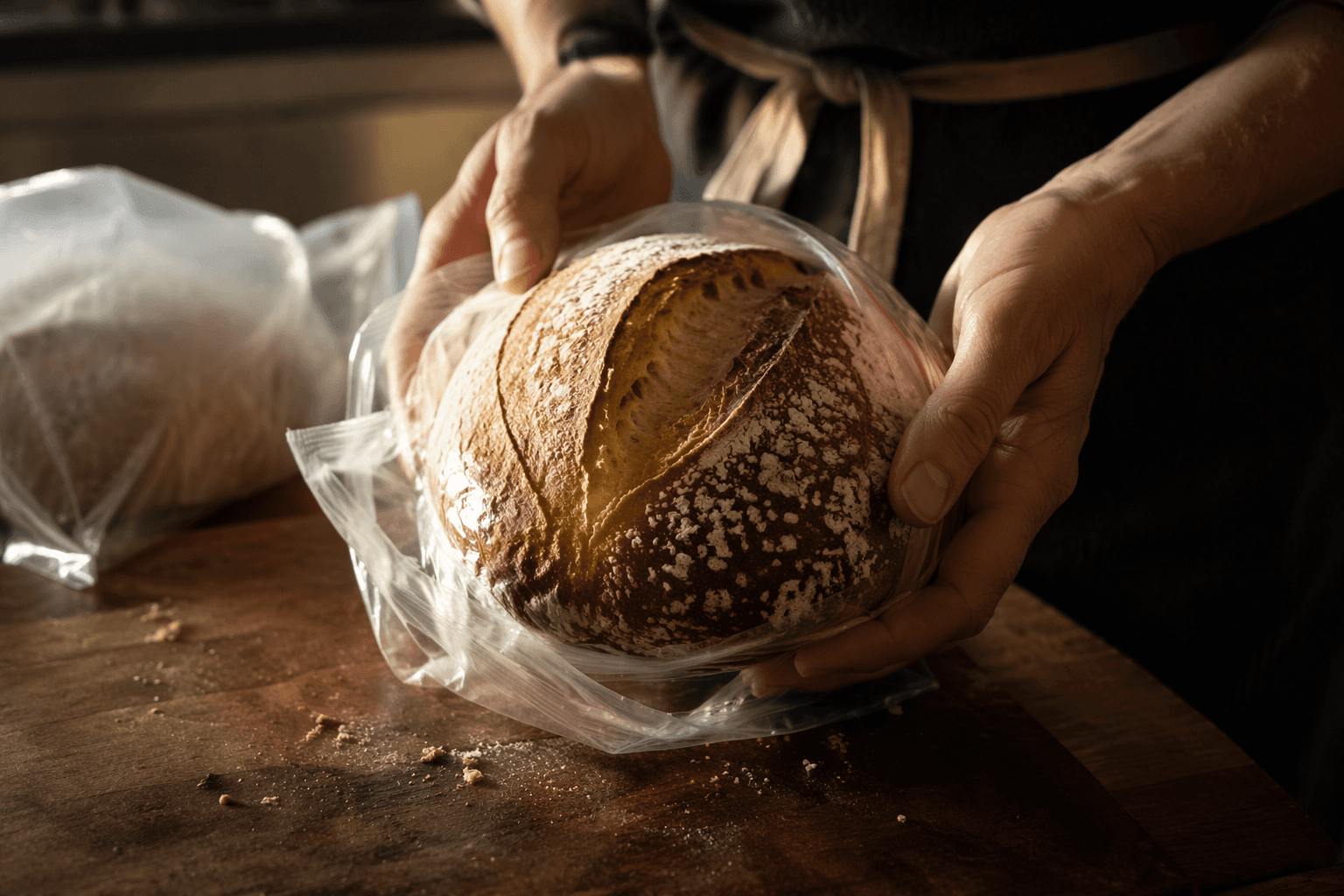
Frozen sourdough does not have to taste like a compromise. If you thaw it with a little patience and keep moisture under control, a boule or batard can come back close to fresh, with the crumb intact and the crust still worth eating.
Start with the freezer, not the counter
The best place to save sourdough is the freezer. King Arthur Baking treats it as the best long-term storage option because it preserves bread at its prime, which matters whether you are holding a whole loaf or stashing a few extra slices. FoodSafety.gov adds an important quality marker: bread and other frozen foods kept continuously at 0°F, or -18°C, can be kept indefinitely for quality purposes, even though the texture will slowly drift over time.
That is the key distinction here. Freezing is about preservation, not resurrection. If the loaf was good when it went in, the job of thawing is to protect that crust, protect that crumb, and avoid adding moisture where it does not belong.
Whole loaves need slow, even thawing
For a whole loaf, room-temperature thawing is the most reliable path. A dense sourdough boule or batard thaws from the outside in, so size matters more than people think. A small loaf of around 500 grams usually needs 2 to 3 hours, a medium loaf 3 to 4 hours, and a large loaf 4 to 6 hours.
Do not judge it by looks alone. The better test is tactile: gently squeeze the bottom of the loaf. When it yields a little and the center no longer feels icy, it is ready. If it still feels cold in the middle, give it more time. Cutting early is the classic mistake, because the outside may seem fine while the center is still frozen and the crumb turns damp once the residual cold works its way out.
A few basics make this method work better:
- Leave the loaf at room temperature, not in a bag that traps wet air.
- Set it where air can move around all sides.
- Be patient with larger loaves, because the thermal mass is doing exactly what physics says it will do.
This is also where bread-specific advice lines up with broader food-safety guidance. USDA and CDC guidance warns against thawing food on the counter for the whole day, but bread is different from raw meat or leftovers. For sourdough, the practical goal is controlled room-temperature thawing, not a long, unattended sit.
Slices are the easy win
If the bread is already sliced, thawing gets much faster and much more forgiving. Slices usually come back in about 30 to 60 minutes, which makes them ideal for toast, sandwiches, or a quick breakfast loaf. In practice, sliced sourdough is the easiest way to freeze in bulk because you can take only what you need and leave the rest sealed away.
King Arthur Baking goes one step further here: slices can go straight from the freezer to the toaster. That is the cleanest option when the goal is heat, crunch, and speed rather than a soft sandwich crumb. If you want a little more lift or aroma, counter-thaw the slice first, then toast it. But for everyday use, straight-to-toaster convenience is hard to beat.
Keep condensation off the crust
The biggest enemy of thawed sourdough is trapped moisture. If the exterior sweats while the loaf is warming up, the crust softens fast and the whole loaf can feel limp or soggy. That is why airtight wrapping is a tradeoff: it protects against freezer air, but once the bread is out, it can trap moisture as the loaf thaws.
The fix is simple and practical. Remove the bread from plastic freezer packaging immediately, then set it on a wire rack so air can move underneath. Skip flat plates and countertops that trap steam under the loaf. Keep it away from hot spots too, because heat can make the bread sweat before the center has finished thawing.
This is one of those sourdough problems that looks mysterious and is actually basic moisture management. If the crust goes soft, it is usually because the loaf was sealed too tightly during thawing. If the crumb feels gummy, it is often because the bread was cut or heated before the center finished coming back to temperature.
Use the oven when you want the crust back
If the loaf has thawed but the crust feels dull, the oven is the best revival tool. King Arthur Baking recommends refreshing crusty sourdough in a 350°F oven for a few minutes after room-temperature thawing. That short blast of heat restores warmth and brings back some of the crackle that makes sourdough worth baking in the first place.
The details matter. Preheat fully, put the loaf on the middle rack, and leave enough space for air to circulate. If the crust starts to darken too quickly, use foil to keep it from over-browning. This is not a long re-bake, and it should not be treated like one. The goal is surface refreshment, not drying the loaf out.
For me, this is the cleanest rescue move when I have frozen a country loaf for dinner. Thaw it patiently, then give it a brief oven finish right before serving. That sequence gets you much closer to the bread you wanted in the first place.
What sourdough’s chemistry buys you
Sourdough has one quiet advantage in the freezer and on the counter: its pH helps keep it mold-free days longer than non-sourdough bread. That does not make it immune to staling, and it does not make sloppy thawing harmless, but it does explain why sourdough is such a good candidate for batch baking and freezing.
That extra mold resistance is useful when you bake big. If you know a loaf will not disappear in two meals, freezing it at peak freshness is smarter than letting it sit around until the crust goes stale and the crumb dries out. And if the bread is already headed for storage, the freezer is still better than trying to stretch freshness with the wrong wrap. Airtight wrapping can soften the crust within hours, while breathable storage can dry bread out. Frozen storage is the middle path that actually protects both texture and flavor.
The practical rescue plan
The real trick is matching the thaw to the loaf. Whole bread needs room-temperature patience. Slices need speed and can often go straight to the toaster. If you want that fresh-baked finish, a short pass in a 350°F oven is the last step, not the first.
That is the whole game: preserve the loaf in the freezer, thaw it with airflow, and keep condensation from wrecking the crust. Do that, and the bread that came out of the freezer will still taste like sourdough, not like a compromise.
This article was produced by Prism’s automated news system from verified source data, official records, and press releases, then run through automated quality and moderation checks before publishing. The system is built and supervised by the people who set the standards it runs under. Read our full AI policy.
Did this article answer your question?