Kenyans Discover Sourdough, Drawn by Health Benefits and Artisanal Flavor
Kenyan home bakers are feeding sourdough starters and posting their loaves on social media, drawn by the slow fermentation process that makes the bread easier to digest.
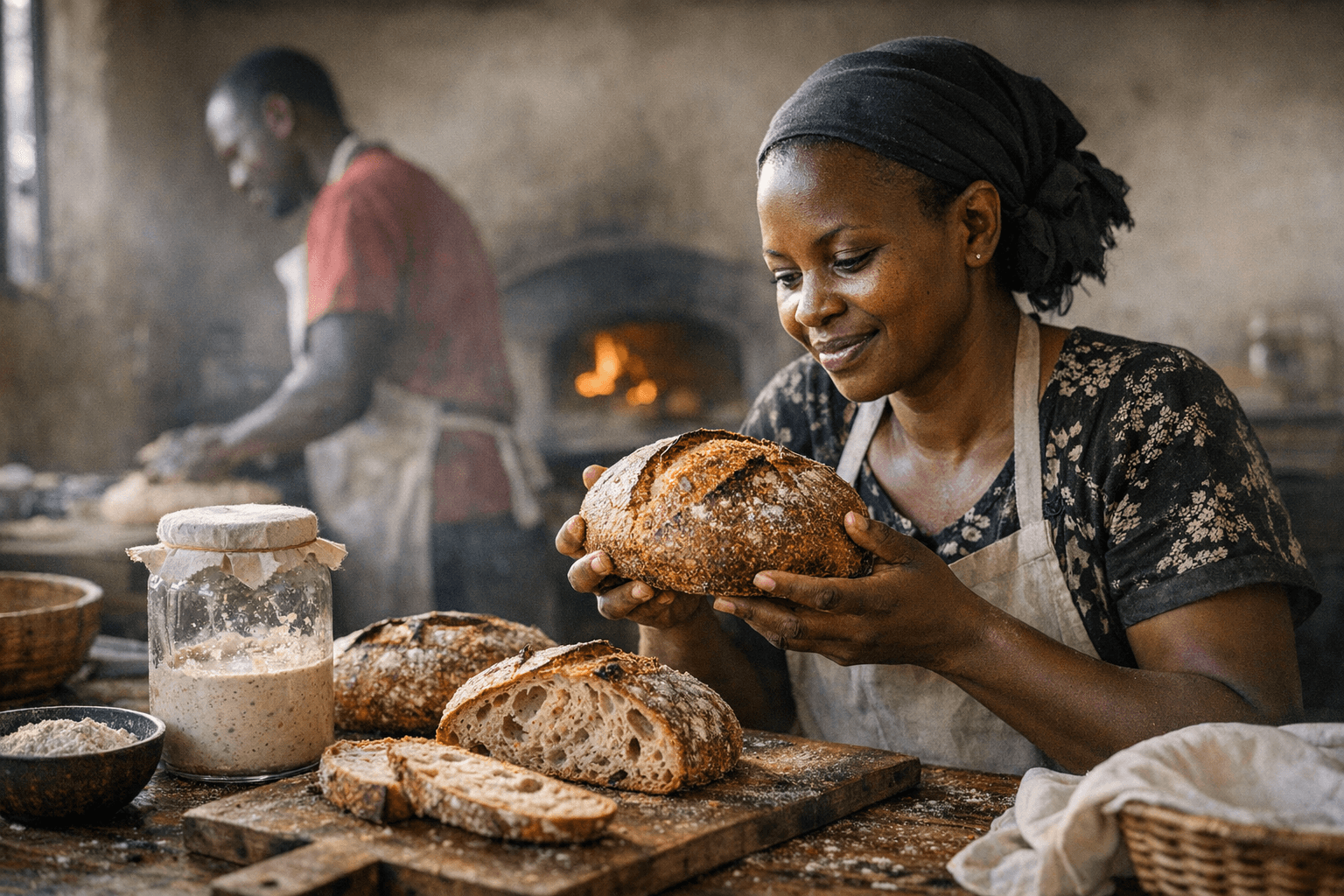
Sourdough, an ancient method of naturally leavened bread, has been quietly building a following in Kenya, with home bakers and artisan bakeries alike turning to wild fermentation for reasons that go well beyond novelty.
The appeal breaks down into four distinct pulls. The slow fermentation process makes sourdough easier to digest than commercial loaves, which has drawn in health-conscious Kenyans looking for a cleaner bread option. The flavour itself is a selling point: that characteristic tangy taste and chewy crust offer something genuinely different from the soft, uniform sliced bread that dominates supermarket shelves. Then there is the craft angle. Sourdough baking is being treated as a skill worth showing off, with home bakers and bakeries posting their scored boules and open crumb shots across social media. Finally, the bread's versatility makes it practical. It fits vegetarian and vegan diets and holds up across every meal of the day.
On the eating side, the bread has found its way into Kenyan kitchens in straightforward, familiar forms. Breakfast means toast loaded with avocado, peanut butter, or a fried egg. For snacks, open-faced sandwiches with cheese, tomatoes, or smoked fish work well. It goes alongside soups, stews, and hearty salads at lunch or dinner. For something sweet, a thick spread of honey, jam, or Nutella does the job. Leftover loaves are not wasted either: stale sourdough converts cleanly into pizza bases, croutons, or breadcrumbs.
The home-baking angle is particularly significant here. The recipe circulating in this context is specifically labeled a "simple sourdough bread recipe (no oven option included)," which lowers the barrier to entry considerably. Starting with one cup of active sourdough starter, the recipe is designed to work within a typical Kenyan home kitchen setup, where a conventional oven is not always available. The no-oven method, whether stovetop or a Dutch oven alternative, is exactly the kind of adaptation that makes this trend sustainable beyond the urban artisan-bakery crowd.
What is driving the social media visibility is the same thing that drove sourdough's explosion in Western markets a few years back: the starter itself. Once you are feeding a culture and tracking its activity, you are invested. That emotional connection to the process, combined with the photogenic nature of a well-baked loaf, translates naturally to sharing. Kenyan bakers are now part of that same global conversation, adapting the technique to local ingredients, local kitchens, and local flavour preferences.
This article was produced by Prism’s automated news system from verified source data, official records, and press releases, then run through automated quality and moderation checks before publishing. The system is built and supervised by the people who set the standards it runs under. Read our full AI policy.
Did this article answer your question?