New Recipe Combines Key Techniques for a Lighter, Bakery-Style Sourdough Crumb
Olive oil, precise hydration, and a two-phase Dutch oven bake are the secrets behind a new sourdough recipe built to give home bakers a lighter, bakery-style crumb.
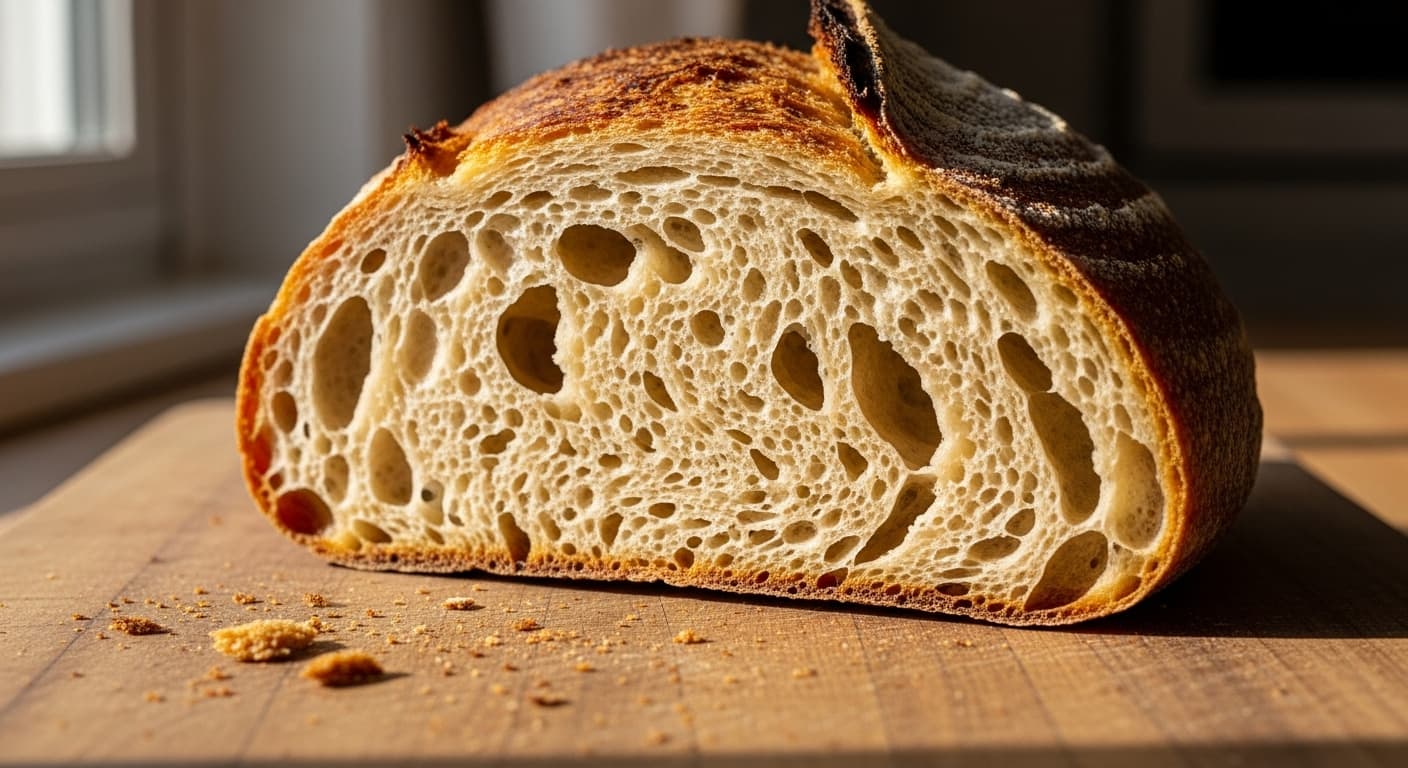
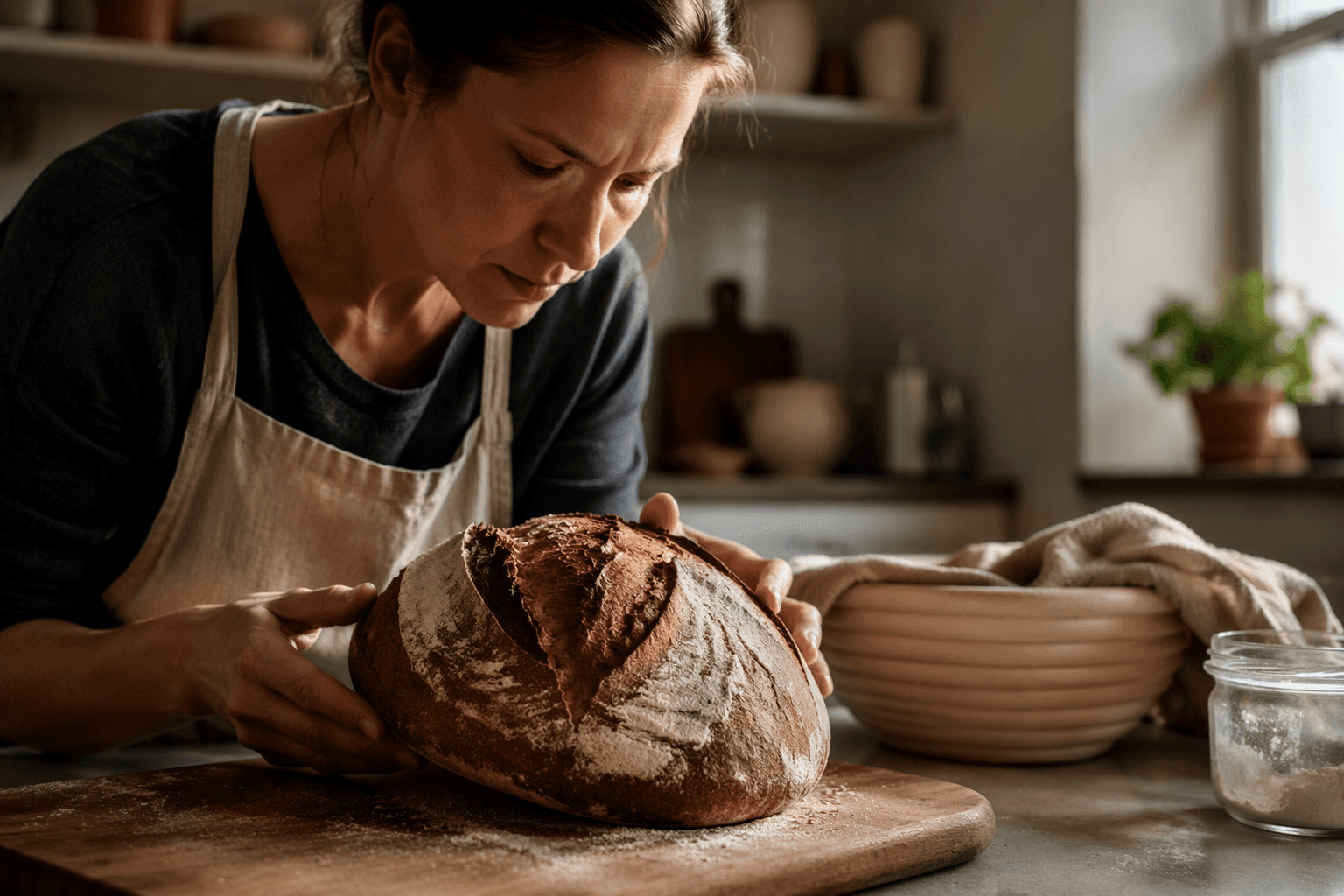
Getting a genuinely light, open crumb out of a home oven has always been sourdough's great frustration. Hydration charts, proofing schedules, baker's percentages — the rabbit hole is deep, and most bakers fall into it hard. A new recipe posted by the Food Blog Alliance, titled "Light (Almost Airy) Sourdough Bread," cuts through that noise by doing something deceptively simple: pulling the best practical techniques from across the home-baking world and assembling them into a single, coherent workflow designed to approximate a bakery-style, less-dense crumb without requiring professional equipment or a cleared schedule.
The Formula: Five Ingredients, One Signature Move
The recipe, as presented by TheCleverCarrot, keeps the ingredient list tight: 150g of bubbly, active sourdough starter; 250g of warm water; 500g of bread flour (explicitly not all-purpose); 10g of fine sea salt; and 25g of olive oil. That last ingredient is the distinguishing choice. TheCleverCarrot describes the olive oil as a "signature addition — known for creating a light, plush crumb and a crisp golden crust." Fat in bread dough coats gluten strands, tenderizes the crumb, and contributes to a more supple, even texture — which is precisely the direction this recipe is aiming for.
A note on flour: the recipe calls specifically for bread flour, and the emphasis on that choice is not casual. Bread flour's higher protein content builds stronger gluten networks, which hold the gas produced during fermentation and give the loaf its structure. If bread flour is unavailable, AmyBakesBread offers a workable substitution — all-purpose flour can stand in, but you should decrease your water by 10 to 20 grams depending on the AP flour's protein content. The hydration adjustment matters; skipping it risks a slack, unworkable dough.
AmyBakesBread, which presents a complementary version of this recipe concept, lists only four core ingredients, which creates a minor discrepancy with TheCleverCarrot's five-ingredient lineup. The difference likely comes down to whether olive oil is counted as an optional addition or a foundational component. Both sources, however, agree on the fundamentals: starter, water, flour, and salt are the backbone.
Starter Management and Hydration: Where the Crumb is Really Made
The Food Blog Alliance's framing of this recipe explicitly emphasizes starter management and mixing/hydration as the two pillars of technique. That's not boilerplate — those two variables are precisely where most home bakers lose control of their crumb.
Your starter needs to be genuinely active before it goes into the dough. TheCleverCarrot specifies "bubbly, active sourdough starter," which means it should be at or near peak rise when you mix. An under-ripe or sluggish starter won't generate enough gas during fermentation, and no amount of careful shaping will recover a loaf that never properly proofed.
Hydration, at 250g of water to 500g of bread flour, puts this dough at around 50% hydration when calculated against flour alone, or somewhat higher when accounting for the moisture in the starter. This is a relatively moderate hydration level — workable and forgiving, especially for bakers who aren't doing intensive stretch-and-fold sessions throughout the bulk fermentation.
The Workflow: Built for Real Life
One of the most practical aspects of this recipe is its timeline flexibility. AmyBakesBread describes the workflow plainly: "You can mix the dough in the morning and shape and bake it when you get home in the evening." The dough is mixed in minutes, left to rise throughout the day or overnight, and once it has doubled in size, it is shaped, given a short final proof, and baked. No stretch-and-folds, no hourly checks, no standing over the counter at 2 a.m.
This does come with a trade-off that AmyBakesBread is refreshingly honest about: "It is not a loaf that gets a lot of light and airy bubbles. It has a closed crumb and is not meant for intricate scoring." If you want the dramatic, wide-open honeycomb crumb of a high-hydration naturally leavened loaf, this is not that recipe. What it is, per AmyBakesBread, is "tasty and delicious and a good option if you don't have time for 'stretch and folds' and watching your loaf during the day." That's a meaningful distinction worth knowing before you start.
TheCleverCarrot, by contrast, frames the outcome in more aspirational terms, describing results that are "light, plush and airy." The difference in crumb descriptions between the two sources likely reflects differences in technique, hydration handling, starter strength, and shaping approach — none of which are resolved in the available recipe texts, but both descriptions are offered in good faith and are worth holding in mind as you calibrate your own expectations.
Scoring: Quick, Confident, and With Panache
Right before the dough goes into the oven, it needs to be scored. TheCleverCarrot's Step 6 instructs a shallow slash down the center of the dough, about 2 to 3 inches long, made with a small serrated knife, sharp knife, or bread lame. The slash serves a structural purpose: it lets steam escape and allows the bread to "bloom" or expand in the oven rather than bursting unpredictably at a weak point in the crust.
Scoring makes many bakers anxious, and TheCleverCarrot doesn't pretend otherwise: "Admittedly, this step is a bit nerve racking, so I don't want to gloss over it. Be quick and confident." The instruction from their sourdough mentor cuts to the core of it: "Slash with panache!" Hesitation produces a dragged, torn cut that doesn't open cleanly. One committed stroke is the move.
AmyBakesBread reinforces the keep-it-simple approach: this dough is not meant for intricate scoring patterns. A few clean slashes are the right call. If decorative scoring is your goal, that's a project for a different, more advanced recipe with a dough structure built to hold complex cuts.
Baking: Two Methods, One Target Temperature
Both sources use a covered vessel to trap steam in the early bake — mimicking the deck oven environment of a professional bakery — but their specific instructions differ enough to be worth understanding separately.
TheCleverCarrot's method: bake on the center rack with the lid on for 20 minutes, then remove the lid and continue baking uncovered for 40 minutes, or until the crust is deep golden brown. The internal temperature target is 205 to 210°F (96 to 98°C). Note that TheCleverCarrot's recipe excerpt does not specify an oven preheat temperature, which is a gap worth confirming if you're following their method precisely.
AmyBakesBread's Dutch oven method works on a slightly different schedule and includes an explicit temperature:
1. Remove the Dutch oven from the oven carefully. As AmyBakesBread emphasizes in capital letters: "This is a VERY HOT dutch oven. Keep those oven mitts on and be very careful not to burn yourself."
2. Remove the lid, place the dough on parchment paper into the Dutch oven, and replace the lid.
3. Immediately decrease the oven temperature to 450°F and bake covered for 25 minutes.
4. Remove the lid and continue baking uncovered for 20 more minutes.
5. Pull the loaf when the internal temperature reaches 205°F.
The total bake time differs between the two methods: TheCleverCarrot's approach runs 60 minutes; AmyBakesBread's runs 45 minutes at 450°F. Both converge on the same internal temperature target of approximately 205°F as the reliable done indicator, which is the number to trust regardless of which method you use. A probe thermometer is worth using here — visual cues on crust color can be misleading depending on your oven.
For surface preparation, TheCleverCarrot recommends either fine ground cornmeal or non-stick parchment paper under the loaf before it goes into the vessel.
A Practical Philosophy Behind the Recipe
TheCleverCarrot's author brings 13-plus years of baking experience and a professional culinary background to this approach, and what's notable is how much they lean toward accessibility over orthodoxy. Their reflection captures something true about the sourdough learning curve: "I know what holds people back: the confusion, hesitation, comparison. I teach from a straightforward practical perspective because sourdough is not just a written recipe; it's an understanding."
That framing aligns with what this recipe is actually doing technically: not chasing the most open crumb achievable, but building a process where the techniques reinforce each other and the baker stays in control. Olive oil for crumb tenderness, bread flour for gluten strength, a flexible fermentation window, a covered bake for oven spring, and a clear internal temperature target for doneness. Each decision serves the others. The result may not be a wild, blistered country loaf — but it's a genuinely good sourdough that fits into the actual shape of a working week.
This article was produced by Prism’s automated news system from verified source data, official records, and press releases, then run through automated quality and moderation checks before publishing. The system is built and supervised by the people who set the standards it runs under. Read our full AI policy.
Did this article answer your question?