Nixa sourdough workshop teaches starter care and home baking basics
A $55 evening class in Nixa turns sourdough into a take-home workflow: starter care, mixing, shaping, and a loaf to finish at home. It is built for beginners who want fewer questions and faster results.
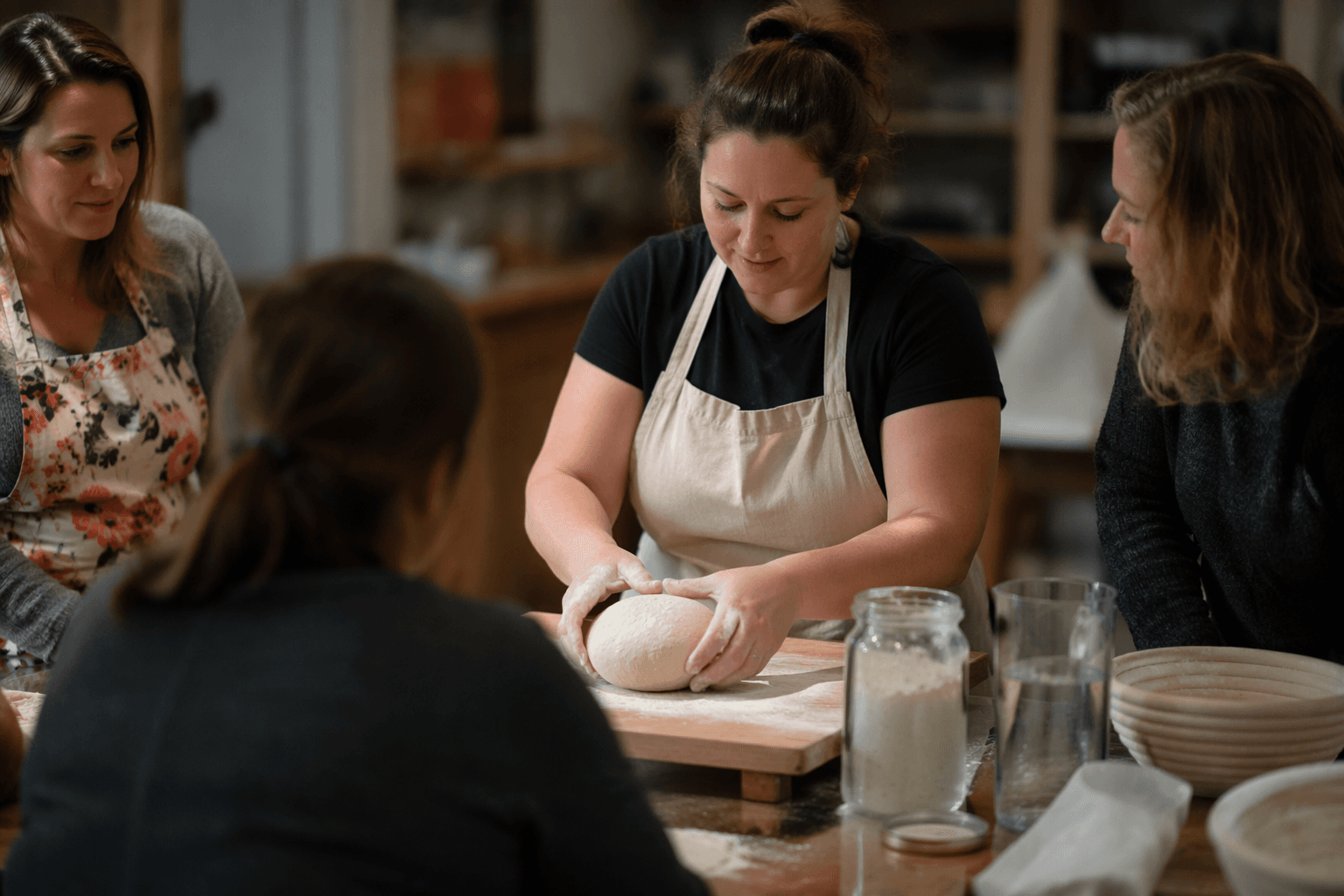
A lot of sourdough teaching gets lost in the weeds. The Sourdough 101 Workshop at Cassidy Station at Estes Farms in Nixa cuts through that noise by giving you the whole starter-to-loaf path in one compact evening, from 6:30 p.m. to 8:30 p.m. for $55. Taught by Crysta with Blythe Co. Bakery, the class is set up as a low-friction first step for anyone who wants to bake at home without getting trapped in the usual online rabbit hole.
Why this class works for true beginners
The best part of this workshop is not just that it teaches sourdough, it compresses the hardest early lessons into one session. SpringfieldMO.org says the class covers how to maintain a sourdough starter, the science behind fermentation and gluten development, and step-by-step guidance on mixing, shaping, and baking. That matters because the early stage of sourdough is where most beginners stall out: you can watch five videos on feeding schedules and still have no idea what your dough is supposed to look like.
This class answers that problem with a practical payoff. Attendees do not just sit through a demo. They leave with starter and a loaf ready to bake at home, which turns the evening from a theory lesson into a usable home-baking setup. If you are the kind of baker who wants a clear first win before diving deeper, that starter-and-loaf format is exactly the kind of shortcut worth paying for.
What the workshop covers
The description is useful because it spells out the workflow instead of hiding behind vague promises. You are not getting a generalized bread talk. You are getting the pieces that actually make or break sourdough at home.
- Starter care, including how to maintain a living culture
- Fermentation and gluten development, explained in a way that connects to the dough in front of you
- Mixing, shaping, and baking, with step-by-step guidance
- Tips for getting the right rise and crust
- A starter to take home
- A loaf ready to bake at home
That sequence is important. A lot of beginner sourdough education starts with mystique and ends with confusion. Here, the class is built around repeatable actions: feed the starter, mix the dough, shape it, bake it, and keep going. That is a much better fit for someone trying to learn how sourdough behaves in a real kitchen.
The setting adds to the appeal
Cassidy Station at Estes Farms gives the workshop a setting that fits the class’s hands-on spirit. The venue says it is a lovingly renovated 150-year-old family farmstead, and SpringfieldMO.org says the Estes family began restoring it in 2022 to honor 150 years of Estes Farms. Five original buildings were restored as part of the project, and the property now includes a mercantile, flower shop, Airbnb, and multiple event spaces.
That backdrop matters more than it sounds. Sourdough is already a craft that rewards patience, routine, and close observation. Learning it in a place that feels rooted in history and labor gives the class a little more texture than a generic classroom or corporate kitchen would. The address is 5176 N. Fremont Road in Nixa, Missouri 65714, which puts the workshop squarely in Christian County and within easy reach for anyone in the Springfield area.
Why the bakery connection matters
Crysta is teaching the class with Blythe Co. Bakery, and that name carries weight if you care about the difference between a hobby lesson and real bakery practice. Blythe & Co. Bakery describes itself as a small-batch cottage or home bakery in Springfield serving the Ozarks region. On its own materials, it also frames itself as a home bakery serving artisan breads and pastries crafted in small batches using organic grains.
That is the sort of profile that makes this workshop feel grounded in real home-baking technique rather than polished social-media bread content. A small-batch bakery is usually tuned to the realities beginners care about most: dough handling, fermentation timing, ingredient quality, and what it takes to make bread that works outside a demo setup. If you want a class that sounds like it comes from an actual working kitchen, this is the kind of background that makes the pitch stronger.
The science behind the simple pitch
Sourdough only looks romantic from a distance. At the counter, it is a living system. University extension sources describe sourdough starter as a culture of yeast and bacteria that has to be maintained by feeding, and they note that you can buy starter, get it from another baker, or build one from flour and water. That is the basic truth behind every loaf: if the starter is neglected, the bread never really gets off the ground.
Those same sources also explain why the class’s focus on fermentation and gluten development is so important. Sourdough fermentation contributes to rise, flavor, and texture, which is why the process matters more than just the ingredients list. Some research also indicates sourdough fermentation can reduce gluten content, but not enough to make sourdough safe for people with celiac disease. In other words, this workshop is teaching bread craft, not selling magic.
A better starting point than the online spiral
If you have been circling sourdough for months, the value here is obvious: one evening, one instructor, one starter, one loaf, and a path you can repeat at home. That is a lot more concrete than jumping from starter troubleshooting videos to shaping clips to hydration debates and back again. The class offers the kind of practical compression that beginners need most, especially when they want to stop reading and start baking.
That is why this Nixa workshop stands out. It does not try to make sourdough feel glamorous or complicated. It makes it usable. By the time you walk out with starter in hand and a loaf ready for your own oven, the mystery is already smaller, and the next batch feels a lot more possible.
This article was produced by Prism’s automated news system from verified source data, official records, and press releases, then run through automated quality and moderation checks before publishing. The system is built and supervised by the people who set the standards it runs under. Read our full AI policy.
Did this article answer your question?