Northern Ireland bakers reveal 24-hour sourdough, wild starters Betty and Betsy
The Daily Apron's gold-winning loaf is built on a 24-hour ferment, twin wild starters Betty and Betsy, and a plain flour-water-salt formula.
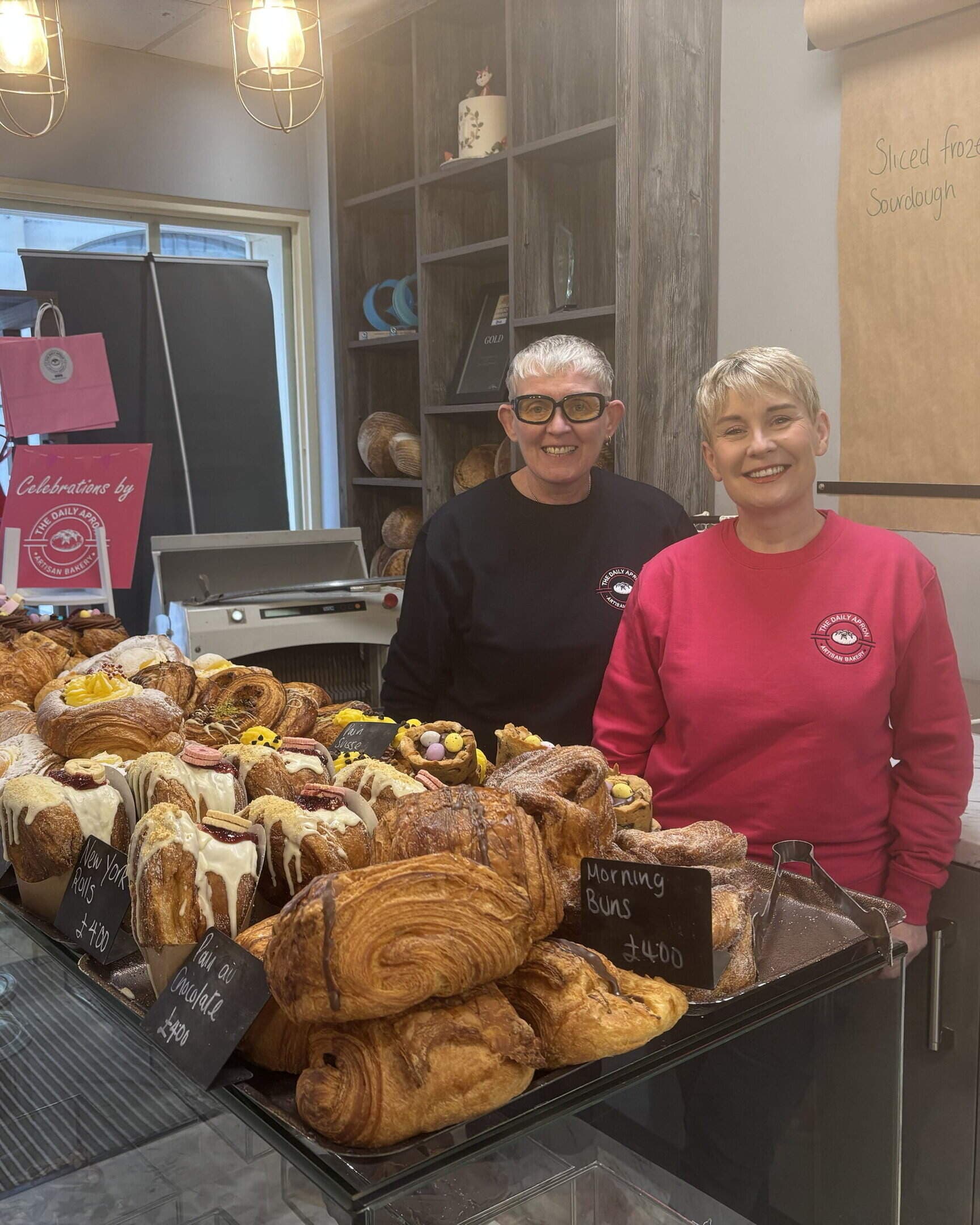
Real bread is chemistry, and the Daily Apron proves the useful kind
The biggest lesson in The Daily Apron’s award-winning sourdough is not a secret ingredient. It is restraint. Katrina Collins and Cathy Stevenson, the married couple behind the Lisburn bakery, have built a multi-award-winning plain sourdough around water, flour, salt, a 24-hour fermentation, and twin wild starters called Betty and Betsy.
That matters because it turns sourdough from mystique into method. If you want the kind of loaf that can carry a World Bread Awards gold, a Blas na hÉireann gold and a Great Taste Award, you start thinking like a baker who understands chemistry, not a shopper chasing add-ons.
Betty and Betsy are the real engine
The Daily Apron says Betty and Betsy are 8 years old, and that age is part of the point. A mature starter is not just a jar of bubbles, it is a stable culture that has been fed and kept long enough to become predictable, and predictability is what lets a bakery repeat a good loaf day after day.
For you at home, the takeaway is simple: stop treating starter like a talisman and start treating it like a working culture. If your starter is young, erratic or weak, spend your effort on consistency, not on fancy shaping tricks. A dependable starter makes every other part of the bake easier, from oven spring to flavor.
The 24-hour ferment is where the loaf earns its medals
The Daily Apron’s plain sourdough is a 900g loaf, and it goes through a 24-hour fermentation process. That long clock gives the wild starters time to do the work that instant fixes never quite match, building flavor and allowing the dough to develop on its own terms.
This is the playbook worth stealing on a weekend. Mix the dough with the understanding that it is not finished when you stop stirring. Set up your schedule so the loaf can ferment for a full day, and do not rush it just because the dough looks active early. The bakery’s success is a reminder that sourdough rewards patience more reliably than urgency.
Keep the formula bare, then manage the variables
The plain loaf is described by the bakery as nothing more than water, flour and salt. That simplicity is why every variable suddenly matters, because when you remove the clutter, time, temperature and flour quality become the whole game.
That is the chemistry home bakers can actually use this weekend. Keep your dough temperature steady enough that fermentation does not sprint out of control, choose a flour that suits the structure you want, and let the dough develop before you push it into the oven. Real bread is chemistry only when you turn that idea into practical control, and The Daily Apron’s loaf shows exactly how the control point shifts from ingredients to process.
- Fermentation timing: build around a long ferment, not a rushed same-day bake, if you want the dough to taste like something more than flour and salt.
- Dough temperature: keep conditions even so the wild starters can work at a steady pace instead of racing and collapsing.
- Flour choice: use flour with enough strength for long fermentation, especially if you want the loaf to hold the shape and structure that judges notice.
- Crust development: give the loaf enough time in the oven to finish properly, because a good sourdough should not just taste fermented, it should also bake into a crust that carries the rest of the bread.
Why Lisburn keeps producing serious bread
The Daily Apron is not a novelty act. Collins and Stevenson say they have been in hospitality for more than 30 years, and a Belfast News Letter profile noted that the business gets only about four hours of peace, quiet and no flour each day. That kind of rhythm says a lot about what award-winning baking really looks like: not a romantic morning ritual, but a relentless production cycle built on repetition.
Their story goes back more than 20 years, when they opened their first café and bistro, and later spent 12 years running a café at Smyth Patterson department store in Lisburn before stepping back to focus on the bakery. That long runway explains why the sourdough feels so dialed in. It is the product of years spent making food from scratch in small batches, then narrowing the focus until the bread could stand on its own.
The wider Irish bread scene backs up the same lesson
RTÉ has described an artisan bakery boom across Ireland, and the note that sourdough’s essentials are flour, water, salt, time and skill could have been written as a slogan for the Daily Apron loaf. The country’s better bread stories keep pointing in the same direction: simpler formulas, tighter process, and bakeries that know how to repeat quality instead of chasing trends.
That includes Counter Culture in Bangor, which won Slow Food Northern Ireland’s Producer of the Year in 2024, while its sourdough focaccia took Slow Food Northern Ireland’s Food Product of the Year. It also includes earlier local work by Mark Douglas and Lady Vibse Dunleath, who developed sourdough bread from flour made with wheat grown by a local farmer in Northern Ireland. In that same local conversation, BakeryInfo noted that much flour used in Northern Ireland bread baking is imported because the climate makes hard-wheat production difficult, which is exactly why flour choice becomes such a serious decision in the first place.
Zac’s Bakehouse near Ballymena fits the same pattern. It says it was born from curiosity, trial and error, hard work and dedication, and describes itself as one of the first and finest purveyors of sourdough in Ireland. Taken together, these bakeries make the same argument in different voices: good sourdough is not about doing more, it is about understanding the few things that matter and getting them right every time.
The Daily Apron’s loaf proves the point cleanly. Betty and Betsy do not win awards by magic, and neither does a 24-hour ferment. The bread wins because someone respected the chemistry long enough to let it do its job.
This article was produced by Prism’s automated news system from verified source data, official records, and press releases, then run through automated quality and moderation checks before publishing. The system is built and supervised by the people who set the standards it runs under. Read our full AI policy.
Did this article answer your question?