Nutrition Experts Reveal Why Sourdough May Be Healthier Than Other Breads
Long fermentation at 12 to 24 hours is what actually delivers sourdough's health benefits, but a systematic review found more than half of studies showed no glycemic advantage in healthy people.
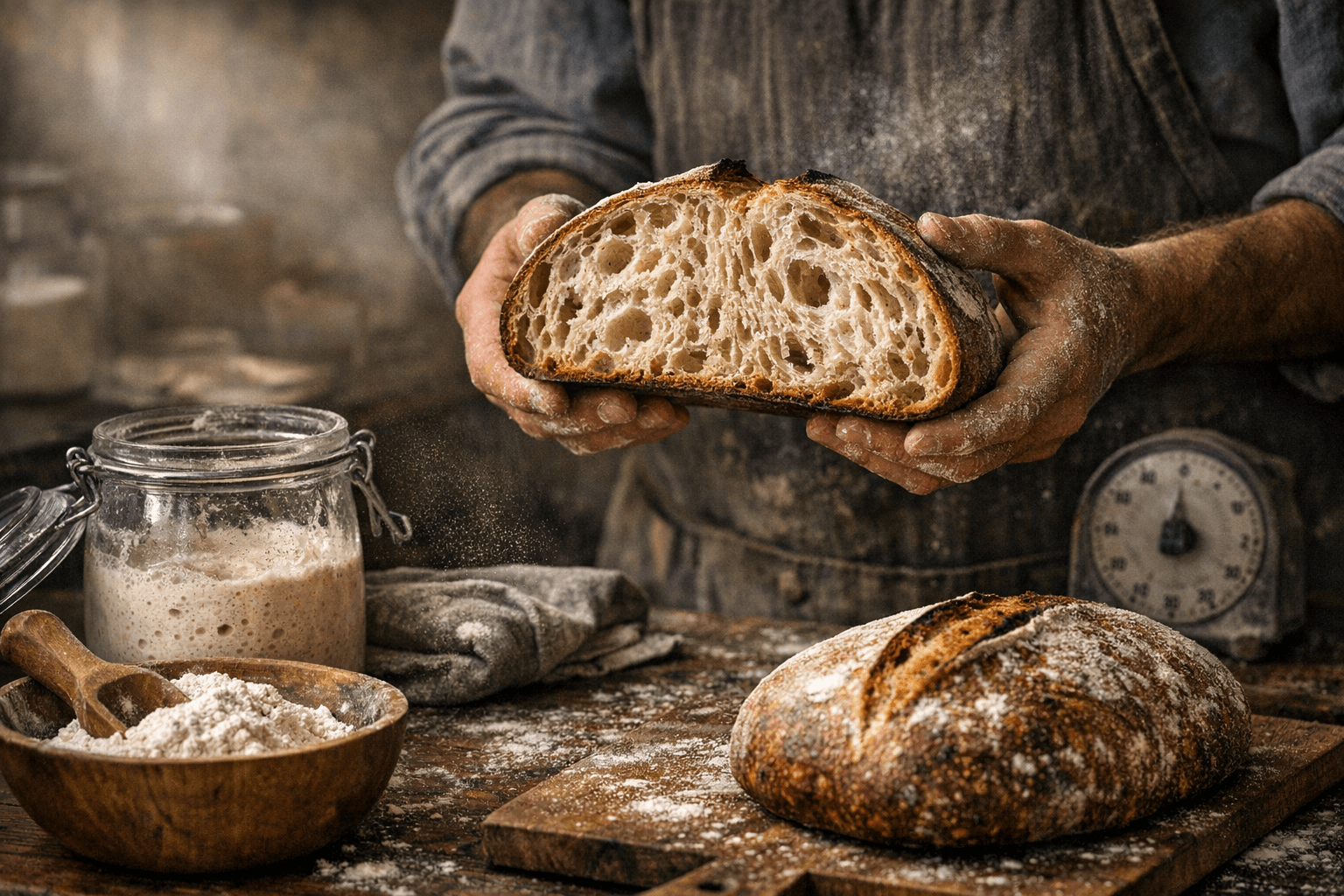
The starter sitting on your counter is performing chemistry that most commercial bread factories deliberately skip. London-based registered dietitian Emer Delaney describes it plainly: "Instead of using yeast, which gives a quick rise, sourdough is leavened, which is a slower fermentation process that uses a mix of wild yeast and lactic acid bacteria. It can take anywhere between 12 and 24 hours for this to happen." That window is where sourdough's health story either begins or doesn't, and whether it actually unfolds depends on variables most bread labels never mention.
The biochemical effects are real but conditional. During a full fermentation, lactic acid bacteria can drive up to 90 percent phytate reduction, which improves mineral bioavailability by freeing bound iron, zinc, and magnesium. The same process partially breaks down gluten and degrades FODMAPs. Fermentation also alters starch structure in ways that can lower glycemic impact. But a systematic review of 25 clinical trials found that more than half of studies comparing sourdough with white wheat bread showed no significant difference in glycemic response among healthy individuals, suggesting the effect depends heavily on how the bread was made. This is the line between fermentation science and marketing copy: the benefit is plausible, not guaranteed.
The dial bakers can actually turn is fermentation length and temperature. Lower temperatures, along with a lower percentage of starter, extend the fermentation window and maximize the microbial work being done. An overnight bulk in the refrigerator rather than a few accelerated hours on the counter is not just a scheduling choice; it is a meaningful process variable. Using a higher percentage of whole-grain flour amplifies the phytase activity, since phytic acid is concentrated in the bran.
On raw macronutrients, sourdough's numbers don't straightforwardly win. Registered dietitian Jennifer Pallian puts sourdough at 319 calories per 100 grams, above white bread (238 kcal), whole wheat (252 kcal), and whole grain (265 kcal). Protein runs 13 grams per 100 grams for sourdough, higher than white bread's 10.7 grams and whole wheat's 12.4 grams, but trailing whole grain's 13.4 grams. Fat in sourdough is 2.14 grams per 100 grams, below whole wheat (3.5 grams) and whole grain (4.23 grams). These figures underscore what the research confirms: sourdough's functional edge lives in the fermentation process, not the macronutrient profile.
Two groups who need to read this carefully are people with IBS and people with celiac disease. Those with non-celiac gluten sensitivity or IBS may find that properly fermented sourdough is better tolerated due to its reduced FODMAP content and partially broken-down gluten proteins, and longer fermentation time produces a greater reduction in FODMAPs, making the 24-hour window particularly relevant for IBS sufferers. For celiac disease, the picture is entirely different: partial gluten breakdown during fermentation does not reduce gluten to levels that prevent immune response. Standard wheat sourdough is not safe for celiac patients regardless of fermentation time or starter type.
The commercial loaf problem is where Pallian's warning lands hardest. "Some commercial 'sourdough' bread is produced with baker's yeast rather than true fermentation," she says. "This shortcut means the bread does not deliver the same nutritional or digestive benefits." Her ingredient test cuts through the label noise: a true sourdough lists only flour, water, salt, and starter. Commercial yeast anywhere in that list means the 12-to-24-hour microbial process never happened, and the loaf is sourdough in name only.
This article was produced by Prism’s automated news system from verified source data, official records, and press releases, then run through automated quality and moderation checks before publishing. The system is built and supervised by the people who set the standards it runs under. Read our full AI policy.
Did this article answer your question?