Purdue Fermentation Expert Explains the Microbiology Powering Sourdough's Ancient Rise
Purdue fermentation specialist Allison Wells breaks down how two microbes, Lactobacillus spp. and Saccharomyces cerevisiae, power every loaf you've ever baked.
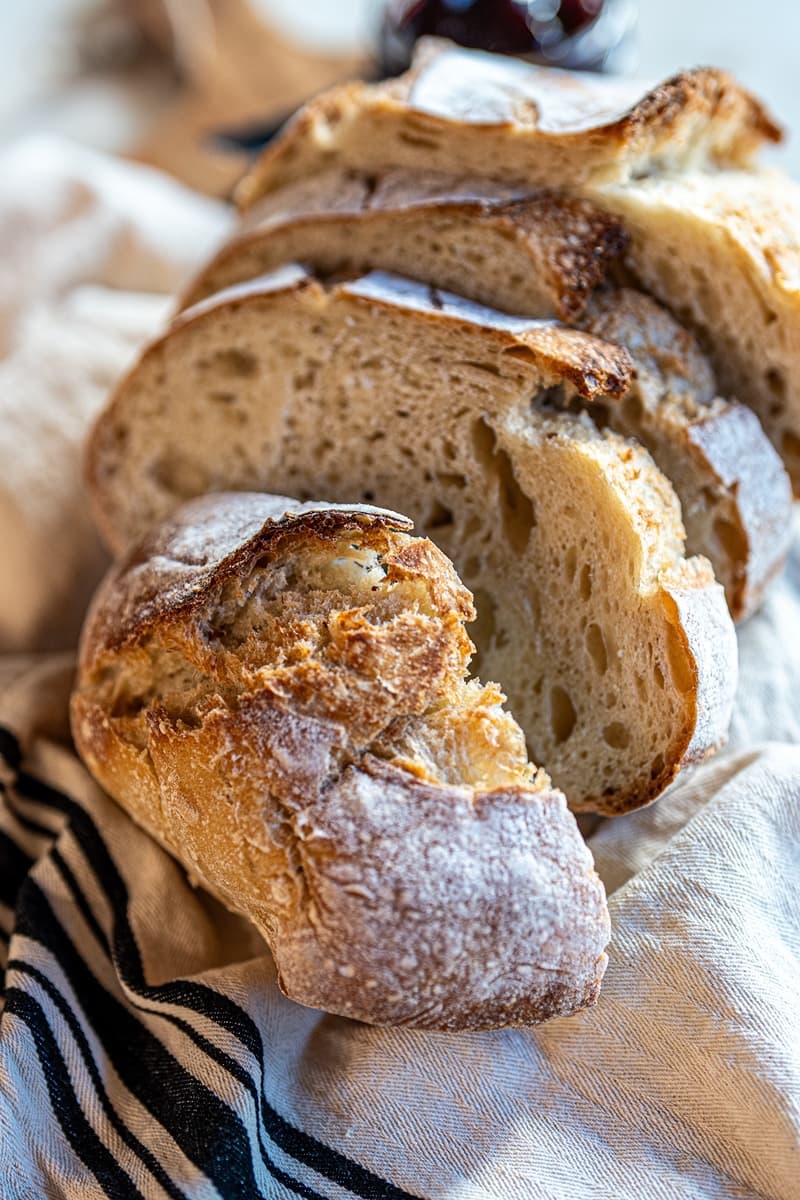
Allison Wells cuts straight to it: "Sourdough is one of the oldest forms of leavened bread in human history." As a fermentation science specialist in Purdue University's Food Science department, Wells knows that statement carries millennia of weight. Archaeological evidence places leavened bread in ancient Egypt as far back as 6,000 years ago, and the core biological mechanism behind every one of those loaves has barely changed. What has changed is our ability to name the organisms doing the work, understand why they behave the way they do, and use that knowledge to bake better bread at home.
Two Microbes, One Ancient Partnership
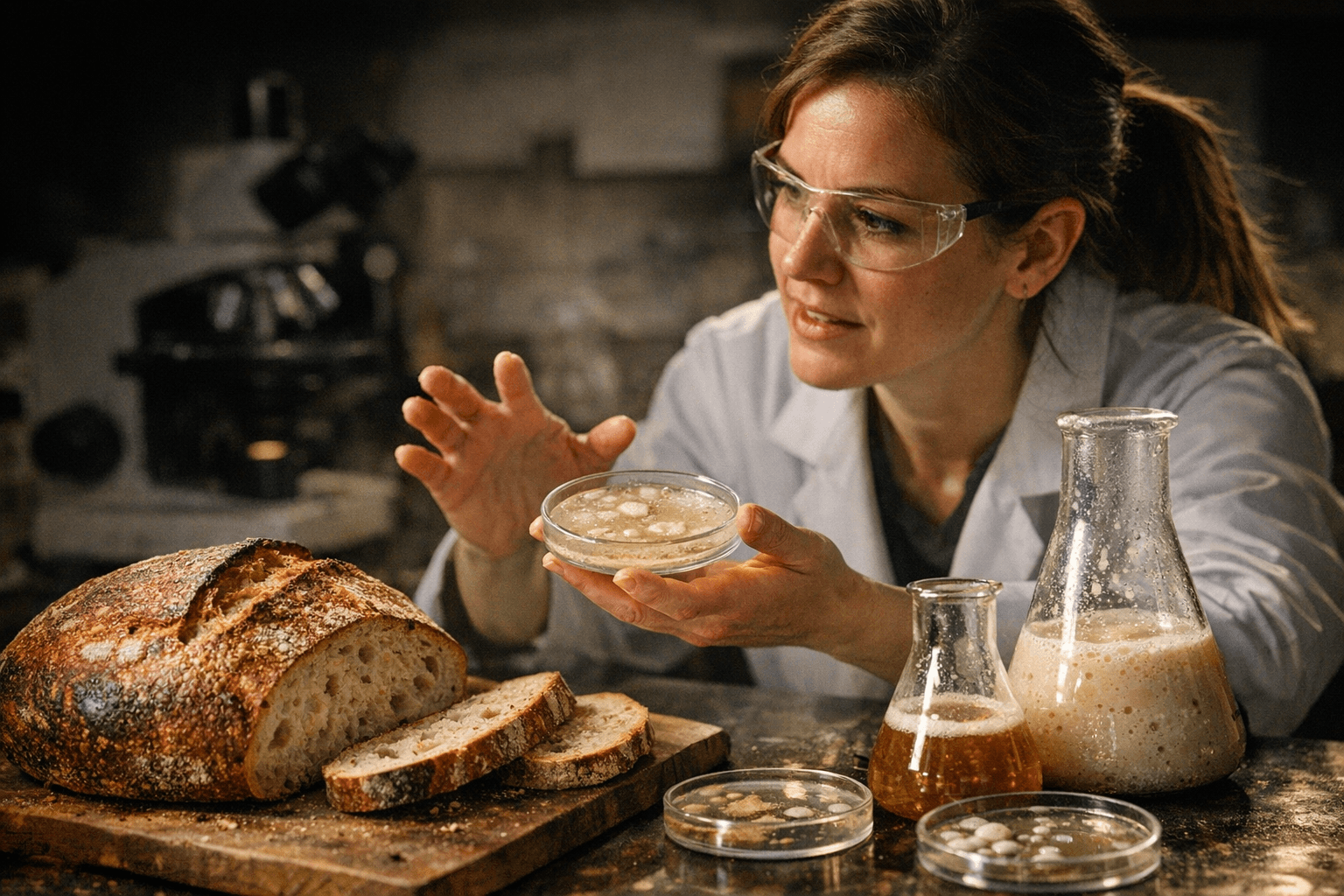
Sourdough's flavor, texture, and leavening all trace back to a two-organism collaboration. According to Wells, sourdough fermentation is driven by Lactobacillus spp. (lactic acid bacteria) and Saccharomyces cerevisiae (a type of yeast), both of which are naturally present in flour and water. Neither organism works in isolation; their partnership is what separates a real sourdough from a commercially yeasted loaf dressed up with a dash of vinegar.
Saccharomyces cerevisiae handles the lift. It ferments the simple sugars available in the dough, releasing carbon dioxide that inflates the gluten network and alcohols that contribute to aroma and complexity. Lactobacillus spp. work in parallel, producing organic acids, primarily lactic and acetic acid, that give sourdough its signature tang, tighten the crumb structure, and, critically, lower the dough's pH in ways that affect digestibility. These aren't cosmetic differences from commercial bread; they are the product of distinct biochemical pathways that alter the bread at a structural level.
What Your Starter Actually Is
Wells defines the sourdough starter precisely: "a mature mixture of flour and water that contains an established microbial community — a stable group of beneficial bacteria and yeast." That definition matters because it reframes the starter from a kitchen curiosity into a functioning microbial ecosystem. The community inside a healthy starter is not random; it is stable, self-regulating, and shaped over time by the specific conditions you provide.
Before those two organisms can do their work, the dough needs fuel. Endogenous flour enzymes, particularly amylases, break starches down into simple sugars that the yeast and bacteria can metabolize. This enzymatic step is the first link in the chain: no sugar availability, no robust fermentation, no rise, no acid production. Everything downstream depends on it, which is why flour choice and hydration both influence the final loaf in ways that go beyond mere texture preference.
Backslopping: The Technique That Kept Starters Alive for Centuries
Long before anyone named Lactobacillus, bakers kept their cultures alive through a practice Wells describes as backslopping: reserving a portion of the previous batch of dough to inoculate the next one. It is an elegantly simple propagation method that explains how starters survive not just from bake to bake but, in well-documented cases, for decades or longer. The microbial community you are maintaining has likely been selected and stabilized through hundreds of feeding cycles; every time you hold back a tablespoon of starter, you are continuing a lineage.
The pandemic years offered a vivid, large-scale demonstration of renewed public interest in this practice. In the first months of 2020, flour and yeast sales in the United States doubled or tripled, and King Arthur Flour reported a tripling of demand it could not fully meet despite normal wheat and milling capacity. Roughly 31% of people who baked during that period tried sourdough specifically. The cultural rediscovery was real, but so was the confusion about why their starter bubbled on Tuesday and not on Thursday, or why the loaf came out gummy instead of open-crumbed. The answer, almost always, comes back to microbiology.
Why Feeding Schedule and Environment Are Not Optional
If the starter is a living microbial ecosystem, then feeding it is ecosystem management, not just a recipe step. Temperature, hydration level, and feeding rhythm all exert selection pressure on the community inside the jar. A cold, infrequently fed starter will shift the balance toward acid-producing Lactobacillus strains, producing a more aggressively sour loaf. A warmer, frequently fed starter favors yeast activity, producing more CO2, faster rise, and milder flavor. Neither outcome is wrong, but understanding the mechanism lets you make deliberate choices rather than hoping for the best.
Purdue's Wells and the broader research framework she draws from make clear that these are not folk observations; they reflect measurable changes in microbial community composition driven by specific environmental variables. The practical upshot: a consistent feeding schedule, stable temperature, and appropriate hydration ratio are the three levers you actually control. Changes to any of them shift the microbiology, and the bread will tell you exactly how.
Digestibility and the Case Beyond Flavor
One of the most important points in Wells's framing is that sourdough's benefits extend well past taste. The organic acids produced by Lactobacillus spp. lower dough pH in ways that activate phytase activity, reducing phytate content, which is an antinutritional compound found in grain that binds minerals and limits their absorption. Research published in peer-reviewed nutrition literature has documented phytate reductions of up to 90% in long-fermented sourdoughs, alongside improved protein digestibility and a lower glycemic response compared to conventionally leavened bread. These are the consequences of the same biochemical pathways Wells describes; the tang and the nutritional profile share the same microbial origin.
Sourdough as Microbial Ecology in Practice
Purdue's decision to publish Wells's explainer on National Sourdough Bread Day was a deliberate move to anchor a moment of popular enthusiasm in scientific grounding. For educators and citizen scientists, the implications are direct: a sourdough starter is one of the most accessible living models of microbial ecology available to a home kitchen. It contains a stable community maintained by resource competition and environmental selection. You can observe succession (what happens when you neglect feeding), test hypotheses (does refrigeration shift the flavor profile?), and measure outcomes with nothing more than a kitchen scale, a thermometer, and a taste.
The Purdue explainer does not present new experimental data, but it lays out the named organisms and verified mechanisms clearly enough to serve as a launching point for more rigorous investigation. For the home baker, that foundation is useful in a direct way: when you understand that Lactobacillus spp. and Saccharomyces cerevisiae are running a finely tuned metabolic relay inside your starter, the maintenance rituals stop feeling arbitrary. The feeding window, the float test, the windowpane check — all of it reflects biology that has been operating, as Wells puts it, for millennia. Knowing the science does not make the bread easier to bake, but it makes every unexpected result a clue rather than a mystery.
This article was produced by Prism’s automated news system from verified source data, official records, and press releases, then run through automated quality and moderation checks before publishing. The system is built and supervised by the people who set the standards it runs under. Read our full AI policy.
Did this article answer your question?