same-day sourdough sandwich bread skips overnight planning
Same-day sourdough sandwich bread gives you sourdough flavor without overnight planning, but it trades the lofty open crumb for a softer loaf built for real-life slicing.
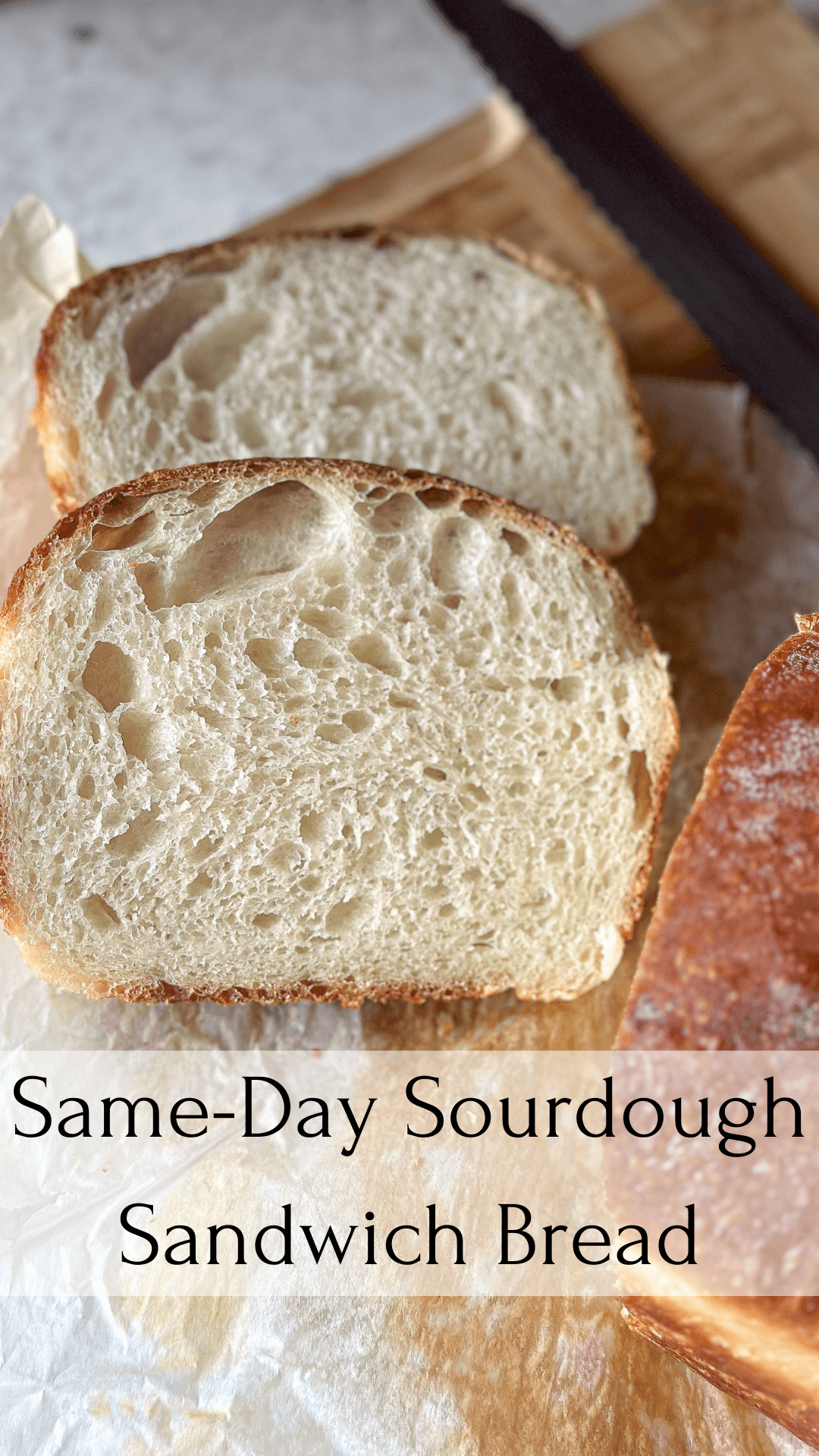
**Same-day sourdough sandwich bread solves the biggest weeknight problem: time.** It gives you the flavor and fermentation character of sourdough without letting bulk fermentation, cold proofing, and a delayed bake take over your whole day. The payoff is a soft, fluffy, sliceable loaf that works for sandwiches, toast, grilled cheese, and the kind of everyday eating that a rustic boule usually does not handle well.
What this schedule is really for
This is the loaf you make when you want homemade bread to fit around life instead of the other way around. If you bake for lunch boxes, breakfast toast, or a family that wants bread on the table the same day, the pan format and simpler workflow make sense immediately. It is not chasing the dramatic open crumb of a country loaf; it is built to be sturdy, tender, and useful.
That trade-off is the whole point. Same-day sourdough works best when you care more about getting a dependable sandwich loaf than nursing a dough through an overnight schedule. If your favorite part of baking is the ritual of a long cold proof, this skips that pleasure. If your favorite part is slicing warm bread and actually using it before dinner, this is the better deal.
How the loaf stays soft without losing sourdough character
The ingredient list is doing quiet but important work. Active sourdough starter brings the natural fermentation, while warm filtered water helps the dough move along without feeling sluggish. Olive oil and honey or sugar are not just flavor notes here, they help soften the crumb and keep the loaf tender for several days.
That softness is what makes the bread feel like a sandwich loaf instead of a bakery-style showpiece. Flour and salt round out the structure, but the oil and sweetener are the reason the crumb stays plush enough for grilled cheese and still holds together at the slicer. If you want a loaf that feels practical instead of precious, those enrichments matter more than they get credit for.
The method is simple on purpose
The process stays streamlined from the start. You mix the starter and water, add the oil and honey or sugar, then add the flour and salt. After a brief knead, the dough gets a rest, then stretch-and-folds, then shaping and baking in a standard loaf pan.
That sequence is the shortcut that matters most. There is no Dutch oven to preheat, no specialty vessel to manage, and no need to wrestle a high-hydration boule into a perfect round. The loaf pan gives you the familiar rectangular shape people actually want for sandwiches, and it lowers the equipment barrier for home bakers who are tired of overcomplicated sourdough routines.
Why the loaf pan changes the result
Baking in a standard loaf pan changes both the look and the feel of the bread. Instead of a crusty round loaf with an airy interior, you get an even-sided sandwich loaf that slices cleanly and stacks well in a lunch bag or toaster. That shape is a feature, not a compromise, because it is designed for the way most people eat bread every day.
The pan also pushes the recipe toward softness. Pan-baked bread tends to be more controlled and uniform, which is exactly what you want when the goal is a tender crumb and reliable slices rather than an unpredictable, holey interior. For a sandwich loaf, that predictability is worth more than the romance of a wild oven spring.
The science behind the speed still matters
Sourdough has not lost the basics just because the timetable is shorter. It still relies on naturally occurring yeast and lactic acid bacteria, the same fermentation partnership that gives sourdough its flavor and character. Illinois Extension describes sourdough as a lactic-acid fermentation, where lactic acid bacteria feed on sugars in flour and produce lactic acid.
That lactic acid helps explain why sourdough keeps so well. Fermentation can improve keeping qualities, which is one reason a same-day loaf can still feel fresh and practical beyond the first slice. Purdue University also frames sourdough as a tradition being revived, with a lot of fermentation science packed into every slice, and that is exactly what this loaf leans on: enough science to give flavor, not so much waiting that it becomes a project.
Why this style keeps showing up in home baking
The move toward sourdough sandwich bread is not random. By 1933, nearly every bakery in the United States had a bread-slicing machine, and about 80 percent of American bread was sold sliced. That history tells you something important: convenience has always been part of bread culture, not an enemy of it.
Today’s pan-baked sourdough fits right into that lineage. King Arthur Baking treats sourdough sandwich bread as a soft, sliceable loaf made for sandwiches and toast, and its everyday sourdough loaf is described as moist, spongy, and easy to slice. CatchyMeals is really making the same argument in a more weekday-friendly way: sourdough does not have to live in the slow lane to be worth baking.
Who gets the most out of this loaf
This schedule makes the most sense for bakers who want sourdough flavor but do not want the day ruled by fermentation checkpoints. It suits families, sandwich eaters, toast people, and anyone who values softness and sliceability over a blistered crust and open crumb. It also fits bakers who want a shorter path from starter to dinner without abandoning natural leavening altogether.
Colorado State University Extension’s best-practices guidance is a good reminder that sourdough can be made safely at home when you keep the starter healthy and viable. That is the real unlock here: not a gimmick, not a hack, just a well-managed starter, a simple enriched dough, and a loaf pan doing practical work.
In the end, same-day sourdough sandwich bread is for the moments when overnight planning feels like too much and sandwich bread still needs to happen. It gives up the dramatic crumb and some of the old-world theater, but it keeps the flavor, the tenderness, and the one thing busy bakers need most: bread that fits the day instead of taking it over.
This article was produced by Prism’s automated news system from verified source data, official records, and press releases, then run through automated quality and moderation checks before publishing. The system is built and supervised by the people who set the standards it runs under. Read our full AI policy.
Did this article answer your question?