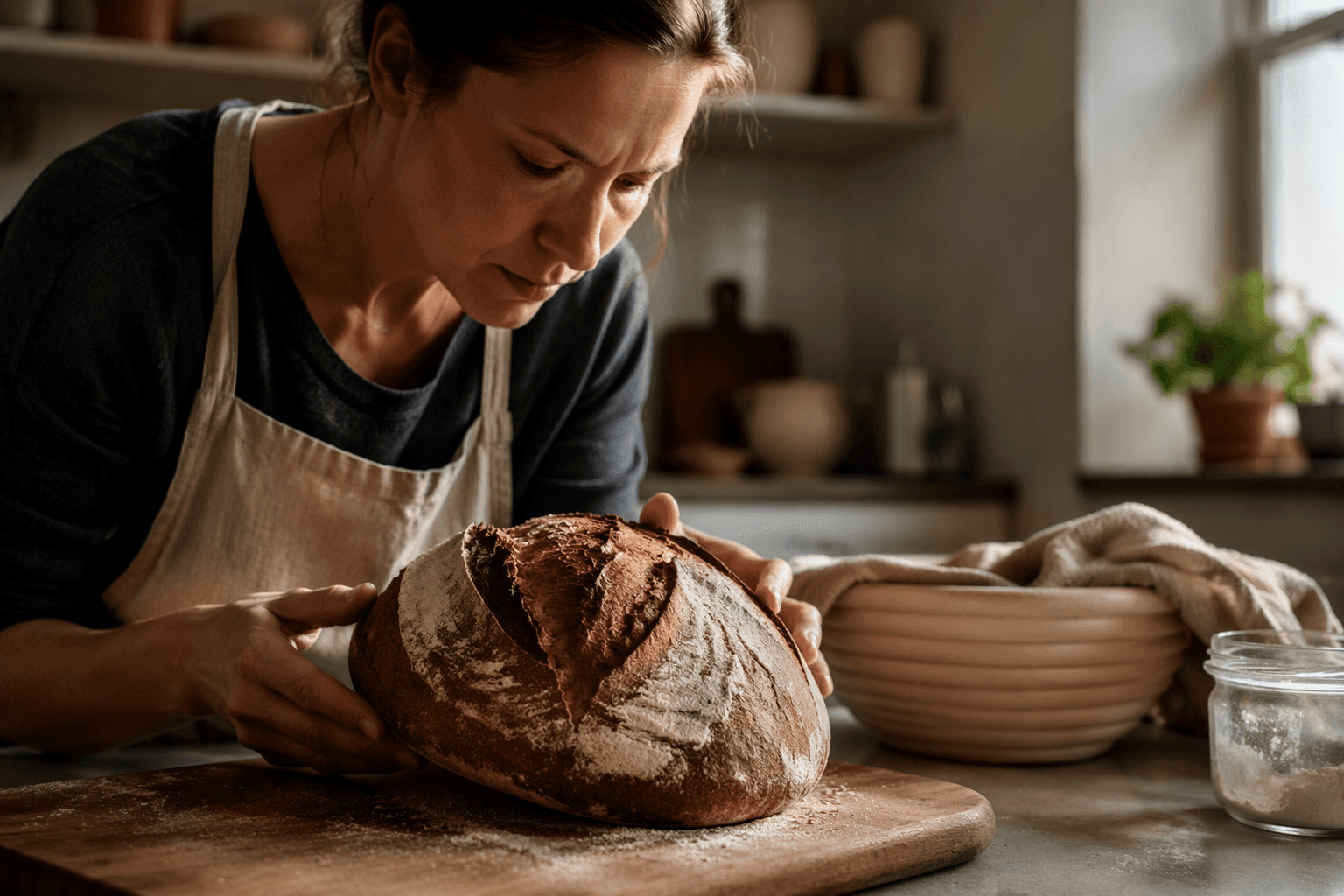
Scientists Identify Key Factors Driving Sourdough Bread's Complex Flavors and Textures
Sourdough's buttery notes come from a specific bacterium, Lactococcus lactis, and new VUB research shows your flour choice drives that microbial mix more than most bakers realize.
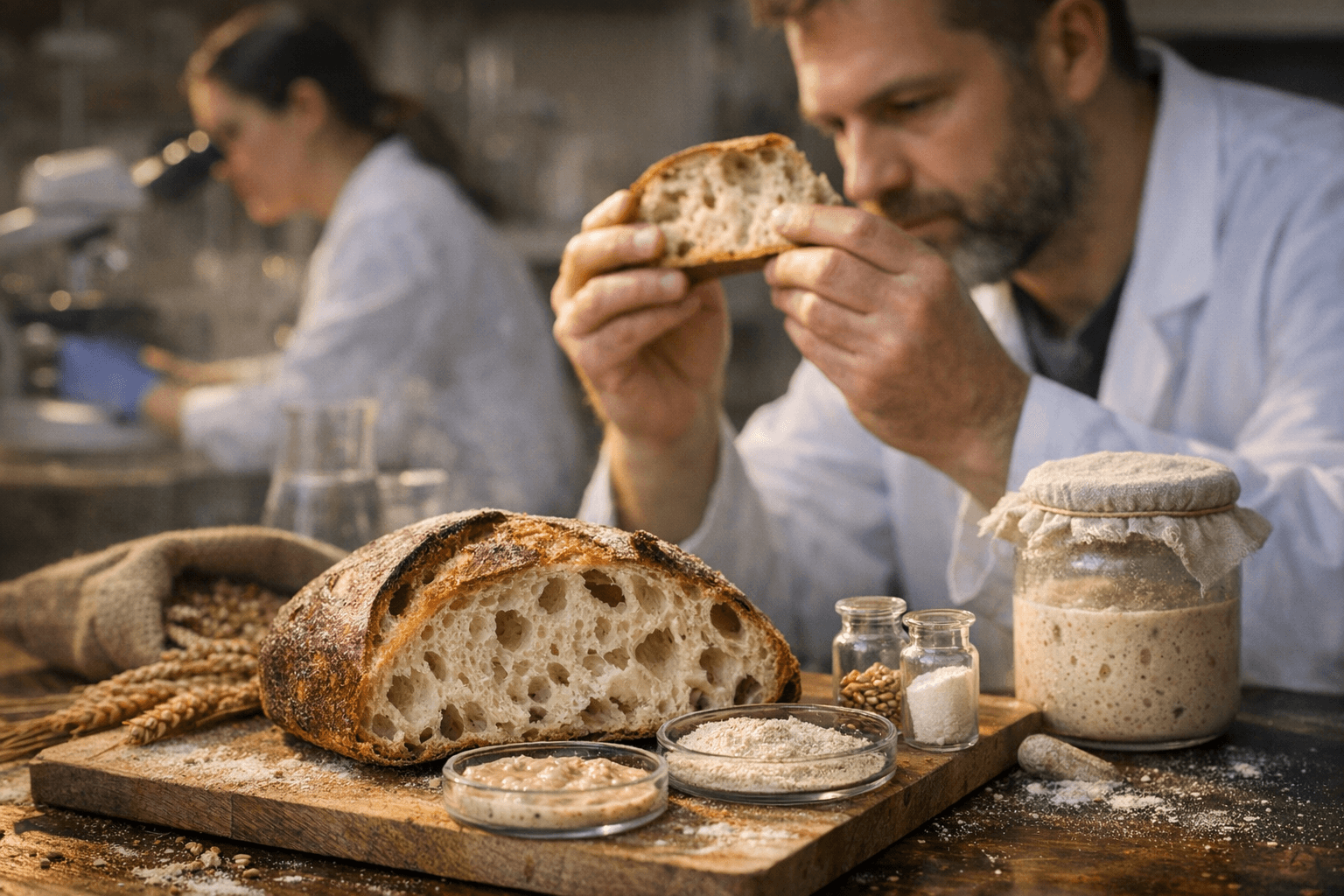
The assumption among most sourdough bakers is that flavor lives in the starter, that the wild yeast and bacteria fed for months are the sole architects of complexity in the crumb. Research from Vrije Universiteit Brussel (VUB) in Ixelles, Belgium, says the picture is more complicated, and more actionable.
Doctoral researcher Víctor González Alonso spent years investigating how a specific class of wheat dietary fibers called arabinoxylans behave during sourdough fermentation. His central finding upends a basic assumption: it is not only the microbes driving flavor and texture, but the wheat's own enzymes, activated by the acidic environment the starter creates, that break down these fibers and reshape the bread's structure. "Wheat provides a large share of the calories and fibre consumed in Europe and arabinoxylans play an important part in this," González Alonso said. "They help determine the structure and quality of bread."
For home bakers, arabinoxylans come in two functionally opposite forms. Water-extractable arabinoxylans, or WE-AX, support dough performance, improving viscosity and gas retention in ways that help a loaf hold its shape and spring. Water-unextractable arabinoxylans, WU-AX, work against you: they are associated with heavier, denser doughs and reduced bake quality. The VUB research found that fermentation conditions directly determine which form dominates, meaning the variables already controlled in your kitchen are shaping crumb chemistry more precisely than most bakers realize.
Flour choice emerged as the most immediately adjustable lever. González Alonso's pilot baking trial used wheat flour enriched with high levels of arabinoxylans and produced loaves that were not only higher in nutritional value but also showed a noticeably broader flavor profile. If you want more complex flavor, the research points toward using whole wheat or high-extraction flour. Rye, which naturally carries higher arabinoxylan content and greater enzymatic activity than standard bread wheat, takes this further: it absorbs more water, ferments more aggressively, and produces the acidic conditions that most aggressively activate fiber-degrading enzymes. Swapping even 20 to 30 percent of your white bread flour for whole wheat is not just a nutritional decision; it is a flavor decision backed by molecular data.
The specific bacteria present during fermentation proved equally decisive in shaping taste. González Alonso's team identified two strains with distinct flavor signatures: Lactococcus lactis produced buttery aromas, while Limosilactobacillus fermentum generated sugar alcohols that push toward gentle sweetness. These effects are not guaranteed by any single starter; they depend on which microbes your particular culture harbors and the substrates available to them at fermentation time. If you want buttery depth, the research suggests prioritizing fermentation conditions that favor Lactococcus lactis, which means cooler, longer bulk ferments with higher hydration, letting acid accumulate slowly rather than pushing the dough warm and fast.
The research maps cleanly onto a one-week, two-loaf kitchen experiment. Bake your standard loaf on day one using your usual flour blend, hydration, and fermentation schedule. On day four or five, bake an identical loaf with one variable changed: substitute 25 percent of the white flour with whole wheat or rye to raise the arabinoxylan baseline. Hold everything else constant, including starter percentage, bulk fermentation time, and proofing temperature. The crumb texture, crust color depth, and most notably the flavor complexity should diverge measurably. That divergence is the arabinoxylan effect made tangible in your own oven.
"Sourdough remains a fascinating interplay of biology and craftsmanship," González Alonso concluded. His pilot baking trial confirmed what laboratory analysis had only theorized: enriching the flour's arabinoxylan content produced loaves with genuinely more complex flavor, not just better fiber numbers on a nutrition panel. The U.S. sourdough market reached roughly $8.6 billion in 2025, with projections pointing toward $12.6 billion by 2035. Much of that commercial momentum rests on sourdough's reputation for distinctive, irreproducible taste. González Alonso's work begins to explain, at a molecular level, what that taste actually is and why the flour bag you reach for at the store matters far more than most bakers have been told.
This article was produced by Prism’s automated news system from verified source data, official records, and press releases, then run through automated quality and moderation checks before publishing. The system is built and supervised by the people who set the standards it runs under. Read our full AI policy.
Did this article answer your question?