Sourdough discard becomes soft, chewy pretzel bites for snacking
These pretzel bites turn sourdough discard into a chewy, golden snack with bakery flavor, and they are easy to make ahead, reheat, and serve.
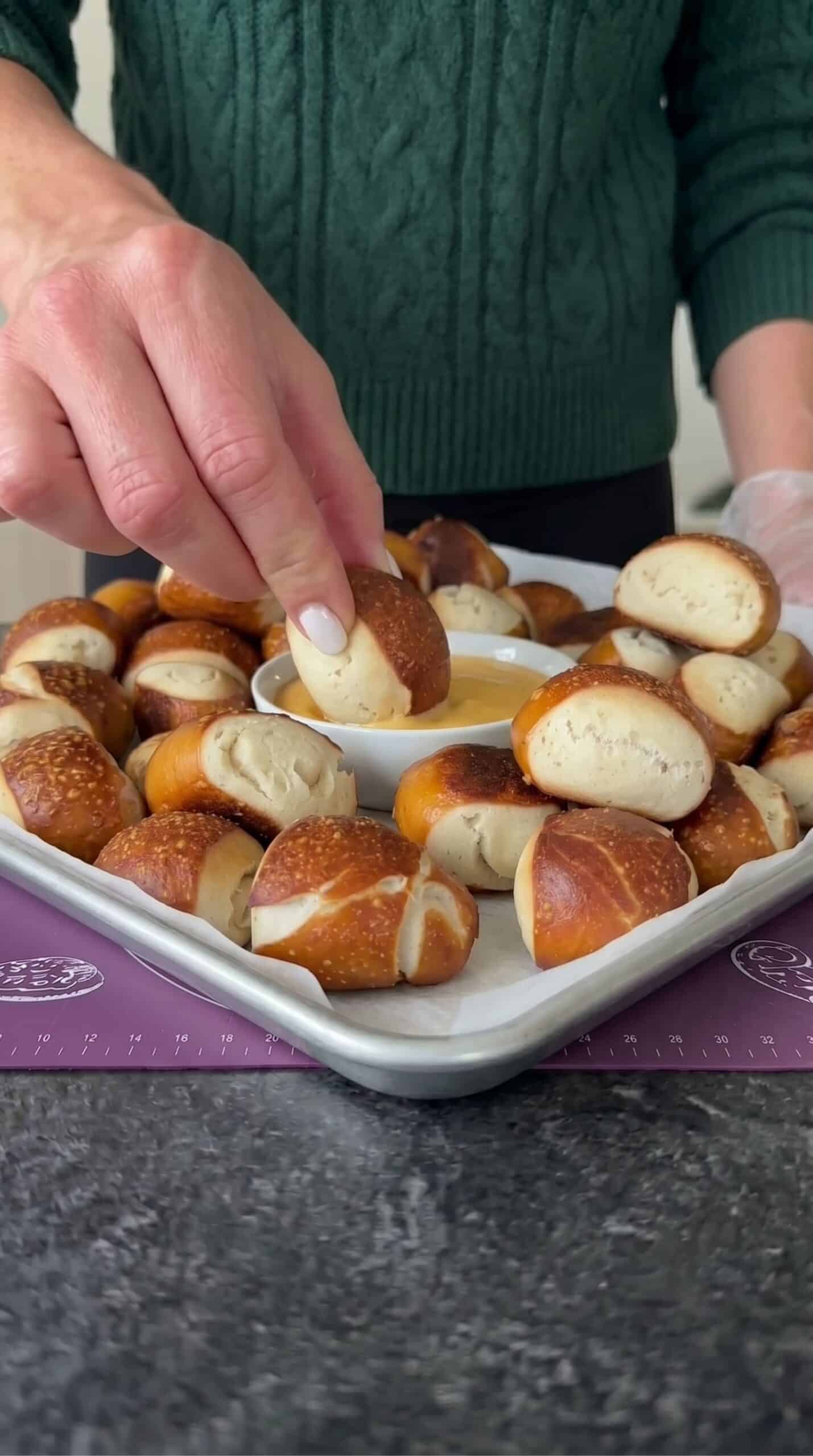
Sourdough discard finally gets the job most home bakers have been waiting for: it becomes the snack people reach for first and remember later. These pretzel bites bake up soft and chewy inside, golden outside, with the classic pretzel flavor that works for game day, movie night, potlucks, after-school snacking, and holiday spreads without feeling fussy.
Why this discard recipe earns repeat status
The appeal here is immediate utility. Instead of treating discard like leftovers that only belong in pancakes or crackers, this recipe puts it into an enriched dough that feels bakery-made and crowd-pleasing. King Arthur Baking defines sourdough discard as the portion of starter removed during routine maintenance, and it points out that you can bake with it instead of throwing it away.
That matters because discard is not just a waste-avoidance move. Regularly discarding part of the starter and refreshing it with flour and water helps keep the microorganisms healthy, which is why the maintenance step exists in the first place. Put that excess to work in pretzel bites, and the result is a snack that feels more like a plan than a cleanup project.
What discard does in the dough
In a pretzel dough like this, discard pulls more than one job. It brings a subtle tang, adds moisture, and helps create the tender chew that makes a pretzel bite worth reaching for in the first place. CatchyMeals notes that discard can contribute flavor, moisture, and fermented depth, while yeast still provides the reliable rise that keeps the bite from turning dense or leaden.
That balance is the point. The sourdough character shows up in the background, not as a loud sour punch, so you still get the familiar pretzel profile people expect from a good bakery snack. It is also why this recipe makes sense in a richer dough, where discard performs better than a lot of bakers expect.
The method that keeps the bites chewy, not bready
The texture comes from the pretzel treatment, not just the dough itself. King Arthur Baking’s pretzel-bites recipe has the bites go into a baking-soda solution, where they are gently swished around before baking. That bath is the difference between a generic dinner-roll bite and a real pretzel bite with that distinctive exterior and chew.
The bake time is short, which is part of the charm. King Arthur’s recipe calls for 12 to 15 minutes in the oven, until the bites are golden brown. That timing is long enough to build color and flavor, but not so long that you dry out the center.
A few details keep the texture on track:
- Use sourdough discard confidently, not as a backup ingredient. It belongs here.
- Give the bites their baking-soda bath so the exterior gets that pretzel look and bite.
- Pull them when they are golden brown, not when they have drifted into dark, hard territory.
- Reheat before serving if you want the texture to feel fresh from the oven.
Why this is such a strong make-ahead snack
For hosts, this is where the recipe gets especially useful. The bites can be reheated before serving, which means you are not locked into the oven at the exact moment guests arrive. That makes them a smart fit for a game-day table, a movie-night tray, or a potluck where the snack needs to survive a little waiting.
King Arthur Baking also makes a useful point with its sourdough pretzel recipe: you can use starter straight from the refrigerator without feeding it first. That is the kind of practical shortcut home bakers actually use, because it lowers the barrier between “I have discard” and “I have snacks.” You are not building an entire production around a fresh feeding window.
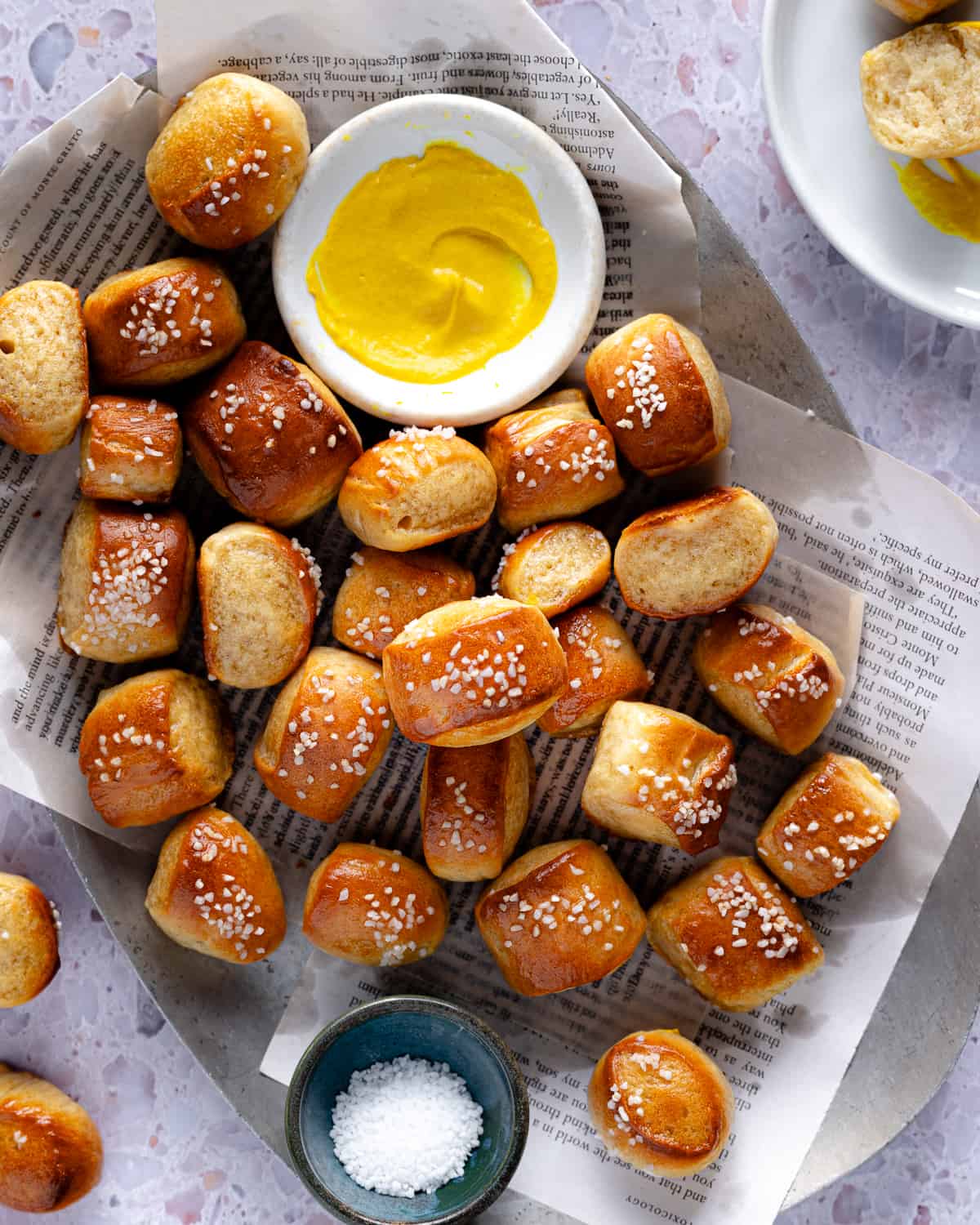
A wider view of what discard can do
King Arthur Baking has a collection of 20 sourdough discard recipes, and that range says a lot about how flexible discard really is. It is not limited to savory bakes or a single style of quick bread. Their lineup stretches from blueberry muffins to savory pancakes to chocolate cake, which is a good reminder that discard belongs in more places than the usual starter cleanup recipes.
That broader category shift matters for bakers trying to waste less without sacrificing quality. Once you see discard as an ingredient with its own value, not just an obligation, recipes like these pretzel bites start to look like the most efficient kind of home baking: useful, familiar, and worth repeating.
Where pretzel bites fit in the bigger pretzel story
The recipe also taps into a long pretzel tradition. Britannica describes pretzels as a German or Alsatian-origin snack, shaped into a loose knot, briefly boiled, then glazed, salted, and baked. It also notes that pretzels are customarily eaten as a snack with beer, which helps explain why they have always lived comfortably in social, shareable settings.
History.com says pretzel history is often traced back to the seventh century, and it marks National Pretzel Day on April 26. That old boiled-and-baked framework still holds up in modern kitchens, even when the dough starts with sourdough discard instead of a more traditional mix.
These pretzel bites work because they connect the old and the practical: a classic boiled pretzel method, a short bake, a chewy center, and a use for discard that feels too good to waste. That is the kind of recipe a host makes once for a crowd and then keeps in the rotation because the tray empties fast.
This article was produced by Prism’s automated news system from verified source data, official records, and press releases, then run through automated quality and moderation checks before publishing. The system is built and supervised by the people who set the standards it runs under. Read our full AI policy.
Did this article answer your question?