Sourdough Moves Beyond Bread Into Snacks, Pizza, and Tortillas
Sourdough fermentation is conquering the snack aisle: croutons, frozen pizza, tortillas, and Kooshy's new avocado oil Minis signal a gut-health shift far beyond the bread basket.
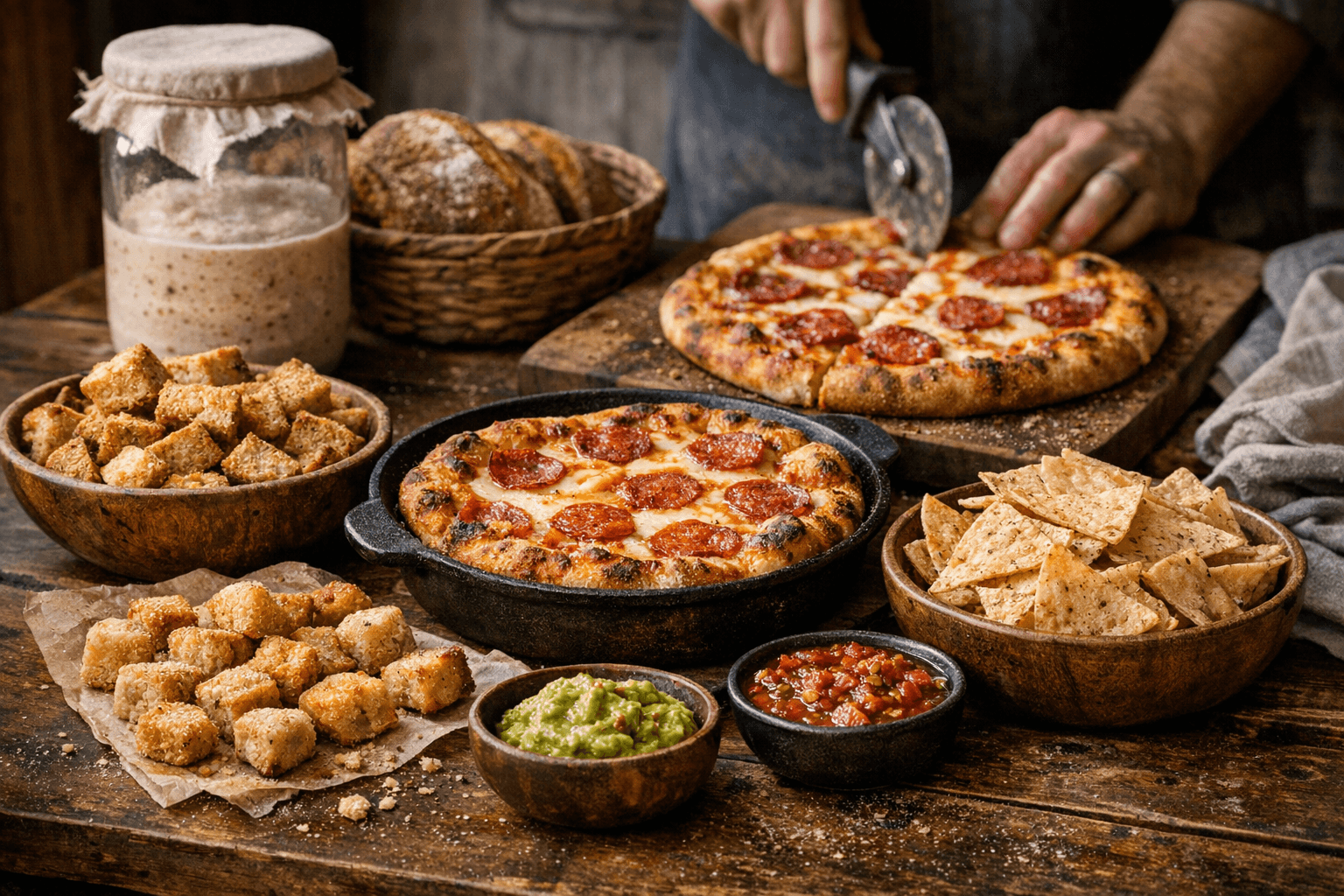
The fermentation that makes a sourdough loaf worth eating is now the selling point on products you'd never expect to find next to your starter jar. According to NOSH, sourdough innovation is surging beyond bread into croutons, frozen pizza, tortillas, and instant powder, driven by consumer demand for gut-healthy fermented foods. That's not a niche bakery trend anymore; it's a full aisle strategy.
The gut-health engine behind the expansion
The core appeal is biological, not aesthetic. Sourdough's long fermentation process breaks down gluten and phytic acid in ways that straight yeasted breads don't, and brands are leaning hard into the claim that it's easier to digest and feeds good bacteria in the gut. NOSH frames the broader movement bluntly: brands are leveraging fermentation benefits across aisles, not just across loaf sizes.
For the sourdough community, this is familiar territory. You already know the difference between a properly fermented long-cold-proof loaf and a grocery store bread stamped "sourdough" with a splash of vinegar for flavor. The question now is whether these expanded product categories are carrying genuine fermentation culture through the process or just borrowing the branding. That's worth watching closely as more SKUs hit shelves.
Kooshy Snacks and the Sourdough Minis at Expo West 2026
The most concrete example of this shift right now is Kooshy Snacks, which showed its Sourdough Minis at Expo West 2026. TrendHunter describes them as "gut-friendly bread bites" that are "light and crunchy" and made with avocado oil, a formulation choice that positions them squarely in the better-for-you snack segment rather than the conventional cracker aisle.
Three flavors were presented: Sea Salt, White Cheddar, and Garlic Bread. The Garlic Bread flavor in particular is a smart move, pulling in the comfort-food association of a classic sourdough pairing without requiring anyone to actually bake anything. Kooshy isn't starting from zero here either. The brand already produces sourdough-based croutons, stuffing mixes, and breadcrumbs, so the Minis represent a logical extension of an existing fermented-grain lineup rather than a pivot from nowhere.
The avocado oil detail matters from a formulation standpoint. It signals a cleaner-label approach compared to the seed oils that dominate most shelf-stable snack formats. Whether the sourdough fermentation process survives the manufacturing required to produce a stable, crunchy snack bite is a question worth putting to the company directly, but the positioning is coherent and the Expo West 2026 showing puts it in front of the buyers and press who move products into retail.
Where the category expansion is heading
Beyond Kooshy, NOSH's reporting points to four product categories where sourdough fermentation is gaining traction: croutons, frozen pizza, tortillas, and instant powder. Each one represents a different set of production and formulation challenges.
Frozen sourdough pizza is arguably the most ambitious. Getting fermentation character to survive the freeze-thaw cycle while maintaining a crust texture that holds up to toppings is a real technical problem. Sourdough tortillas face a similar issue: traditional tortilla production favors speed and uniformity, neither of which are natural allies of a long ferment. Instant sourdough powder is perhaps the most interesting category because it brings fermentation benefits to home cooks who aren't managing a starter, though the authenticity question gets complicated quickly.
TrendHunter's trend analysis identifies three areas where this expansion has the most commercial logic:
- Packaged Snacks: Better-for-you snack brands can extend into fermented or sourdough-based lines to capture health-motivated consumers seeking convenient, microbiome-supporting options.
- Foodservice and Restaurants: Menu developers have room to introduce gut-friendly bread components and snackable sides that appeal to diners prioritizing digestive comfort alongside taste.
- Health and Wellness Retail: Specialty grocers and wellness chains may curate fermented-grain and sourdough snack assortments that align clinical gut-health trends with mainstream snacking habits.
That foodservice angle is underplayed right now. A sourdough crouton or fermented flatbread as a menu component gives restaurants a functional health story on an otherwise unremarkable bread basket item. It's a low-friction entry point for chefs who want to nod toward gut health without restructuring their whole menu.
The fermentation renaissance and what it means for the sourdough community
TrendHunter places this product expansion inside a broader "Fermented Food Renaissance," noting that rising consumer interest in fermentation-driven health benefits creates scope for novel shelf-stable products that leverage live-culture narratives and digestive wellness positioning. The "Functional Snackables" theme adds another layer: snack formats that combine craveable textures with measurable gut-health claims open space for products that balance indulgence and digestive benefits without sacrificing flavor.
For those of us who have been maintaining starters and obsessing over crumb structure for years, the mainstreaming of sourdough's health story is genuinely interesting, even if some of the commercial execution deserves scrutiny. The fermentation that makes your Saturday morning country loaf worth the 36-hour process is a real thing with real biological effects. Whether a shelf-stable cracker can legitimately carry that story depends entirely on how the product is made, and right now the industry is moving faster than the transparency around process.
The "Crunchy Gut-friendly Formats" theme identified by TrendHunter points toward something worth tracking: reformulating traditionally indulgent crunchy items into gut-supporting versions represents a genuinely new product category, not just a relabeling exercise. Chips, crackers, and snack bites made with fermented grain base rather than conventional flour could deliver real prebiotic or probiotic value if the fermentation is preserved through processing.
Related innovations on the horizon
TrendHunter's related ideas include Smart Sourdough Kits, Sourdough Pizza Pop-Ups, and notably Crustello from Race Box, which uses AI-backed sensor monitoring for crust development. That last one is worth flagging for the home baker community: AI-assisted fermentation monitoring tools are moving from concept to product, which could eventually mean consumer-facing devices that take some of the guesswork out of bulk fermentation timing and oven spring prediction.
Sourdough pizza pop-ups are already a real format in urban food markets, and the category momentum from brands like Kooshy will only make that positioning easier to sell to diners who are already primed to associate sourdough crust with digestive benefit.
The bottom line is that sourdough's expansion beyond bread is being pulled by genuine consumer appetite for fermented foods, not just a branding cycle. The brands executing it well will be the ones who can demonstrate that the fermentation is real, measurable, and preserved in the final product. That's the standard this community should hold them to.
This article was produced by Prism’s automated news system from verified source data, official records, and press releases, then run through automated quality and moderation checks before publishing. The system is built and supervised by the people who set the standards it runs under. Read our full AI policy.
Did this article answer your question?