Sourdough Naan Brings Starter Into Quick, Versatile Weeknight Flatbread
Starter leaves the bread basket and lands in a skillet here. This sourdough naan is soft, tangy, and built for wraps, curries, and weeknight leftovers.
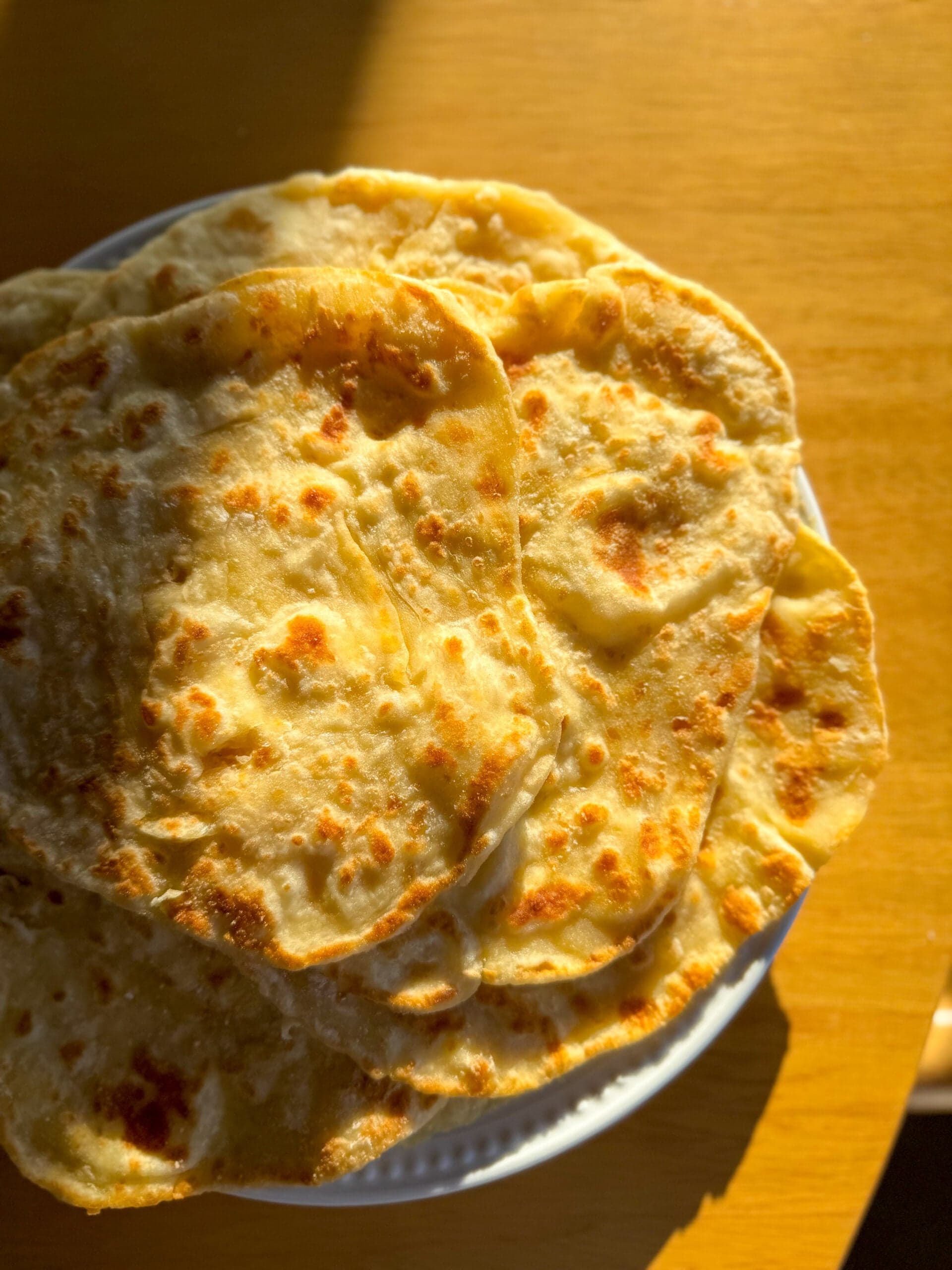
Sourdough naan is the rare starter recipe that actually behaves like dinner
Naan is already one of the most useful breads in the flatbread world, and sourdough makes it even more practical. Britannica describes naan as a teardrop-shaped, leavened flatbread that was traditionally baked in a tandoor oven, but its spread through South Asian and Middle Eastern cuisines also made it easy to adapt to home kitchens. Jillian Glenn’s version leans into that shift: it turns sourdough starter into something you can cook in a skillet, then put on the table the same day as curry, soup, or salad.
That is the part worth paying attention to. So much sourdough content gets trapped in the artisan-loaf lane, all crust and scoring and overnight tension. Sourdough naan does the opposite. It treats starter as a convenience ingredient, not a weekend commitment, and that makes it a much better fit for ordinary dinners.
What goes into the dough, and why it works
Glenn’s formula uses either active starter or discard, along with Greek yogurt, warm water, olive oil, salt, and all-purpose flour. That combination is doing real work: the starter brings flavor, the yogurt adds softness and tang, and the oil keeps the dough supple enough to roll thin without fighting back. All-purpose flour keeps the bread in practical territory, which matters when the goal is a fast flatbread rather than a high-maintenance project.
King Arthur Baking makes the same basic point from a slightly different angle. Its sourdough naan recipe says discard adds tang, yogurt amplifies it, bread flour pushes the chewiness, and ghee brings buttery richness. That comparison is useful because it shows how small ingredient changes change the end result. If you want softer and more neutral, all-purpose flour and olive oil are the easy path. If you want a richer, chewier naan with more bite, bread flour and ghee move it in that direction.
The timing is what makes it weeknight food
The real selling point is not just flavor, it is pacing. Glenn’s dough ferments for six to eight hours, then gets divided into 12 pieces, rolled thin, and cooked for 30 to 45 seconds per side until golden spots form. That is a tight, realistic process for home bakers who want fresh flatbread without building their evening around it. It also means you can work the dough earlier in the day, then cook only what you need when dinner is ready.
The skillet matters just as much as the fermentation schedule. There is no Dutch oven here and no pizza stone to preheat or baby. That lowers the barrier a lot, especially for people who already have a jar of starter in the fridge and do not want to turn every bread project into an equipment decision. Little Spoon Farm’s version makes the same case from another direction, saying sourdough naan can be mixed in the morning and enjoyed in the evening. A discard naan formula using baking powder and baking soda can even be ready in under half an hour, which shows how much room this category has between emergency bread and more developed sourdough flavor.
Why sourdough changes naan instead of just complicating it
A lot of home naan recipes are fine, but sourdough gives this bread a deeper, more grown-up flavor. Glenn describes hers as soft, fluffy, and lightly tangy, and that is exactly the combination that makes naan useful on a weeknight. You get a bread that is tender enough for wrapping around fillings, but still structured enough to dip, scoop, and hold up to saucy food.
The texture is the other win. Glenn’s naan is meant to come out soft and pillowy with crisp edges, which is the sweet spot for a flatbread like this. It is not trying to be artisan bread in disguise. It is trying to be the kind of bread that disappears fast because it works with whatever is on the table.
Where this bread earns its keep
This is the kind of recipe that pays off in ordinary meals, not just in a baking photo. The uses Glenn calls out are the ones that matter most: wraps, curry accompaniment, flatbread pizzas, and a side for soups and salads. Little Spoon Farm adds hummus, stews, sandwiches, and even more flatbread pizza, which is exactly the kind of flexibility that makes a sourdough recipe feel worth repeating.
A batch divided into 12 pieces gives you more than one dinner move, too. You can serve some hot, tuck some into wraps for lunch, and use a few as an easy replacement for store-bought flatbread later in the week. That is the practical payoff here: one starter, one dough, multiple meals.
- Use active starter when you want a more predictable ferment and a stronger sourdough profile.
- Use discard when you want to clear out the jar and still get a useful, flavorful flatbread.
- Roll the dough thin enough that it cooks fast, but not so thin that it loses the soft center.
- Keep the skillet hot enough for those golden spots, because the short 30 to 45 second cook is part of what keeps the bread tender.
The bigger value of sourdough naan
Naan has always been a flexible bread, and that is why the sourdough version makes sense. It began as a traditional flatbread tied closely to South Asian and Middle Eastern cooking, but home bakers have turned it into something that can sit beside hummus, stew, sandwiches, or a pan of curry without asking much in return. Sourdough does not overcomplicate that equation. It simply adds more flavor, a little more chew, and a better reason to keep starter around.
That is the real appeal of this style of baking. It gets starter out of the bread basket and into the dinner rotation, where convenience matters as much as technique. When a recipe can turn a jar of discard or active starter into soft, tangy naan that cooks in seconds and works with whatever is for dinner, it is not a novelty. It is a smart way to bake.
This article was produced by Prism’s automated news system from verified source data, official records, and press releases, then run through automated quality and moderation checks before publishing. The system is built and supervised by the people who set the standards it runs under. Read our full AI policy.
Did this article answer your question?