Sourdough starter feeding ratios tested for faster, predictable rises
1:5:5 gets a starter moving fast; 1:100:100 buys you time. The right feed is the one that matches your bake window, not your pantry math.
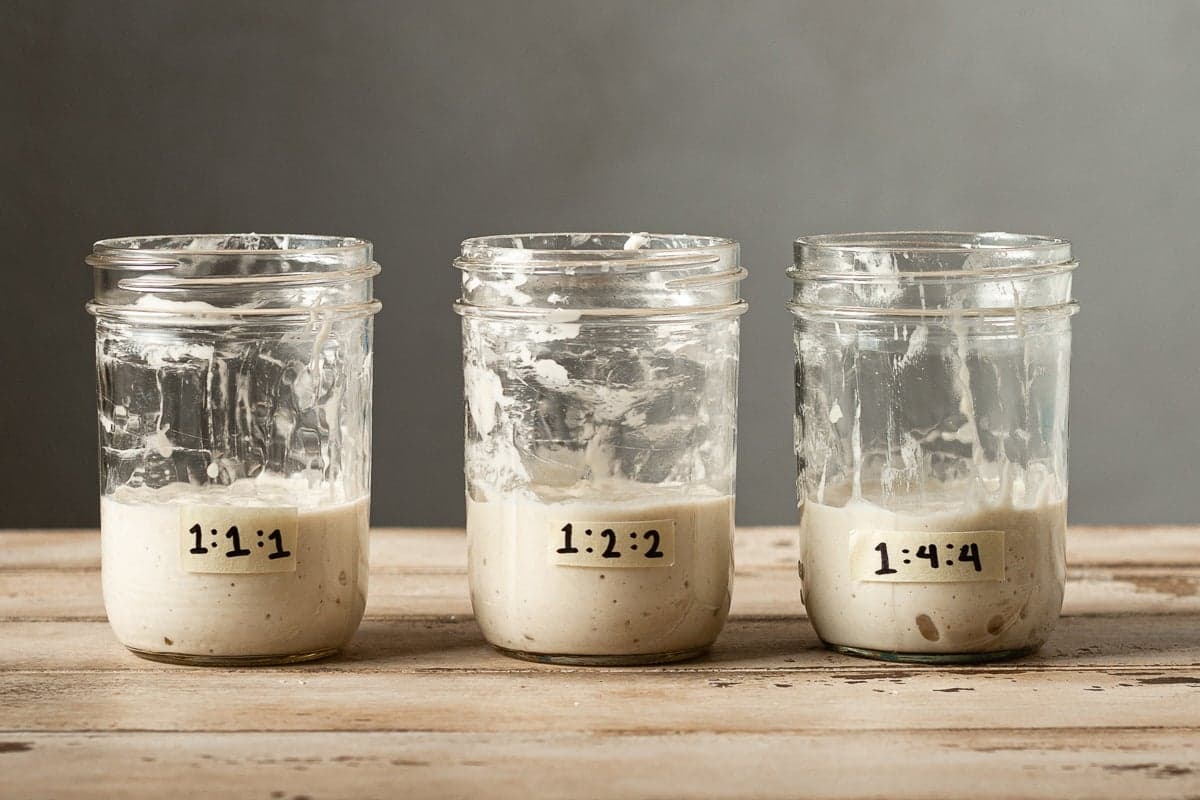
The feed ratio is the schedule, not just the formula
If your starter keeps missing your bake window, the fix is often not more flour or a warmer counter. It is choosing the right ratio for the job. A 1:5:5 feed is the practical choice when you want a starter to wake up faster for a same-day loaf, while 1:100:100 is the lever you pull when you want a long ferment, a slower rise, or less acidity in the build.
That is the real tradeoff home bakers care about: speed versus stretch. Feed too small and the starter can peak before you are ready. Feed too large and it may still be sluggish when you want to mix dough. The ratio changes the rise curve, the peak, and how neatly the starter fits into your day.
What the numbers actually mean
King Arthur Baking defines sourdough feeding ratios as starter:flour:water by weight. In that system, 1:1:1 means equal parts of each ingredient by weight. So 1:5:5 is one part starter, five parts flour, and five parts water. 1:100:100 is the same structure, just scaled way up.
That matters because the math is not cosmetic. A small feed gives the microbes less fresh food to work through, so activity shows up sooner. A huge feed dilutes the seed and slows the climb, which can be exactly what you want if you are managing a starter between work shifts, overnight rest, or a baking schedule that runs late.
Why the side-by-side test is so useful
The most convincing way to understand this is the simplest way: two jars, same starter, same flour, same water, same kitchen temperature, and only the ratio changed. One jar gets 1:5:5. The other gets 1:100:100. Mark both, set them side by side, and watch what happens.

That kind of comparison turns starter care from kitchen folklore into something you can actually plan around. Instead of guessing whether a feed will peak in time, you are looking at a real rise curve and making decisions from that. The point is not that one ratio is universally better. The point is that each one buys you a different amount of control.
When 1:5:5 earns its spot
Use 1:5:5 when you need a starter that gets active in a hurry. It is the cleaner choice for same-day baking because it can bring the culture to life fast enough to line up with mixing, bulk fermentation, and proofing on the same schedule. It also works well when your day is busy and you want the starter to behave predictably without an all-day wait.
Room-temperature starter is typically fed every 12 hours, and that is where a smaller feed can be very handy. King Arthur notes that starter organisms thrive at room temperature, which is why this ratio makes sense when you are keeping the culture active on the counter and feeding it as part of a regular routine.
When 1:100:100 is the better tool
A 1:100:100 feed is not about making the starter stronger in the short term. It is about giving it a much longer runway. That can be useful for overnight builds, for stretching fermentation into a slower schedule, or for reducing acidity when you do not want the starter to push hard and fast.
This is also the better fit when you are not baking often and want the starter maintenance to be less demanding. King Arthur’s standard maintenance advice splits the world neatly: keep a starter at room temperature and feed it daily or every 12 hours, or store it in the refrigerator and feed it weekly. The larger feed makes more sense in the slower, less hands-on lane.

How to tell you picked the wrong feed
The easiest warning sign is timing. If your starter hits peak long before you are ready to mix dough, the feed was too small for that bake window. If it is still behind when you need it to be ready, the feed was too large or the schedule was too tight.
You can also read the mismatch in your routine. A starter that keeps outrunning your day is telling you to stretch the feed or chill it. A starter that drags when you need a same-day bake is telling you to shorten the build or use a smaller, faster feed. The right ratio is the one that gives you a peak when you can use it, not the one that looks biggest on paper.
Why this fits the way sourdough is being talked about now
The broader shift in sourdough coverage is away from ritual and toward control. The Perfect Loaf describes starter as a stable blend of wild yeasts and lactic acid bacteria, and that framing matters because it treats feeding as a way to manage strength, fermentation activity, and flavor. Feeding ratios are not just maintenance instructions. They are how you scale a starter or a levain build to suit the bread you want to make.
King Arthur Baking has been moving in the same direction. It recently trimmed its sourdough starter recipe to make a smaller amount after home baker feedback, and it has also pushed harder on timing, with a guide built around fitting starter maintenance into real life. That is the right way to think about this now: the starter is not asking for blind obedience, it is asking for a schedule that matches yours.
A 1:5:5 feed gets you speed when you need it. A 1:100:100 feed gives you breathing room when you need that more. Once you start matching the ratio to the bake window, starter care stops feeling mysterious and starts behaving like the tool it is.
This article was produced by Prism’s automated news system from verified source data, official records, and press releases, then run through automated quality and moderation checks before publishing. The system is built and supervised by the people who set the standards it runs under. Read our full AI policy.
Did this article answer your question?