Sourdough Workshops and Starter Socials Surge Across the U.S. in April
Cold retards, autolyse, and levain timing drove April's sourdough workshop surge from Portland to Sioux Falls, with syllabi bakers can run at home today.
The cold retard is not a technique reserved for advanced bakers. It is a temperature-controlled fermentation decision that shapes flavor at the bacterial level, and it anchored one of three reproducible skill modules taught at sourdough workshops that spread across Spanish Fork, Portland, Sioux Falls, and university extension centers during the first week of April.
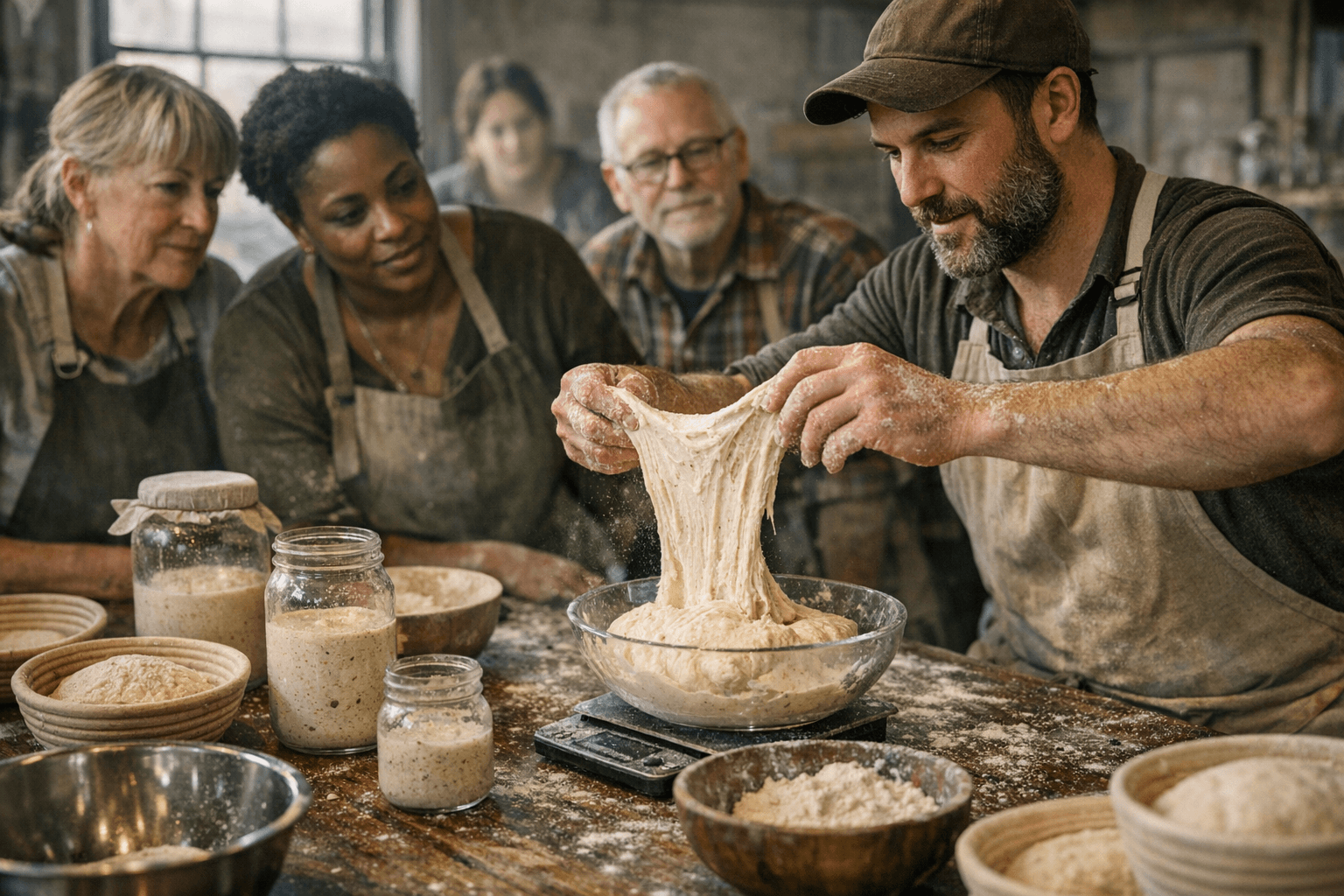
Timed around National Sourdough Bread Day on April 1, the cluster of events included paid masterclasses, community library starter giveaways, and pop-up showcases listed to local calendars between April 1 and 8. Several masterclasses scheduled for April 24 and 25 signal the surge extends well into the month. What set this run of events apart was the structure: organizers built sessions around specific, repeatable modules, offering take-home starters, feeding-ratio cards, and curricula designed for both beginners and intermediate bakers working through troubleshooting and schedule-friendly feeding protocols.
Three technique modules dominated the advertised syllabi. Here is what each one teaches and how to run the drill at home this weekend.
Class 1: Levain Building. The key technique is calibrating a levain build to ambient temperature rather than a fixed timer. Fermentation accelerates in heat and slows in cold, so a levain that peaks in four hours at 78 degrees may need six at 68. The common mistake is ignoring kitchen temperature and committing to a rigid schedule, which sends either an under-ripe or already-collapsed levain into the dough. The measurable success signal is a levain that has doubled, domes at its peak, and passes the float test before it begins to fall. At-home drill: log levain height every 30 minutes over one full build cycle and note room temperature. That single session produces a personalized fermentation chart usable across every future bake.
Class 2: Autolyse. The technique is combining flour and water before adding levain or salt, then resting the mixture for 20 to 60 minutes. This allows protease and amylase enzymes to begin breaking down proteins and starches, reducing total mixing time and producing a more extensible, open crumb. The common mistake is skipping autolyse under time pressure, then over-mixing to compensate, which overtightens gluten and closes the crumb. The measurable success signal is dough that passes the windowpane test after one or two stretch-and-fold sets rather than four or five. Drill: mix flour and water this weekend, cover the bowl, and walk away for 30 minutes before adding your levain. Note how much less resistance you feel on that first fold.
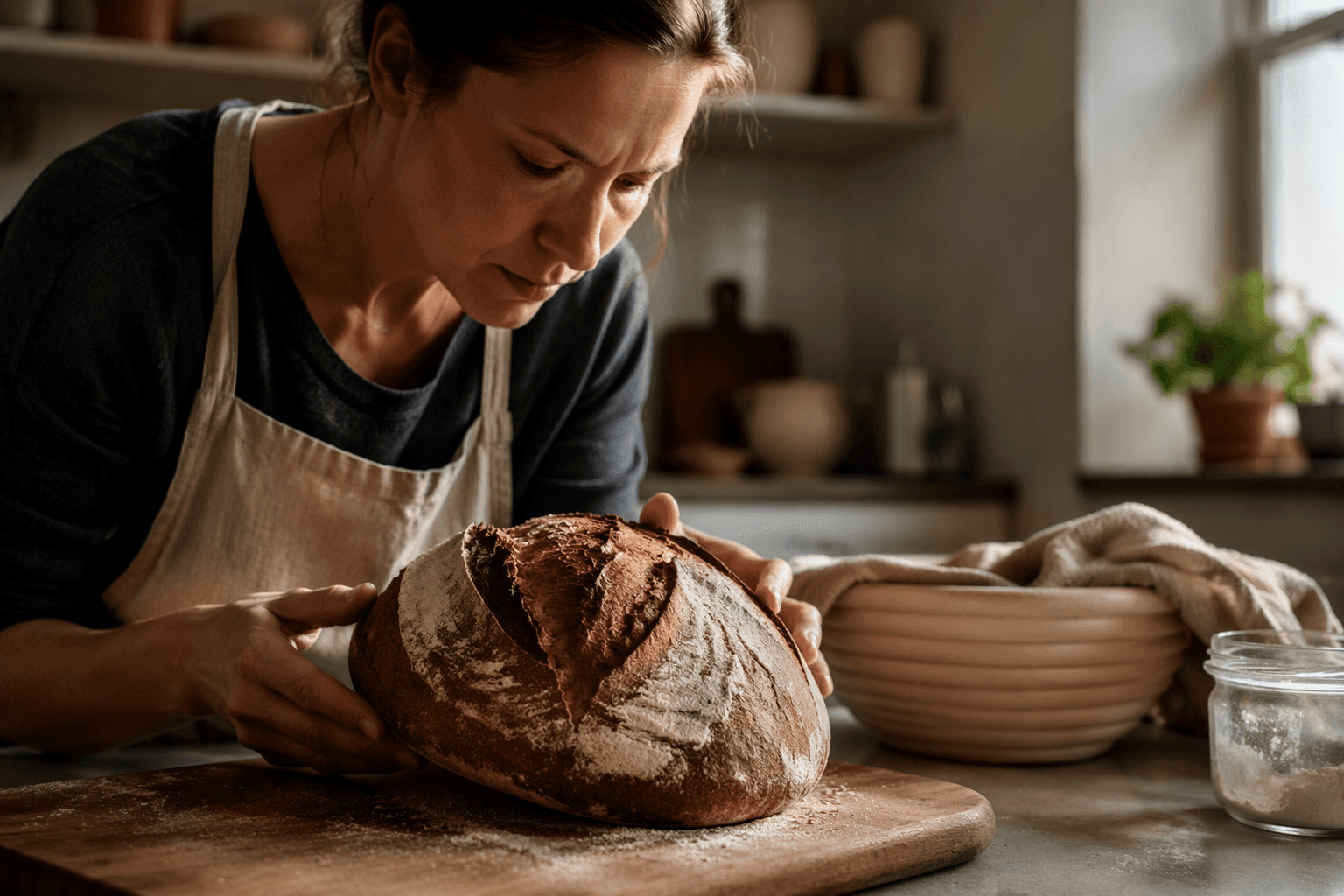
Class 3: Cold Retardation. The technique is loading shaped loaves into a 38 to 40 degree refrigerator for eight to sixteen hours after bulk fermentation is complete. Slow cold fermentation shifts the microbial balance toward acetic acid production, deepening flavor complexity in a way no room-temperature bake can replicate. The common mistake is retarding before bulk has actually finished, which leaves gluten under-developed and produces a dense, gummy crumb. The measurable success signal is a loaf that holds its shape straight from the fridge, resists spreading on the bench, and scores cleanly under a lame without dragging. Drill: refrigerate a shaped loaf overnight this weekend, bake it cold, and compare the crust blistering and crumb cross-section to your last room-temperature bake.
The starter socials running alongside these masterclasses added a layer that pure technique sessions rarely reach. Participants left with jars of active starter and the feeding ratios and rescue protocols needed to sustain one across seasons and schedules, reinforcing what organizers framed as starter resilience rather than just starter ownership.
Try one of these three drills this weekend and share your crumb shot.
This article was produced by Prism’s automated news system from verified source data, official records, and press releases, then run through automated quality and moderation checks before publishing. The system is built and supervised by the people who set the standards it runs under. Read our full AI policy.
Did this article answer your question?