Copenhagen's Mother Pizza Brings Sourdough Fermentation to Artisan Pizza Crusts
Mother's sourdough margherita has ranked among the world's 50 best pizzas, and the Copenhagen pizzeria has been proving natural fermentation belongs in pizza dough since 2010.

Mother has been doing what most pizzerias only recently started talking about. The Copenhagen restaurant opened in the Meatpacking District in 2010 with a commitment most pizza makers won't make: 100 percent natural and organic sourdough dough, wood-fired, every service. Its margherita has ranked as a recurring presence in the 50 Top Pizza guide's list of the world's best pizzas, and a second city-center location opened at Ny Østergade 14 in 2025 to meet demand that hasn't slowed in fifteen years.
The kitchen team draws from the regional Italian cooking traditions its members grew up with, applying sourdough fermentation rather than commercial yeast to every crust. Slow fermentation is the technical core: wild yeasts and beneficial bacteria in the starter break down complex carbohydrates over hours rather than minutes, producing lactic and acetic acids that give the crust depth and a characteristic tang. That extended fermentation also begins to pre-digest gluten in the flour, which is part of why naturally leavened pizza tends to sit lighter than its quick-yeast equivalent.
That isn't just kitchen intuition. A 2025 study published in a peer-reviewed journal examined microbial leavening agents and fermentation time in Neapolitan pizza and found measurable differences in digestibility between naturally leavened and commercial-yeast versions. Separate research on pizza pinsa romana found that sourdough biga fermentation specifically improved digestibility through a simulated in vitro model. The science is catching up to what Mother's kitchen has been demonstrating in practice since before sourdough became a pandemic hobby.
Copenhagen has been an unusually fertile environment for this kind of approach. Since Noma established a global template for fermentation-forward cooking through the New Nordic movement, restaurants across the city absorbed and adapted that framework. Tapperiet BRUS, the craft brewery in Nørrebro, built fermentation into its identity openly. Fine dining spots like Amass let guests see fermentation rooms directly. Mother belongs in that lineage, just on the more democratic end of it.
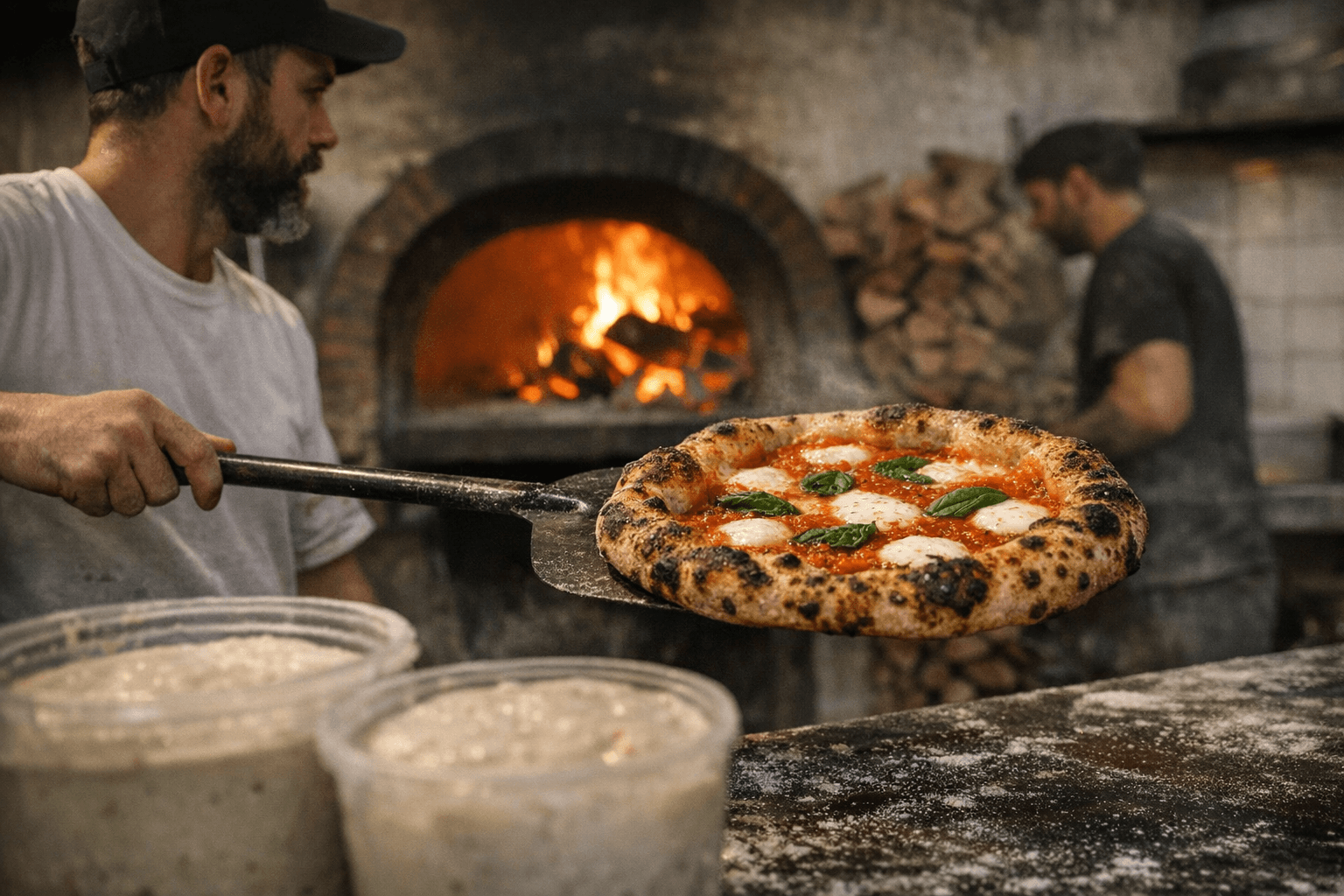
For sourdough bakers looking to extend their levain work into pizza, the key technical shifts are hydration and timing. Pizza doughs generally run lower in hydration than bread doughs and benefit from shorter bulk fermentation paired with a higher final proof temperature. The oven gap between a home kitchen and Mother's wood-fired setup is real, but a baking steel or stone preheated at maximum temperature closes a significant part of it. The crumb structure you're after in a pizza crust, open but not slack, chewy without being doughy, is achievable with the same starter you're already maintaining.
Every weekday between 11:00 and 17:00, any of Mother's organic sourdough pizzas, including vegan and gluten-free options, is available for 100 Danish kroner at the Meatpacking District location. In one of Europe's more expensive dining cities, that pricing says something about what Mother has always been trying to do: put the best-fermented crust in front of as many people as possible.
This article was produced by Prism’s automated news system from verified source data, official records, and press releases, then run through automated quality and moderation checks before publishing. The system is built and supervised by the people who set the standards it runs under. Read our full AI policy.
Did this article answer your question?