Spelt Sourdough Fermentation Yields Peptides That May Help Control Blood Sugar
A 96-hour fermentation of spelt produced peptides that survived simulated digestion and blocked the two enzymes responsible for spiking blood sugar after a meal.
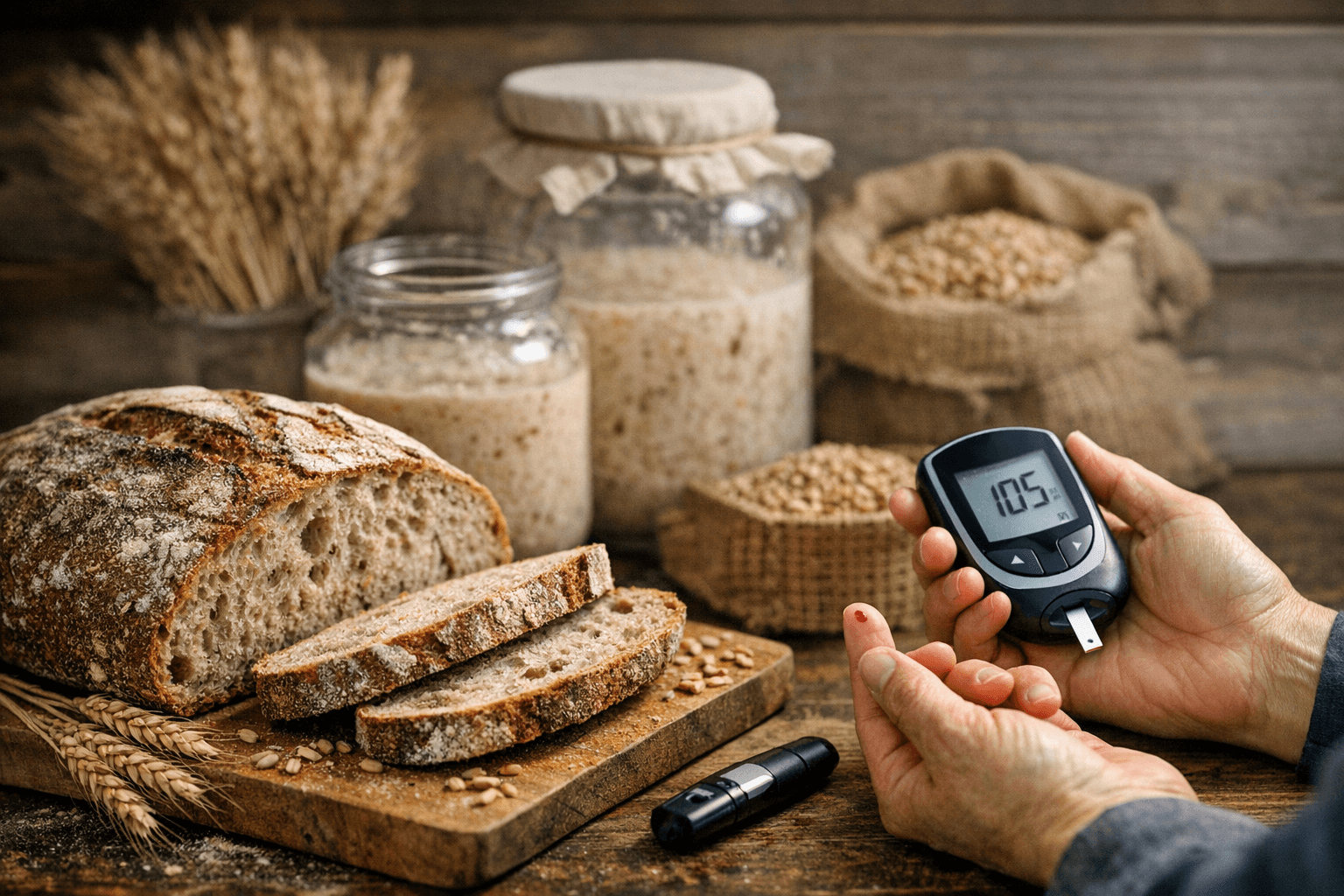
A 96-hour sourdough fermentation of Triticum dicoccum generated small, digestion-resistant peptides capable of inhibiting α-amylase and α-glucosidase, the two enzymes most responsible for spiking blood sugar after a carbohydrate-heavy meal. Published March 27 in Food Bioscience (DOI 10.1016/j.fbio.2026.108754), the study gives the extended-fermentation argument a biochemical backbone that vague "sourdough is healthier" claims never quite managed on their own.
The researchers ran T. dicoccum through a controlled 96-hour sourdough fermentation protocol, then put the resulting flour through INFOGEST, the standardized in vitro gastrointestinal digestion model built to simulate what actually survives the stomach and small intestine. The central question was precise: what molecules make it through digestion intact, and what biological activity do they retain once they get there?
The answers were specific. Prolonged fermentation increased protein solubility and drove proteolysis, releasing a pool of free amino acids that included gamma-aminobutyric acid (GABA) alongside the bioactive peptides. Crucially, those peptides held up through the simulated digestion sequence and retained inhibitory activity against both α-amylase and α-glucosidase. Both enzymes break down complex carbohydrates into simple sugars; blunting their activity is the same mechanism behind drug compounds and commercially developed functional foods targeting postprandial glucose response. The paper describes fermented spelt flour as "a promising functional ingredient for glycemic control."
For bakers, the practical implication cuts directly against the modern rush-fermentation habit. A four-hour bulk at room temperature is not the same biochemical environment as a 96-hour controlled ferment. The study establishes a clear directional finding: longer fermentation of this particular ancient wheat does something measurable at the molecular level that short fermentations simply cannot replicate.
The caveats are worth stating plainly. This is in vitro work, not a randomized controlled trial on people eating spelt sourdough and measuring postprandial glucose curves. Enzyme inhibition in a test tube does not guarantee the same effect in a person eating a slice alongside butter and coffee, where absorption rates, meal composition, and quantity all intervene. The authors call for further human studies and formulation research before these findings translate into clinical claims. The study also focused on one specific grain and one defined protocol; extrapolating to modern whole wheat, shorter ferments, or different starter cultures requires its own separate experimental work.
What the study does provide is an experimental template and a named mechanism. If you bake with spelt and have been running long, cold fermentations on gut feel, this paper gives you something concrete to point at: postbiotic peptide release, α-glucosidase inhibition, GABA accumulation. Documenting your fermentation variables, starter composition, hydration, and timing becomes more valuable when repeatable biochemical outcomes are part of the goal, not just a crumb structure you happen to like. The bench data from Food Bioscience, at minimum, justifies treating the 96-hour spelt loaf as something more than a scheduling quirk.
This article was produced by Prism’s automated news system from verified source data, official records, and press releases, then run through automated quality and moderation checks before publishing. The system is built and supervised by the people who set the standards it runs under. Read our full AI policy.
Did this article answer your question?