Steam and scoring turn sourdough into a showpiece loaf
Flat loaf, torn sidewall, or dull crust? The fix is usually a different lever: basket, score, or steam, in the right order and at the right moment.
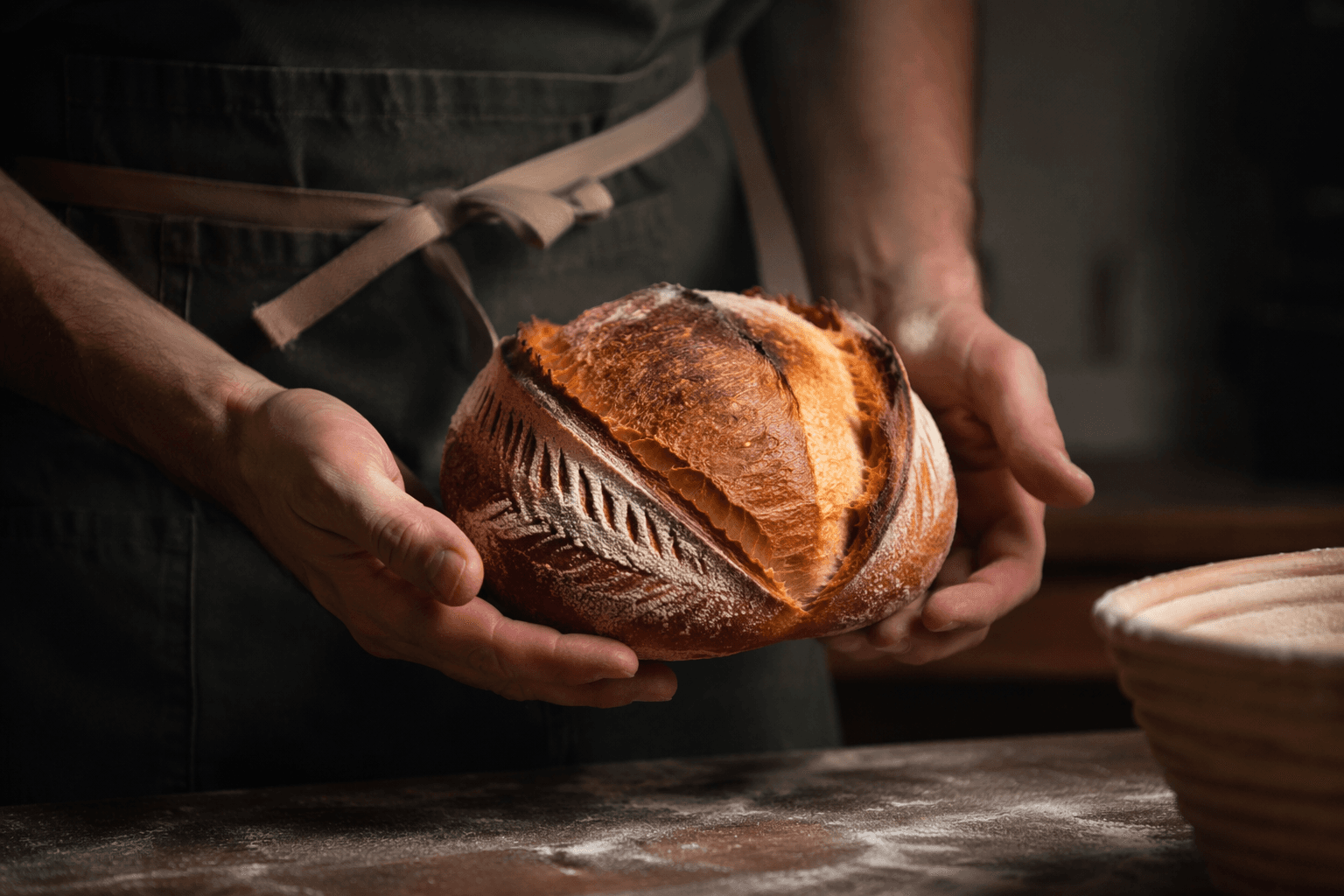
A proofing basket, a razor-blade score, and a burst of steam decide whether sourdough emerges tall or flat. In that last stretch of bake time, the crust stays flexible just long enough for the loaf to open where the baker intended.
Flat loaf: start with the basket
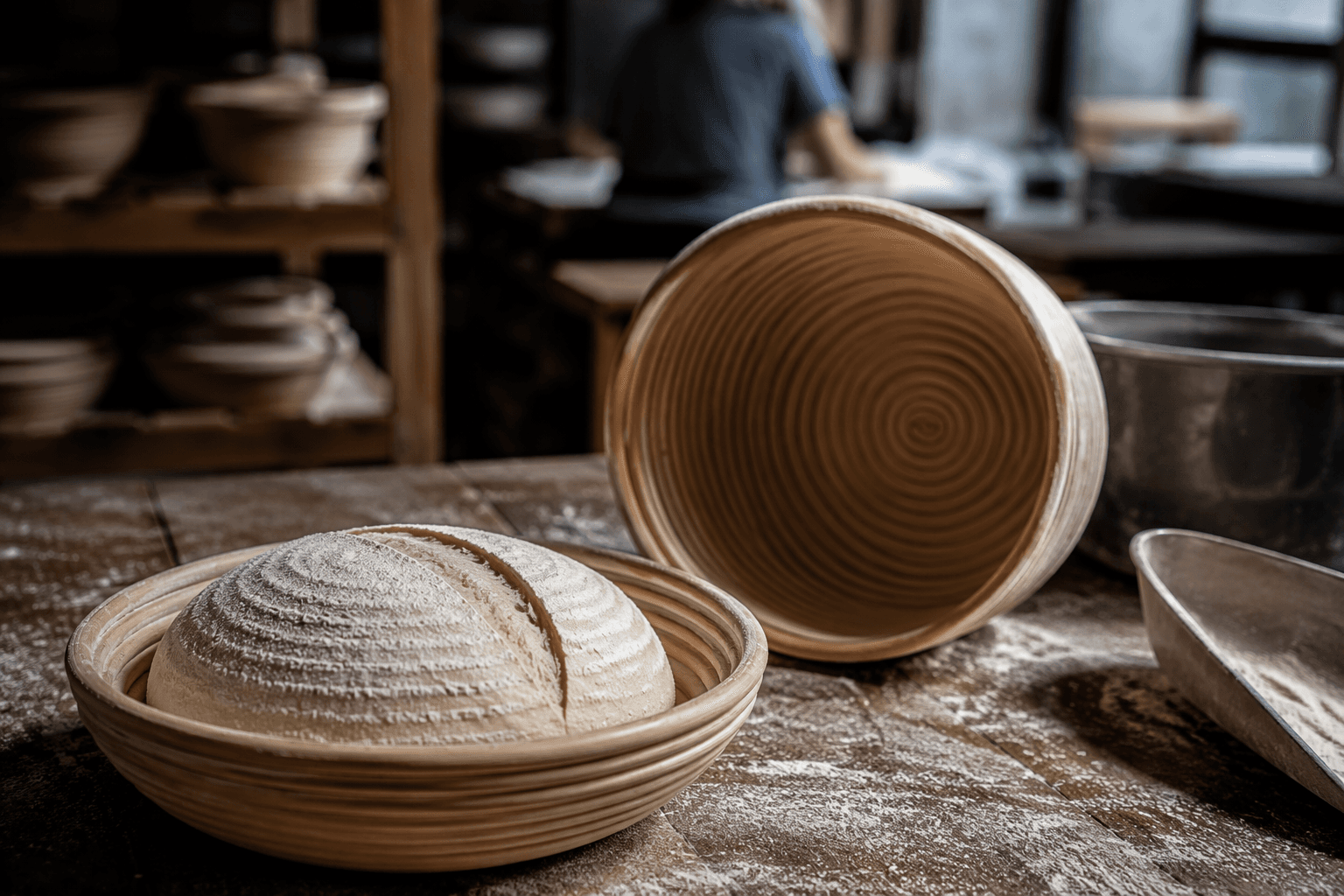
If the loaf spreads instead of rising, the first thing to check is the basket that held it during proofing. Bannetons and brotforms are European proofing baskets used for artisan-style bread, and the terms are often used interchangeably: banneton is the French name, brotform the German one. Their job is not decorative. They cradle the dough, build surface tension, and make the transfer to the oven safer and more controlled.
That shape work matters before the bake even begins. These baskets are commonly made from cane, but can also be made from wood pulp, willow, and other materials. King Arthur Baking lists one oval banneton set as holding around 1 3/4 pounds of dough and one oval brotform-and-liner set as holding up to 3 pounds. If the basket is too large, the dough can lose support and relax outward, leaving you with a loaf that looks tired before it ever springs.
Torn sidewall: let the score do the work
When a loaf blows out at one edge or tears along the side, the score is usually the first lever to adjust. Scoring means cutting the dough before baking with a razor blade called a lame, pronounced “lahm.” Those cuts are not decoration. They guide expansion in the oven, giving the loaf a planned place to open instead of forcing it to rupture at its weakest point.
The science is straightforward: as baking begins, the loaf temperature rises, yeast activity increases, and moisture in the dough turns to steam. That burst of expansion is oven spring, and good oven spring is what gives sourdough its open interior and thin crust. A well-placed score helps the loaf lift cleanly and form the ear or pattern bakers chase, while an unscored loaf can burst unpredictably. King Arthur Baking’s scoring trials found that three variables change the look of that ear: scoring depth, proof level, and dough strength.
Dull crust: trap steam, then let it escape
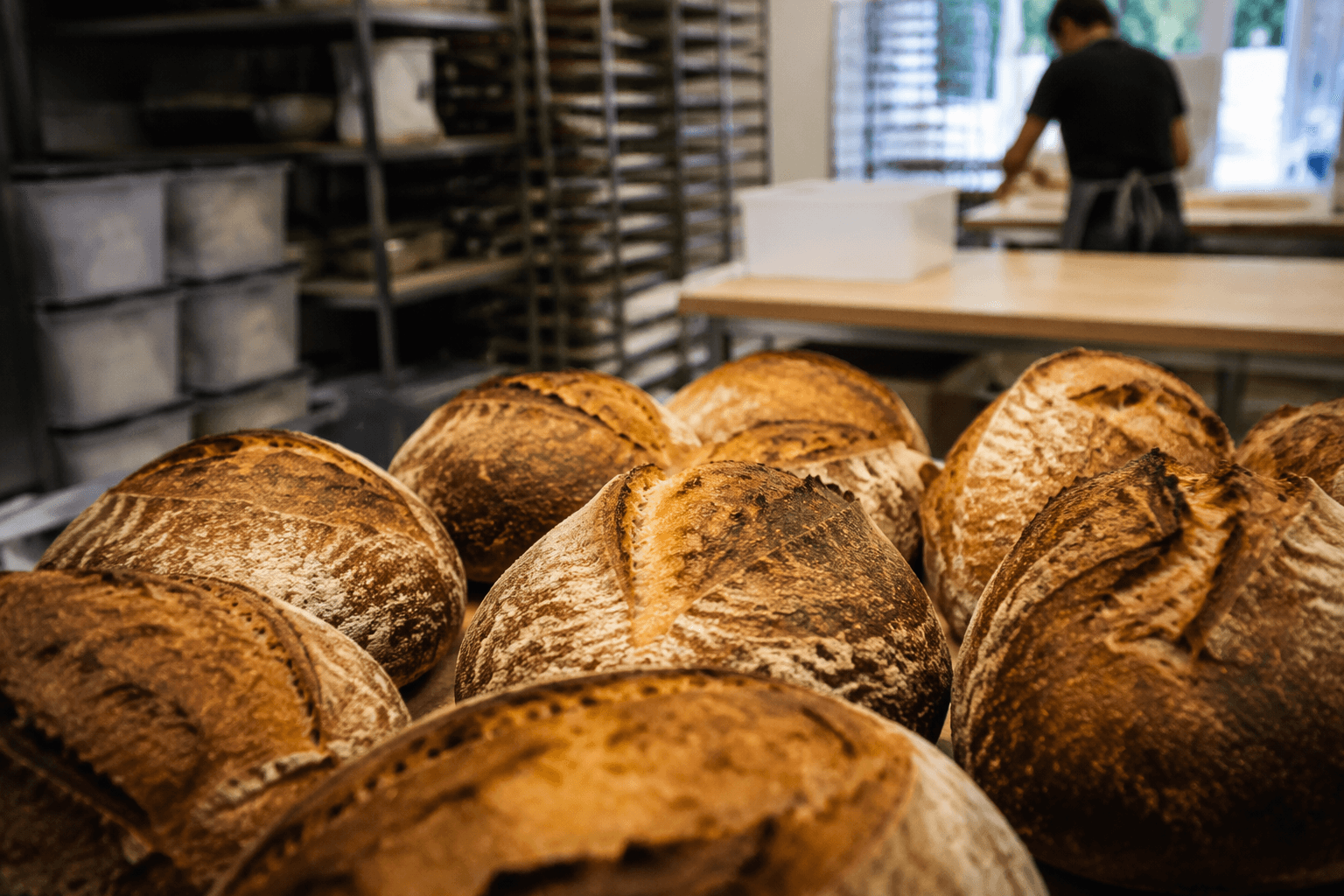
If the loaf springs but finishes pale, soft, or lackluster, the issue is usually steam management. Steam belongs at the start of the bake, because it keeps the loaf’s surface moist and flexible until maximum oven spring. That is why covered bakers, Dutch ovens, and other trapped-steam methods work so well in home kitchens: most home ovens lose steam quickly, while a covered baker traps the loaf’s own moisture so the crust does not set too soon.
The finish matters just as much as the start. King Arthur Baking recommends steaming early, then venting or uncovering after about twenty minutes in a trapped-steam bake so the crust can dry, firm up, and brown properly. In a combo cooker or cloche, parchment paper can help move delicate dough into the hot vessel, but the real trick is knowing when to remove the lid. A bread that stays damp too long may bloom, but it will not finish with the glossy, blistery, crackly shell people associate with a strong sourdough bake.
A 2021 review in Trends in Food Science & Technology found that steam baking produced larger pores than baking without steam, and that bread baked without steam had a more fragile crumb.
What the final bake is really doing
The loaf is already fermented, already shaped, and already proofed before it goes into the oven. A glossy crust, a crackly shell, and a big open crumb depend on that short window when moisture, heat, and expansion are working in the baker’s favor.
Reliable evidence of intentionally leavened bread reaches back to ancient Egypt around 4,500 to 3,500 BCE, and sourdough remained the standard breadmaking method for most of human history before industrial baker’s yeast took over in the late 19th and early 20th centuries. The FDA’s standards of identity are built to keep characteristics, ingredients, and production methods aligned with what consumers expect.
This article was produced by Prism’s automated news system from verified source data, official records, and press releases, then run through automated quality and moderation checks before publishing. The system is built and supervised by the people who set the standards it runs under. Read our full AI policy.
Did this article answer your question?