Sugar Geek Show updates beginner sourdough recipe for first-time success
Sugar Geek Show turns sourdough jargon into a two-day first loaf plan, using a forgiving Dutch oven bake to make peak-rising levain and sticky dough less scary.
A first loaf that explains itself
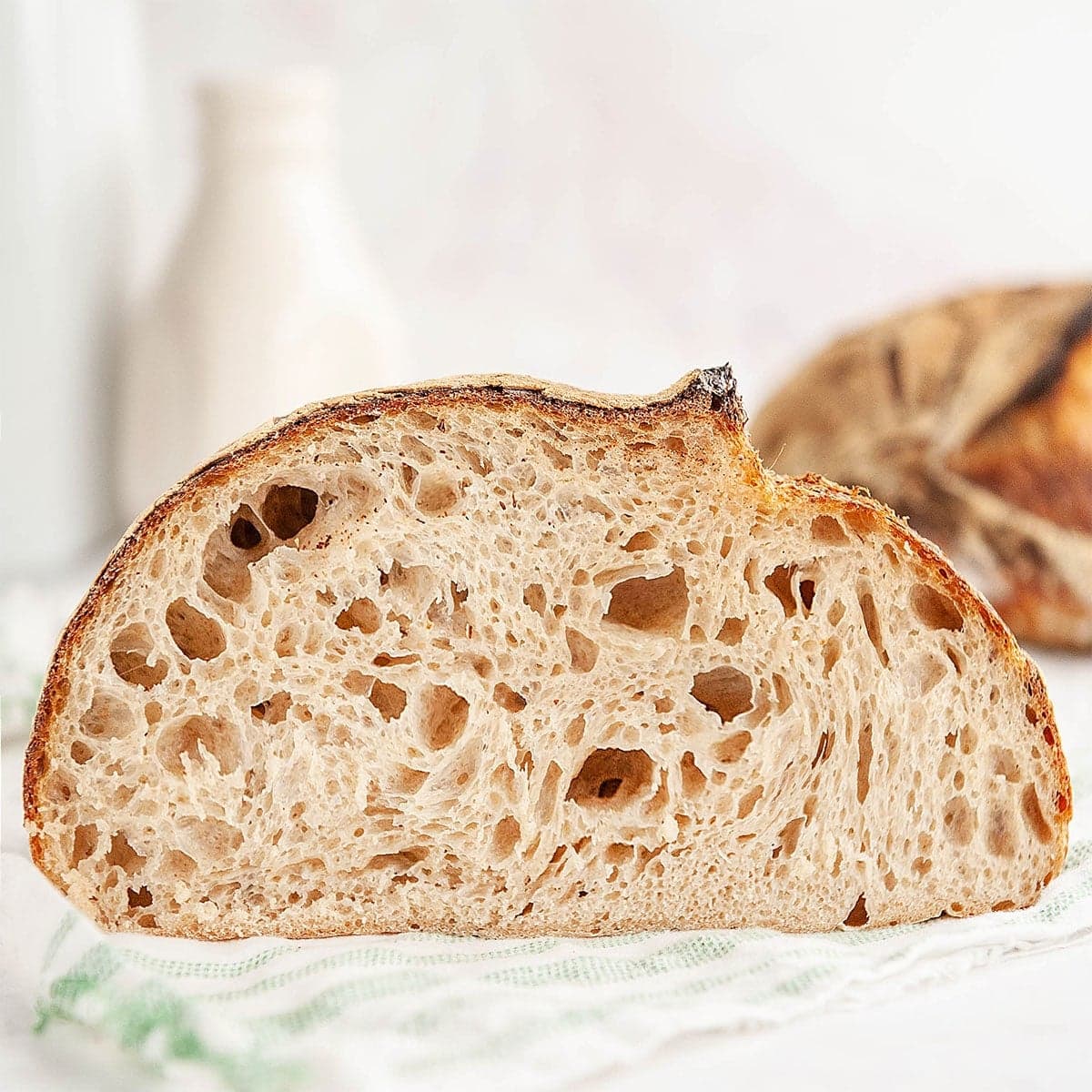
Sugar Geek Show’s updated beginner sourdough recipe is built for the moment when a new baker is staring down a bowl of sticky dough and wondering what all the vocabulary actually means. The recipe answers that anxiety with plain language, a Dutch oven bake, and a process designed to produce a tall loaf with an open crumb on the very first try.
What makes this version stand out is not speed, but clarity. It asks for about 30 minutes of active work spread across two days, then lets time do the rest in a long cold proof overnight, for a total of roughly 25 hours. That structure lowers the stakes: you are not racing a clock, you are following a sequence that is meant to be predictable.
Why the hydration number matters
The recipe uses 80 percent hydration, which is a striking choice for a beginner-focused loaf. In current sourdough teaching, 80 percent and above is often described as very sticky and more advanced, while 65 to 68 percent is usually framed as the more manageable starting range. Sugar Geek Show is not pretending this dough is easy in the hand. Instead, it treats a higher-hydration dough as a tool for confidence, flavor, and a more open crumb.
That matters because high hydration changes how dough behaves. It can help create the airy structure bakers want, but it also makes shaping and handling harder. By pairing that wetter dough with stretch-and-folds, cold proofing, and a direct-from-fridge bake, the recipe de-risks the parts that usually scare people off.
The language gets simpler before the dough does
The strongest teaching move in the recipe is how it explains sourdough’s most intimidating terms without burying beginners in theory. The ingredient list stays short: bread flour, all-purpose flour, whole wheat flour, water, active sourdough starter, and salt. From there, the method walks through each stage in a calm order, starting with building a levain in the morning and moving into autolyse, mixing, folding, bulk fermentation, shaping, and baking.
That kind of step-by-step structure matters because sourdough is often confusing less because the baking is impossible than because the language is packed with jargon. Sugar Geek Show treats levain, hydration, and fermentation timing as things a first-timer can learn by doing, not as secret knowledge reserved for seasoned bakers.
Peak-rise levain is the timing cue that changes everything
One of the most useful details in the recipe is its instruction to use the levain at peak rise, when it has doubled and is just about to fall. That cue gives the baker a visual target instead of a vague waiting game. Too early, and the levain is underpowered. Too late, and it has already lost the strength it needs to support the dough.
For a first-time baker, that kind of timing advice is confidence-building because it reduces guesswork. It turns the starter from a mysterious living thing into something you can read by shape and height. The result is not just better timing for one loaf, but a clearer sense of what healthy fermentation looks like.

Why the rest periods are doing real work
The recipe’s autolyse step fits neatly into that same teaching style. King Arthur Baking describes autolyse as a rest after flour and water are combined, and says the pause can reduce mixing time and increase extensibility. The Perfect Loaf has also noted that autolyse can improve flavor in some cases. Those ideas help explain why Sugar Geek Show’s workflow feels so forgiving: it gives the dough time to organize itself before the more active handling begins.
That is especially useful in a beginner recipe because it softens the physical demands of working with wet dough. Autolyse is not presented as a fancy chef term here. It becomes a practical pause that makes the dough easier to mix, stretch, and shape.
Built for handling, not for panic
After the levain and salt go in, the method calls for three to four stretch-and-fold sessions an hour apart, then bulk fermenting until doubled, shaping, and cold-proofing before baking straight from the fridge in a preheated Dutch oven. Each step is doing some of the emotional labor as much as the technical work. Stretch-and-folds replace aggressive kneading. Cold proofing slows the timeline. Baking from the fridge removes one more variable.
The Dutch oven matters too. It traps steam, which helps the loaf spring in the oven and gives the bread the height and crust that beginners usually want to see from a first attempt. That covered bake, paired with a wetter dough, creates a structure that feels ambitious without being reckless.
Part of a broader move toward clearer sourdough teaching
Sugar Geek Show’s update sits inside a larger shift in sourdough education: less gatekeeping, more translation. The recipe does not just hand over instructions, it translates the process into decisions a new baker can understand. Why does the dough feel sticky? Because 80 percent hydration does that. Why does the dough rest? To build extensibility. Why does the loaf go into the oven cold? To make the workflow more predictable and support oven spring.
The site also updated a sourdough sandwich bread post on the same day, May 27, 2026, which suggests this is not a one-off recipe refresh but a broader push to make sourdough more approachable across different loaf styles. Together, the rustic boules and softer sandwich bread format show the same editorial instinct: make the process legible first, then let the baker grow into the vocabulary.
Sugar Geek Show’s beginner loaf works because it respects the thing that overwhelms most newcomers. It does not hide the sticky dough or the long timeline. It explains them, uses them, and turns them into the path toward that first successful loaf.
This article was produced by Prism’s automated news system from verified source data, official records, and press releases, then run through automated quality and moderation checks before publishing. The system is built and supervised by the people who set the standards it runs under. Read our full AI policy.
Know something we missed? Have a correction or additional information?
Submit a Tip