TikTok pushes sourdough beyond country loaves with seven viral recipes
Seven viral loaves show sourdough has become dinner, dessert and a camera-ready canvas, but only a few actually teach a better bake.
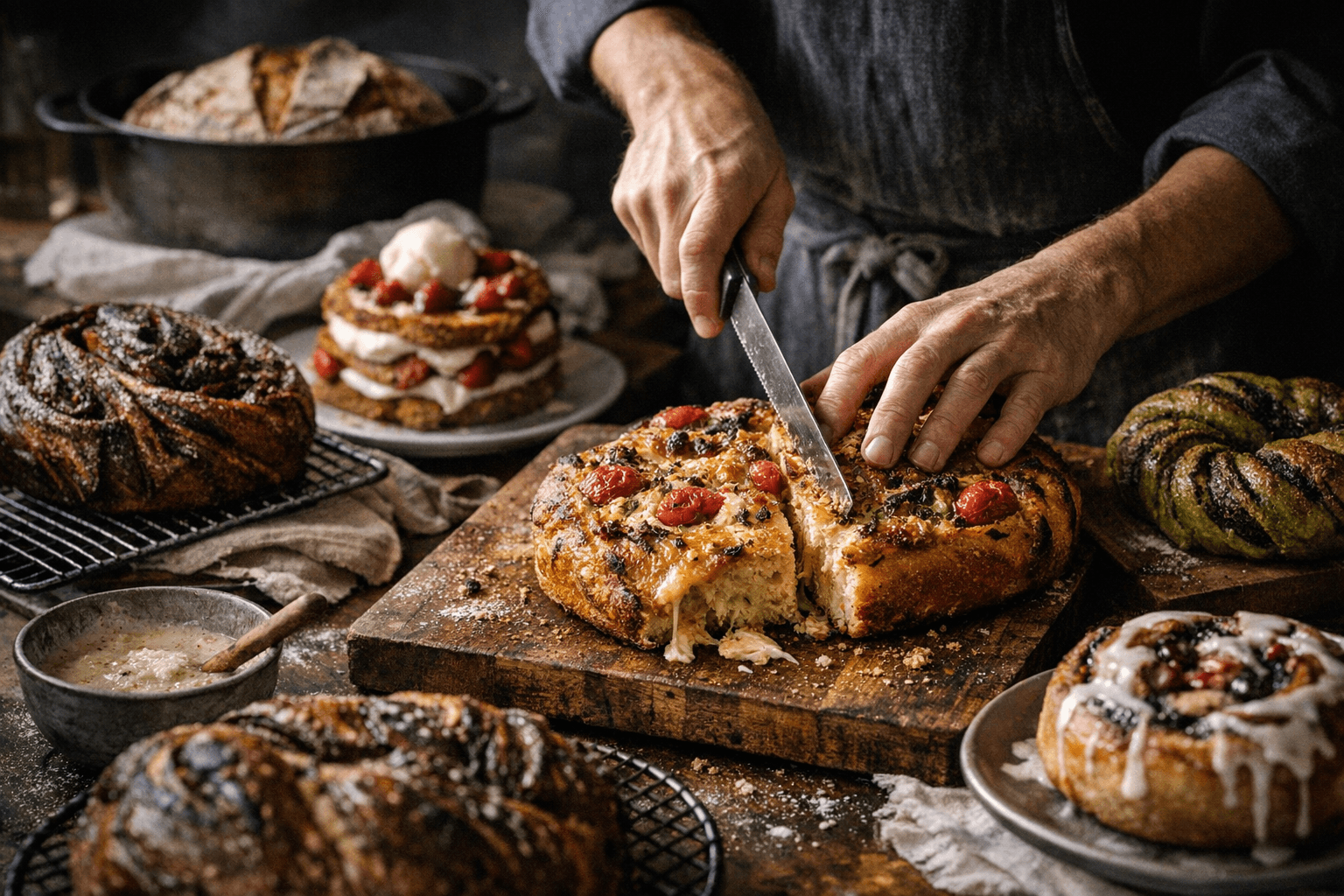
Pepperoni pizza sourdough loaf
The pepperoni pizza sourdough loaf, which drew 7.7 million views, is the easiest proof that sourdough has moved far past the country boule. It works because it solves a real problem every home baker understands: how to make a loaf feel like a full meal without losing the structure that makes sourdough worth baking in the first place. Pepperoni, melted cheese and familiar pizza flavor give the bread enough identity that the ferment still matters, not just the topping.
If you want a genuinely useful next-loaf experiment, this is one of the strongest candidates. It asks whether your dough can hold inclusions, bake through cleanly and still slice like bread instead of collapsing into a stuffed roll. That makes it more than a viral stunt, because the result tells you something about your shaping, strength and oven management.
Chili-oil crunch sourdough
The chili-oil crunch sourdough, with scallions and cheddar, pulled 2.2 million views and lands in the sweet spot between snack bread and flavor bomb. It is one of the best examples of a recipe that reads instantly on screen, because the green scallions, the cheese and the glossy chili oil make the loaf look bold before the first slice is cut. In baking terms, that visual clarity comes with a test: can your dough stay open and lively when it is carrying fat, heat and added moisture?
That is why this loaf is another true next-loaf candidate. It teaches you how far you can push a sourdough base without burying the crumb, and it rewards a baker who can keep the balance right between punchy filling and good oven spring. If the pepperoni loaf is the clean dinner bridge, this one is the control test for savory inclusions.
Buffalo jalapeño popper loaf
The buffalo jalapeño popper loaf pushes the trend harder, loading in bacon bits and pepper jack in a way that feels built for game day. It is also the one most likely to expose weak dough management, because bacon and cheese can weigh down the loaf and make the crumb feel heavy if the dough is underdeveloped or the fermentation is off. That does not make it a bad idea, but it does make it a less forgiving one.
For bakers chasing a viral look, this is where the line between spectacle and structure gets real. A loaf like this can be exciting, but it also punishes rushed proofing and sloppy inclusion handling, which means it is better as an advanced experiment than a first swing at flavored sourdough. The payoff is obvious; the margin for error is not.
Funfetti sourdough
Funfetti sourdough takes a different route altogether, leaning on sprinkles and a sweet, celebratory profile instead of savory heft. It is the kind of recipe that immediately signals occasion, which helps explain why it travels so well in a feed, but it also raises the harder baking question of how sugar and color additions behave inside a dough that still needs strength and fermentation. In other words, it is more about mood than mechanics.
That makes funfetti better as a specialty bake than a benchmark loaf. It can absolutely scratch the itch for a birthday or a bright dessert-table bread, but it is not the recipe that most directly teaches you about crumb structure or fermentation control. If the goal is to stretch sourdough into a new visual category, it succeeds; if the goal is to learn a transferable bread skill, the savory loaves give you more back.
Strawberry sourdough with whipped brown honeycomb butter
The strawberry sourdough topped with whipped brown honeycomb butter is the runaway spectacle, with more than 50 million views. It is also the clearest example of how sourdough can move into dessert territory without losing its fermented backbone, because the fruit and butter do a lot of the sensory work while the bread carries the tang and texture underneath. That contrast is exactly why it performs so well online: it looks special before anyone tastes it.
This is the most dramatic of the useful experiments if you want to show sourdough in a new setting. It is not just a sweet loaf, it is a lesson in how to pair a neutral or lightly tangy base with a topping that brings richness, aroma and visual payoff. For bakers who think sourdough only belongs on the breakfast table, this recipe argues otherwise.
Why these loaves spread so fast
TikTok and other short-form platforms reward loaves that read fast, which is why the roundup leans on bold colors, visible fillings and toppings you can understand in a second. Bake Magazine reported a three-times resurgence in sourdough searches in 2024, and King Arthur Baking said 60 percent of bread bakers now keep an active starter, with its sourdough content drawing 18.4 million views in the prior year and its Sourdough Starter recipe pulling 1.3 million views. That is not just trend noise; it is a signal that sourdough has become a shared language again.
John Henry Siedlecki has pointed to the appeal in practical terms, saying bread baking gives people more control over ingredients and budget at a time when stress and grocery prices are both high. Amber Eisler, director of King Arthur Baking School, pushes the same reality-based approach: measure by weight and build a feeding routine you can actually sustain. The fact that GE Appliances and FirstBuild launched the Sourdough Sidekick on March 25, 2025, only reinforces the point, because starter care has become such a common pain point that it is now being engineered into a device.
What actually works in a real sourdough workflow
The best next-loaf experiments here are the pepperoni pizza loaf, the chili-oil crunch loaf and the strawberry sourdough. Those three solve different problems that matter in the oven and at the table: how to hold savory inclusions, how to balance fat and heat, and how to turn sourdough into a plated finish without losing its identity. The buffalo jalapeño popper loaf is more demanding, and the funfetti loaf is more of a novelty, which makes them less reliable if you care about crumb and fermentation first.
There is a reason this whole conversation keeps coming back to starter care. The American Chemical Society notes that sourdough goes back centuries to Ancient Egypt and depends on a living starter of flour, water, wild yeast and bacteria, which means every flashy topping still rests on the same old engine. That is the real takeaway from the viral roundup: the trend may be changing, but the loaf still only works when the starter, hydration and structure do their job.
This article was produced by Prism’s automated news system from verified source data, official records, and press releases, then run through automated quality and moderation checks before publishing. The system is built and supervised by the people who set the standards it runs under. Read our full AI policy.
Did this article answer your question?