Add sun-dried tomatoes and mozzarella to sourdough for richer flavor
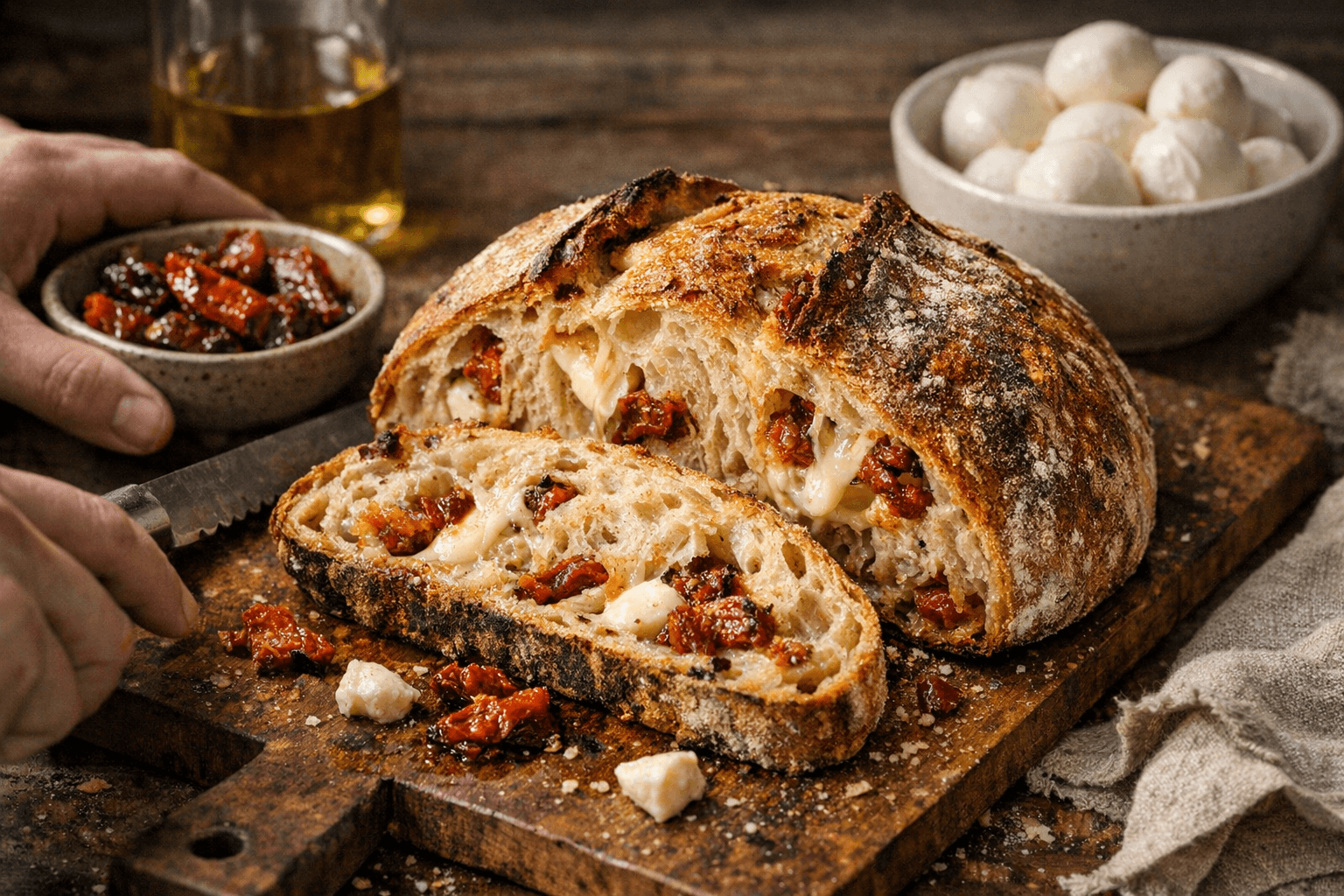
Sun-dried tomatoes and mozzarella can turn a plain boule into a pizza-adjacent loaf, as long as you fold them in gently and keep the oil under control.
Why this pairing works
Great idea, but will it turn the dough gummy or leak cheese everywhere? That is the real question when you start loading sourdough with oily, salty mix-ins. The answer is yes, it can go wrong if you treat inclusions like an afterthought, but sun-dried tomatoes and mozzarella are also one of the cleanest ways to push flavor without changing the core fermentation process.
Sourdough already gives you a deep, tangy base from wild yeasts and bacteria, so the move here is not to overpower that character. It is to build on it with a pizza-inspired combination that reads as familiar, savory, and just special enough to feel like a signature loaf. That is why this pairing works so well in a boule: the bread still tastes like sourdough, only now it has a brighter, richer center of gravity.
How to fold the mix-ins in without wrecking the crumb
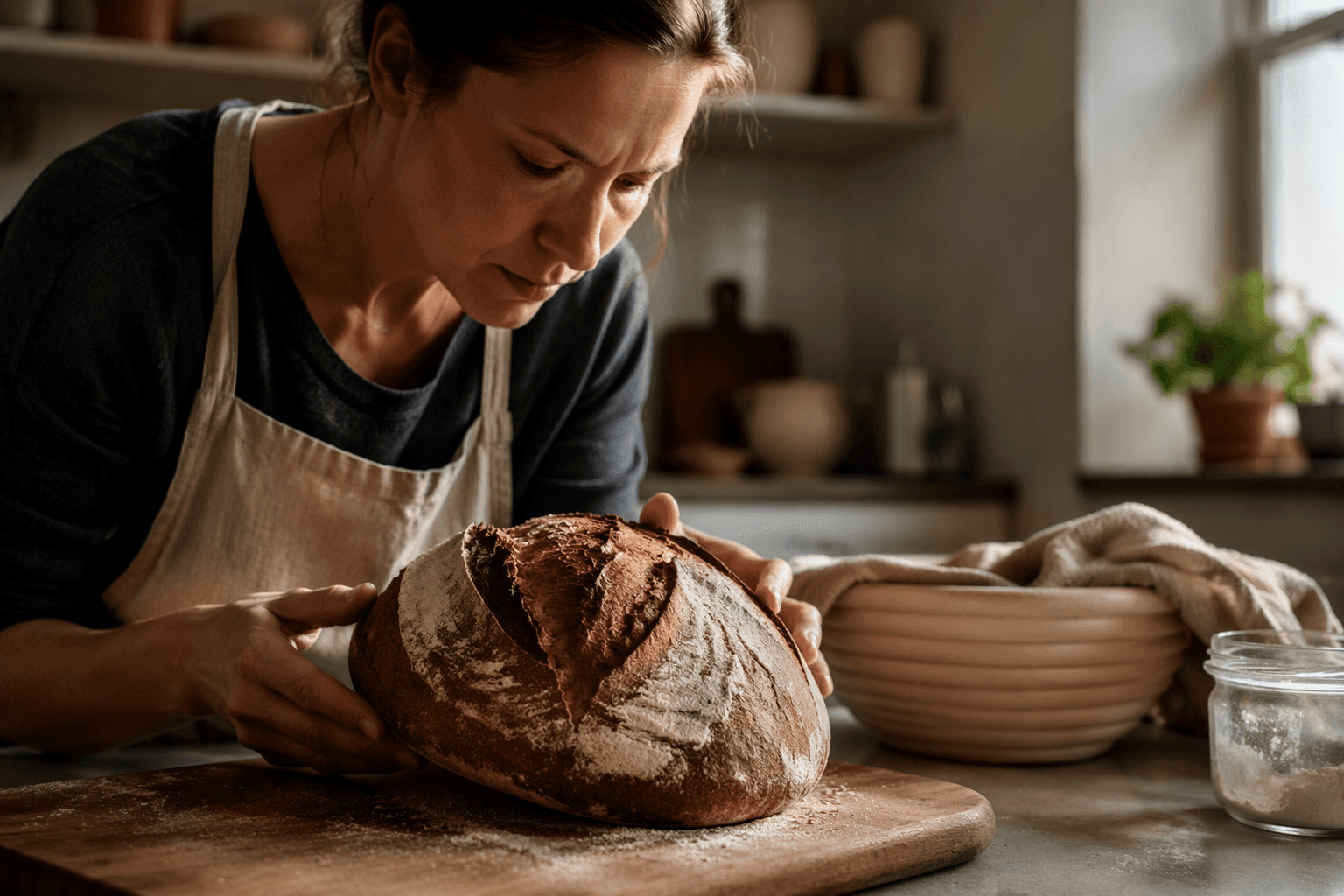
The simplest way to handle this kind of loaf is during folds, not all at once at the start. Layer the sun-dried tomato pieces and the cheese into the dough as you fold it, so the inclusions distribute gradually instead of tearing the structure before gluten has a chance to organize itself. That matters because a well-built sourdough loaf depends on stretch, tension, and timing, and a heavy-handed mix-in strategy can flatten all three.
The tomato oil is the other place where restraint pays off. A little drizzle can deepen flavor and help carry the sun-dried tomato character through the crumb, but the dough should never be soaked. Too much oil can make the surface slippery, slow down structure, and leave you with a loaf that bakes up dense instead of open and lively.
Think of this as controlled enrichment, not stuffing. You want pockets of tomato and cheese, not a collapse of the dough’s architecture. If the dough feels like it is losing strength as you add the inclusions, stop, let it rest, and fold once more rather than forcing everything in at once.
The mozzarella choice that actually matters
This is where a lot of home bakers take the easy route and pay for it later. The practical advice here is to grate mozzarella by hand instead of reaching for pre-shredded cheese. Packaged shreds often contain fillers and anti-caking agents, and those additives can interfere with melt and leave the cheese less fluid inside the bread.
That preference lines up with how mozzarella is handled in the broader food system. U.S. Department of Agriculture cheese specifications say mozzarella may be sold in loaf, sliced, shredded, or diced forms. When mozzarella is shredded, federal rules require any anticaking agent to be used only in the minimum amount reasonably required, and calcium silicate or silicon dioxide cannot exceed 2.0% of the cheese by weight.
A Center for Dairy Research market analysis of 21 retail brands of shredded low-moisture part-skim mozzarella found a familiar lineup of anticaking agents: potato starch, corn starch, powdered cellulose, calcium sulfate, tapioca starch, and dextrose. That is the kind of detail that explains why freshly grated mozzarella often melts cleaner in bread. The pre-shredded bag is convenient, but for this loaf, convenience is not the same thing as better texture.
What to use, and what to avoid
The good news is that this pairing stays on the safer, smarter side of inclusions. UC Agriculture and Natural Resources warns against perishable inclusions such as fresh dairy, fresh vegetables, or cooked meats in sourdough dough because they can pose food-safety risks. That caution matters, especially once you start thinking beyond one loaf and into the habits people build around mix-in breads.
Sun-dried tomatoes and mozzarella sit in a different lane than raw tomatoes, fresh cheese, or meat-heavy fillings. The tomatoes are concentrated, the cheese is handled in a way that helps it melt cleanly, and the whole combination behaves more like flavoring than like a refrigerated stuffing. That is one reason this idea feels practical rather than gimmicky: it gives you the richness people want from loaded bread without inviting the same risks as a wet, perishable filling.
The broader sourdough world is moving in exactly this direction. Industry coverage increasingly treats sourdough as an everyday bread choice and a platform for differentiation through inclusions. In other words, this is no longer just about proving you can make a clean, classic loaf. It is also about making a loaf that stands out on the counter and still bakes like real bread.
Why this loaf is showing up everywhere
There is a commercial reason these breads keep appearing, and it is not subtle. British Baker reported that inclusions are helping keep sourdough loaves fresh and exciting for consumers, and it cited a survey figure showing a 32.4% increase in sourdough purchases. That is the kind of stat that tells you the market is not just tolerating flavored sourdough, it is actively pulling toward it.
The appeal is easy to see. A loaf built around sun-dried tomatoes and mozzarella feels close enough to pizza to be instantly appealing, but it still slices like bread, toasts like bread, and makes sandwiches like bread. It is the kind of loaf that can disappear as-is, then come back as panini or grilled cheese the next day without feeling repetitive.
That flexibility is part of why inclusions are such a useful technique right now. They let you turn one starter-and-flour foundation into something that feels personal, restaurant-adjacent, and distinctly yours. The loaf still belongs to sourdough culture, but it also tells people exactly what kind of baker made it.
The practical payoff
If you want a richer sourdough without changing fermentation timing or rebuilding your entire process, this is a strong place to start. Fold in sun-dried tomato pieces, add mozzarella by hand, and use the tomato oil with restraint. That combination gives you the savory depth of a pizza-inspired loaf while preserving the open, tangy character that makes sourdough worth baking in the first place.
The best version of this bread does not shout. It tastes like sourdough first, then lands with a bright tomato hit, a clean cheese melt, and enough richness to make a plain slice feel finished on its own. That is the sweet spot: a loaf with more flavor, not less structure.
This article was produced by Prism’s automated news system from verified source data, official records, and press releases, then run through automated quality and moderation checks before publishing. The system is built and supervised by the people who set the standards it runs under. Read our full AI policy.
Did this article answer your question?