Which? Investigation Reveals Supermarket Sourdough May Be Flavored Imitation
Many supermarket loaves sold as sourdough contain commercial yeast and baking powder, not starter — and the UK's Real Bread Campaign has called them "sourfaux" since 2015.
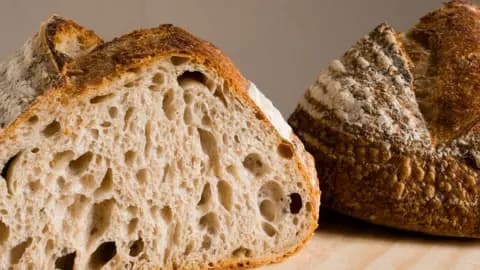
Lactic acid bacteria are the biological signature of real sourdough: they form during fermentation, give the crumb its tang, and help the loaf rise without a packet of commercial yeast in sight. If your supermarket loaf has none of that biology behind it, the Real Bread Campaign has a word for it — "sourfaux."
That term, coined by RBC coordinator Chris Young, sits at the center of a renewed labeling dispute after Which?, the UK consumer group, published an investigation on March 18, 2026 questioning whether supermarket sourdough bread is authentically fermented or simply flavored imitation. The report questioned supermarket labeling practices and, according to summaries of its findings, sparked fresh debate about what "sourdough" on a package actually guarantees.
The Which? investigation arrives more than a decade into a campaign that has been making this same argument. In 2015, the Real Bread Campaign began its push to define authentic sourdough and help consumers identify fakes. What it found was striking: dozens of small- and large-scale bread producers selling loaves labeled "sourdough" were not preparing them like sourdough at all, nor did those loaves behave like it. Many were made with commercial baker's yeast and rising agents such as baking powder, not sourdough starter. Young called them "imposters."
The three-ingredient test is the simplest tool for spotting the real thing. According to the RBC's own guidance, genuine sourdough bread should carry only flour, water, and salt on the label. The complicating factor is that sourdough starter itself, a living, fermented mixture of flour and water, is not normally listed as a separate ingredient on packaging. The fermentation that starter produces creates both yeast and lactic acid bacteria, which do the leavening work and generate the sour flavor that defines the bread. A loaf listing vinegar, citric acid, or baking powder is telling you something about how it was actually made.

The financial stakes matter here. Sourdough commands premium prices on the assumption that it is artisanal and made with greater care. The RBC argued directly that consumers paying that premium have a right to know whether they are buying a standard supermarket loaf with a sourdough label applied to it. That argument drove the campaign's push for changes in UK law that would require breadmakers to disclose whether their sourdough is "real," alongside similar regulatory clarity around terms like "freshly baked" and "wholegrain."
What neither the Which? investigation summary nor the RBC's publicly available findings have specified is which supermarket chains or branded products are implicated. No retailer names, no product SKUs, no lab data on fermentation markers have surfaced in the publicly available material so far. That is the next question worth pressing: whether Which? tested for actual lactic acid bacteria profiles or relied on label review alone, and whether the RBC can produce its list of the dozens of producers it identified over the past eleven years.
Until UK law catches up with what the RBC has been asking for since 2015, the label is the only tool available, and it has a known reliability problem.
This article was produced by Prism’s automated news system from verified source data, official records, and press releases, then run through automated quality and moderation checks before publishing. The system is built and supervised by the people who set the standards it runs under. Read our full AI policy.
Did this article answer your question?