Why 70% hydration makes sourdough lighter and more open
70% hydration is the point where sourdough gets noticeably lighter and more open without becoming a total handling nightmare. It is the middle ground that lets you shape, proof, and bake with control.
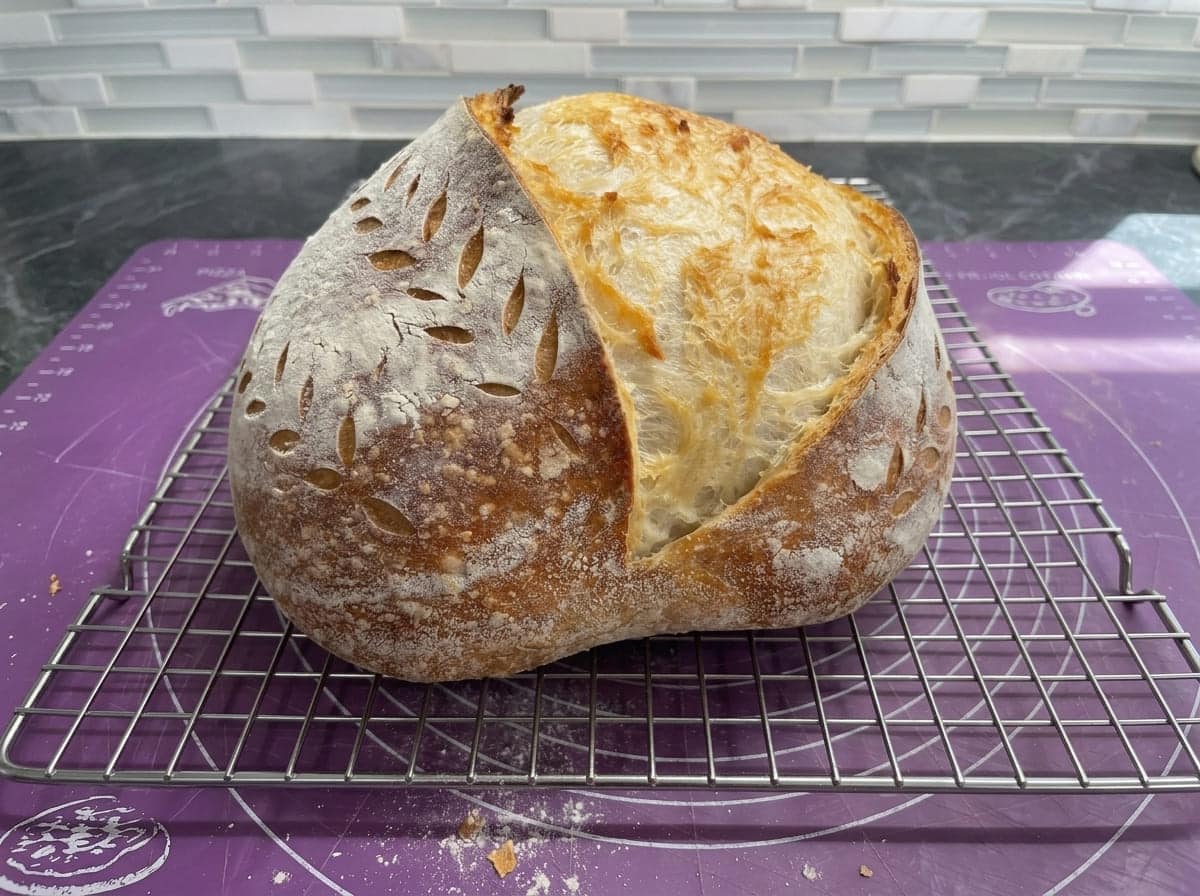
70% hydration is where sourdough starts to earn its keep. At that level, you are working with 700 grams of water for every 1000 grams of flour, which is enough moisture to push the loaf toward a lighter texture and a more open crumb without sending the dough completely out of your hands.
Why 70% lands in the sweet spot
Hydration is just water weight divided by flour weight, expressed as a percentage, but in the bowl it tells you almost everything about how the dough will behave. King Arthur Baking Company places 70% to 72% in a standard artisan sourdough range, which makes sense if you have ever moved from a firm country loaf into something with a little more spring and openness. It is not so dry that the crumb stays tight, and not so wet that every fold feels like a rescue operation.
That middle ground matters because lower hydration doughs, the 55% to 65% range, usually feel firm or stiff. They are easier to handle and shape, but they tend to resist the kind of expansion that gives you big interior holes. Push up into the 75% to 85% range and the dough will likely feel slack or sticky, which is where open crumb can happen, but only if your technique is ready for it.
What changes in mixing, shaping, and fermentation
A 70% dough asks more from you than a low-hydration loaf, but it does not punish you the way an 80% plus formula can. That is why it is such a useful benchmark for bakers who want to move past beginner bread without jumping straight into a wet, fragile mass. You still have enough structure to build strength during mixing and folds, and enough body to shape cleanly on the bench.
King Arthur Baking Company is right to frame hydration as only one part of the picture. Dough hydration sets expectations for how you develop strength, shape, and even how you proof, but it does not do the whole job by itself. Starter vigor, recipe complexity, weather, fermentation, and proofing all matter, and if any one of those drifts off, the loaf can go from lively to flat fast.
That is also why 70% is a better learning tool than a super-wet formula. It lets you feel how the dough tightens after folds, how it relaxes during bulk, and how far you can push fermentation before the structure starts to give way. You learn the signs without fighting a dough that behaves like batter.
Why the crumb opens up
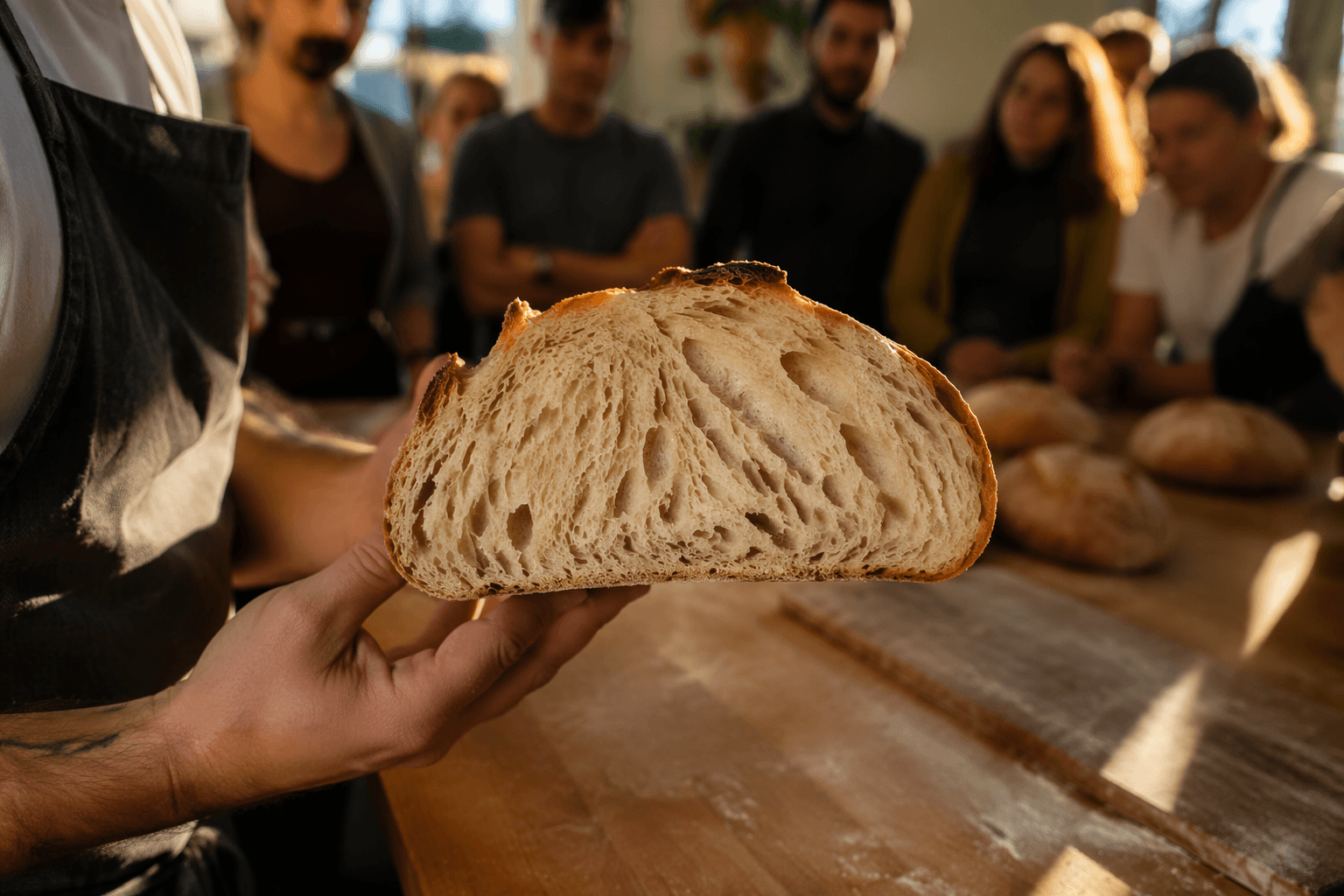
The payoff for that extra water is a loaf with a lighter texture, bigger air pockets, a more open crumb structure, a thinner crust, and better oven spring. In practice, that means the loaf rises with more force in the oven, rather than spreading dull and dense. The result is the kind of bread people point at on the cooling rack: a crisp crust, a dramatic ear, and a crumb that looks deliberately irregular instead of compact.
But hydration does not get all the credit. King Arthur Baking Company makes the point plainly: there are many ways to achieve an open crumb, and there are no hard-and-fast rules that guarantee it. Flour protein matters, too, because higher-protein bread flour can make it easier to achieve an open interior. Fermentation and proofing also shape the result, which is why two doughs at the same hydration can bake very differently.
That is the part beginners often miss. They treat hydration like a magic number when it is really one lever in a whole system. A 70% dough can give you a better shot at openness, but only if the flour can hold it, the fermentation is active, and the proof is judged well.
How 70% compares with wetter and drier formulas
Think of hydration as the dial that moves bread style. A 55% to 65% dough is sturdier and easier to manage, but it usually gives you a tighter crumb and a more closed loaf. A 75% to 85% dough starts to move into sticky territory, where the trade-off is more dramatic openness, more stretch, and more risk if you are not prepared for the handling.
Once you get past 80%, you are in high-hydration bread territory. King Arthur Baking Company describes those loaves as often producing crackly crusts, chewy interiors, and holey crumb structures associated with artisan bread. That is a great outcome when the technique is there, but it is not the easiest place to build confidence.
Seventy percent is why so many bakers stay there for a while. It gives enough water to lighten the loaf, but it still lets you work with the dough instead of chasing it around the counter.
A practical way to read baker’s percentages
Baker’s percentage is the language that makes all of this understandable. In that system, every ingredient is expressed as a percentage of the flour weight, and flour is always 100%. That means if your formula has 1000 grams of flour and 700 grams of water, the dough is 70% hydration. Once you see it that way, the number stops feeling abstract and starts telling you something useful about structure, feel, and outcome.
The same logic explains a common sourdough starter feeding ratio of 1:1:1, which is a 100% hydration starter. Equal parts flour, water, and starter culture keep the math clean and show how hydration works across the whole sourdough process, not just in the final dough. The terminology can sound technical, but the payoff is practical: you know exactly how wet your dough is before you ever touch it.
When 70% is the right move
If you want a loaf that is lighter, more open, and still manageable enough to shape with confidence, 70% is a smart place to land. It is high enough to push the crumb away from dense and into airy, but not so extreme that every step becomes a lesson in frustration. That is why it works so well as the next step for bakers who have already outgrown stiff doughs but are not ready to live in the world of ultra-wet formulas.
It also matches the way serious bread bakers talk about dough in the first place, the same practical language you see around bakers’ percentages, hydration, and dough feel in the work of people like Maurizio Leo, Martin Philip, and Jeffrey Hamelman. The number is not the point by itself. The point is that 70% gives you enough water to open the crumb, enough strength to shape the loaf, and enough control to make the final bake feel earned rather than lucky.
That is why 70% keeps showing up as the sweet spot. It is the place where sourdough gets lighter without getting away from you.
This article was produced by Prism’s automated news system from verified source data, official records, and press releases, then run through automated quality and moderation checks before publishing. The system is built and supervised by the people who set the standards it runs under. Read our full AI policy.
Did this article answer your question?