Why Buying a Bakery Sourdough Starter Can Help Beginners Bake Better
A bakery starter can skip the toughest waiting period, but the real win is a stronger, steadier culture that helps a beginner bake sooner and with less guesswork.
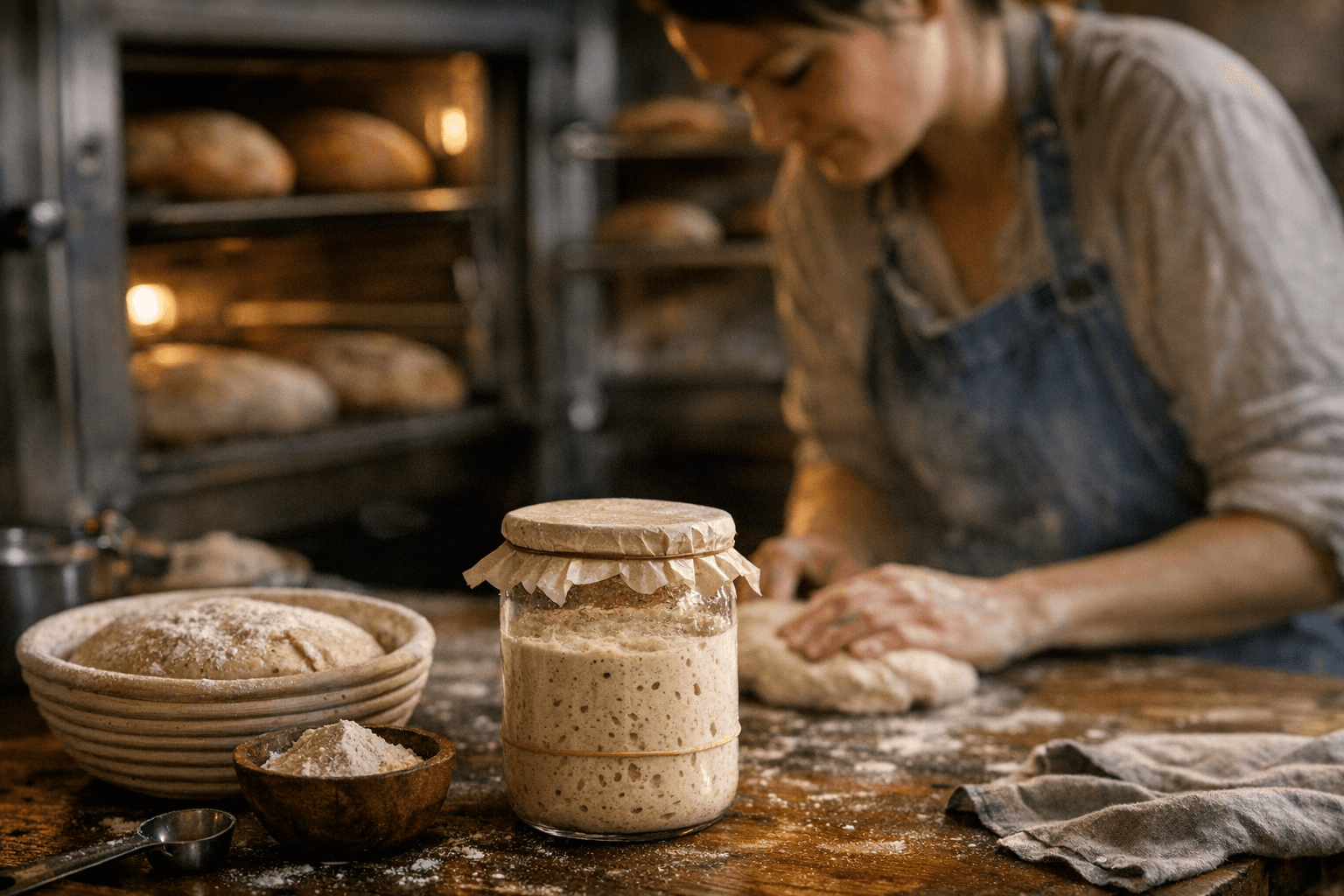
A bakery starter makes the most sense when you want your first loaves to rise sooner, with fewer false starts. The biggest advantage is not mystery or romance, but reliability: you are buying a living culture that has already been fed, refreshed, and kept active enough to do the job.
When a bakery starter is worth the money
Buying starter from a bakery is especially useful if you want a faster path to baking and less uncertainty in the first few weeks. Allyson Letal, a recipe developer and food photographer, argues that a bakery is one of the best places to source a starter because bakery cultures are usually well maintained, which gives you a healthier foundation. That matters because sourdough starter is the engine of the loaf: when it is strong and active, your odds of getting good rise and better bread go up fast.
This is the right choice if you are impatient with the long setup phase that trips up many beginners. Making starter from scratch can be rewarding, but it also means waiting through the slow build-up period before you can bake with confidence. Buying a starter does not skip the craft of sourdough, but it can skip the most discouraging part: staring at a jar and wondering whether anything is happening yet.
What it saves, and what it does not
A purchased starter saves time, but it does not eliminate maintenance. Sourdough starters are living microbial communities of yeast and lactic acid bacteria, and they still need regular flour and water to stay healthy. Colorado State University Extension notes that the fermenting microorganisms need fresh flour and water regularly to survive and grow, so the jar still needs your attention once it reaches your kitchen.
What you gain is a head start, not a permanent shortcut. Scientific reviews describe sourdough as a bread-making practice used at both artisanal and commercial scales around the world, with no single standardized starter type or maintenance method. In practice, that means a bakery starter can be a strong jump-off point, but the way you feed it, the flour you use, and the environment you keep it in will shape how it behaves over time.
Why a bakery starter can be more reliable for beginners
For a new baker, reliability matters more than novelty. A starter that is already active is more likely to produce consistent rise, which is where beginners often struggle most. The microbiome inside sourdough also affects flavor, texture, and shelf life, so a stable starter can make the difference between a flat first loaf and one that actually feels worth the effort.
Research on sourdough starter microbiomes found that yeasts, lactic acid bacteria, and acetic acid bacteria work together to produce carbon dioxide, which leavens the bread. A study of 500 sourdough starters across four continents found that environmental factors shape starter microbial ecosystems and affect aroma and rise. Repeated transfers also favor microbes best adapted to the sourdough environment, which is why a well-kept bakery starter can arrive with a community already trained for the job.
What flavor expectations to keep realistic
A bakery starter can influence flavor, but it is not a magic flavor preset. Letal’s point is useful here: starter differences often come down less to where the culture came from and more to how it is maintained, how it is fed, what flour is used, and the local environment around it. That means the starter in your jar may behave differently once it settles into your kitchen, even if it came from a bakery with a great reputation.
This is where beginner expectations need a reset. If you want a distinctly tangy loaf, a milder loaf, or a crumb that leans light and bakery-style, the starter is only one part of the equation. Feed schedule, flour choice, hydration, and room temperature all play a role, which is why a bought starter helps most when you need consistency first and flavor fine-tuning second.
When making your own starter still makes sense
There are good reasons not to buy one. Making your own gives you more starter volume to work with, plus discard you can turn into pancakes, crackers, and other recipes. It also gives you a hands-on way to watch the culture develop, which some bakers value as much as the bread itself.
If you enjoy the process and do not mind waiting, building starter from scratch can be satisfying. But if your goal is to bake sooner and avoid the kind of early uncertainty that stops many beginners, a bakery starter is the more practical route. The choice is less about identity and more about how much patience you want to spend before the first usable loaf.
What to ask a bakery before you pay
Before you hand over cash, ask questions that tell you how well the starter has been kept. The important issue is not just where it came from, but whether it is active, recently fed, and maintained in a way that makes it likely to thrive after the move home. Since starter health depends on feeding, flour, and environment, a good bakery should be able to tell you how often it is refreshed and what flour it prefers.
It is also smart to ask how much starter you will receive and how to continue it. King Arthur Baking describes its starter as descended from a culture nurtured in New England for decades, and says it quickly becomes your own as it adapts to your region and climate. That is a useful reminder that your kitchen conditions matter, so you want enough guidance to help the starter settle in rather than just survive the trip.
- When was it last fed?
- What flour is it kept on?
- How much should you feed it at home?
- How much starter should you keep versus discard?
- How soon can you bake with it?
A few practical questions can save a lot of frustration:
The social shortcut that often works best
There is a third option worth considering: ask a friend for some starter and return the favor later with bread. Starter has long been shared among bakers, and a 2021 review notes that starter cultures are maintained, portioned, and passed along worldwide. That tradition turns sourdough into a community exchange, not just a transaction.
This route can be especially useful if you want a proven starter without paying bakery prices. You still need to feed it and adapt it to your kitchen, but you start with a culture that already has history and handling behind it. For many beginners, that is the sweet spot between full DIY and full retail.
Why this question matters now
Sourdough became even more visible during the COVID-19 period, when home bakers were looking for projects and commercial yeast was scarce in spring 2020. That surge helped turn starter care into a mainstream kitchen skill, and it also made more people ask whether they really needed to build everything from scratch. King Arthur Baking even updated its sourdough starter recipe in February 2026 to make a smaller amount, a sign that home bakers are still looking for simpler, lower-waste ways in.
In the end, buying a bakery starter is worth it when your priority is speed, steadier results, and a gentler first step into sourdough. If you want the fastest path to a loaf that behaves, it is a smart buy. If you want more discard, more control, and more of the slow-build experience, making your own still has its place.
This article was produced by Prism’s automated news system from verified source data, official records, and press releases, then run through automated quality and moderation checks before publishing. The system is built and supervised by the people who set the standards it runs under. Read our full AI policy.
Did this article answer your question?