Why long-fermented sourdough may be easier to digest and absorb nutrients
Gary Brecka’s sourdough pitch has real science behind it, but the strongest evidence points to better tolerability and mineral access, not a miracle gluten fix.
What long fermentation really changes
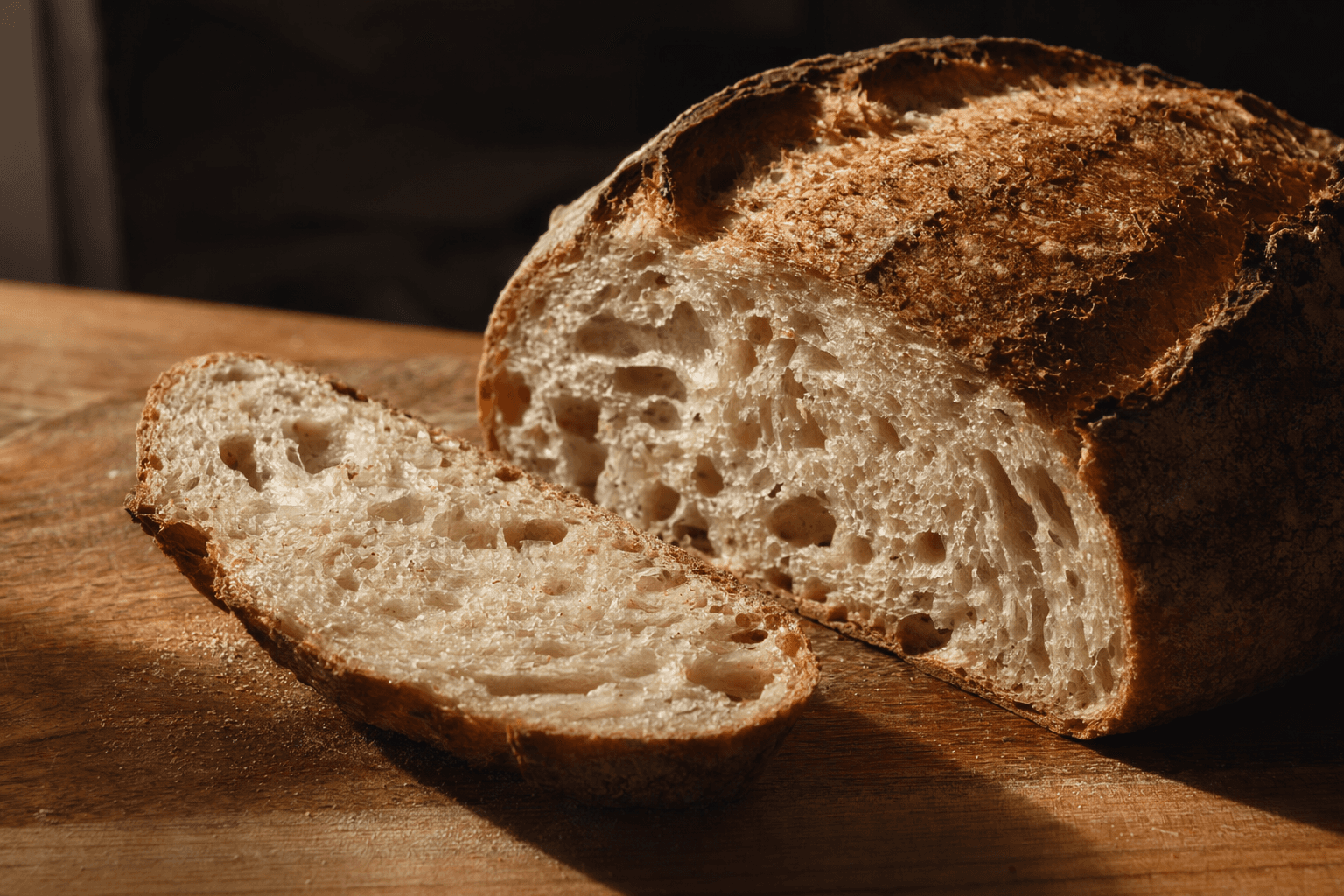
Gary Brecka has helped turn long-fermented sourdough into a wellness talking point, often with the simple suggestion that it can be enjoyed with butter. The science does support part of that appeal: sourdough is one of the oldest bread-making methods, built on flour, water, lactic acid bacteria, and yeasts, and that fermentation changes the dough in ways fast commercial bread does not.
The big shift is time. As the microbes work, they can reduce phytic acid and tannins, compounds that interfere with mineral availability, while also improving protein digestibility. That does not make sourdough a miracle food, but it does explain why a well-fermented loaf can feel easier to digest for some people than a standard processed bread.
What the studies actually show
A 2023 systematic review brought together 25 clinical trials involving 542 participants. Across those studies, sourdough showed possible benefits for glycemic response, satiety, gastrointestinal comfort, and some cardiovascular markers in certain settings. The catch is just as important as the upside: the review said the findings still are not standardized enough to support one broad, universal conclusion.
That limitation matters because sourdough is not one fixed product. The research summarized in a 2024 review also reported that fermentation can reduce phytic acid and tannins, which improves mineral bioavailability and protein digestibility, but those effects vary with the loaf. A starter that is active, a dough that gets enough time, and a process that allows real microbial activity will matter far more than the buzz around the word “fermented.”
Why sourdough can feel easier on digestion
For readers who get bloating or heaviness from bread, the most practical finding is the drop in certain FODMAPs, especially fructans. One review reported that sourdough fermentation lowered fructans by 69% to 75% compared with bread fermented by Saccharomyces cerevisiae, the baker’s yeast used in many standard loaves. That is a meaningful reduction, and it helps explain why some people with IBS-like symptoms report better comfort after eating sourdough.
Still, easier digestion is not the same thing as a medical cure. The strongest evidence supports improved tolerability for some people, not a guarantee that every sourdough loaf will feel light or that every sensitive gut will react the same way. If bread tends to sit heavy with you, long-fermented sourdough may be worth trying, but the result depends on the exact loaf and your own response.
Where the hype goes too far
This is where the wellness narrative needs a hard boundary. Traditional wheat sourdough is not gluten-free, and it is not considered safe for people with celiac disease unless it is specifically made gluten-free and meets the legal standard for that claim. In the United States, the FDA’s gluten-free labeling rule defines what can legally be called gluten-free, and that rule is there because the label has to mean something precise.
Mayo Clinic materials also make the distinction clear between gluten intolerance, also known as non-celiac gluten sensitivity, and celiac disease. Those are not the same condition. Medical and celiac-focused voices, including Joseph Murray, Charlene Van Buiten, and Josephine Wee, have repeatedly cautioned against treating ordinary wheat sourdough as a safe shortcut for celiac disease, because symptoms alone do not tell the full story and intestinal damage can still occur.
Food scientists such as M. Gobbetti have long studied how fermentation changes bread chemistry, and that work helps explain why sourdough earns attention. But that does not turn every claim into a blanket health promise. Brecka’s comments fit a broader fermented-food trend, where gut health is often used as a catch-all phrase, yet the evidence remains much narrower: digestion-related tolerability, some nutrient-related effects, and not a universal fix.
What matters most when you bake
If you want the benefits sourdough can actually deliver, the process matters more than the hype. Fermentation length is the biggest lever, because the microbes need time to change the dough in ways that affect digestibility and mineral availability. A short, under-fermented loaf may taste sour, but sour flavor alone is not the same as meaningful fermentation.
Flour choice matters too, because the dough you start with sets the stage for what fermentation can change. A bread built from wheat flour still contains gluten, so no amount of fermentation turns it into a celiac-safe food. The best results come from giving the dough enough time, using a fermentation process that actually works, and choosing a loaf that matches your goal, whether that is better comfort, improved mineral bioavailability, or simply a richer flavor.
- If your main goal is gentler digestion, look for genuinely long fermentation, not just a tangy taste.
- If your main goal is mineral access, remember that fermentation helps by lowering compounds like phytic acid and tannins.
- If you have celiac disease, only a product specifically made and labeled gluten-free belongs in the conversation.
- If you are comparing bread labels, remember that the FDA’s separate “healthy” claim rule is about labeling standards, not a promise of better digestion.
Long-fermented sourdough earns its reputation because fermentation can change how bread behaves in the body, especially for digestibility and nutrient availability. What it cannot do is erase gluten, replace medical guidance, or turn every loaf into a health food by default. The real advantage is narrower, but also more useful: when the fermentation is long enough and the process is done well, sourdough can be a smarter bread, not a magical one.
This article was produced by Prism’s automated news system from verified source data, official records, and press releases, then run through automated quality and moderation checks before publishing. The system is built and supervised by the people who set the standards it runs under. Read our full AI policy.
Did this article answer your question?