Why sourdough bakers should learn to mix dough by hand
A stand mixer saves time, but hand-mixing teaches the cues that matter most: dough feel, hydration judgment, and how fermentation is actually moving.
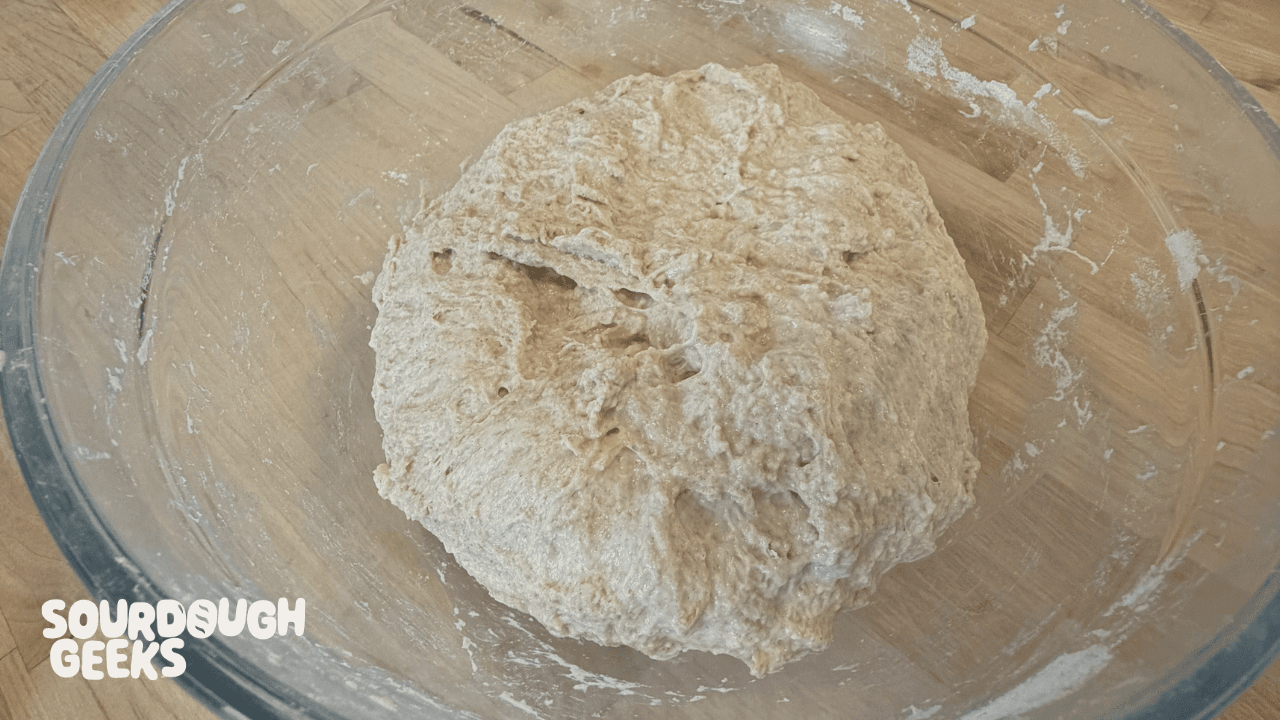
If you already own a stand mixer, hand-mixing sourdough still earns its place. The first time you mix by hand, you stop treating dough like a formula and start reading it like a living thing, which is the skill that separates lucky loaves from repeatable ones.
Hand-mixing teaches what the machine hides
A mixer can make dough look finished before you actually understand it. Hand-mixing slows you down enough to notice hydration, resistance, stickiness, and when the dough shifts from shaggy to cohesive. That matters because sourdough is not just about getting ingredients combined; it is about learning how flour, water, starter, and time behave together.
That is the core idea behind Sourdough Geeks’ new guide. It argues that hand-mixing is not a backup method for people without equipment. It is a teaching tool, especially early in your sourdough journey, because it forces you to pay attention to the pace of fermentation and the way gluten strength develops over time.
Mixing and bulk fermentation are not separate in hand work
When you mix by hand, the old checklist mindset starts to break down. You do not finish one stage and move neatly to the next, because every stretch, fold, and turn is also part of the mixing process. The dough is building structure while it is fermenting, which is why hand work gives you a much better sense of what the dough is actually doing hour by hour.
That overlap is one reason so many no-knead sourdough methods still rely on active handling. King Arthur Baking’s no-knead sourdough method uses wet hands or a dough whisk, then asks for three sets of stretch-and-folds during a 3-hour bulk fermentation. The message is simple: even when the recipe says no kneading, the dough still needs your hands to develop strength.
What happens when water first meets flour
The first minutes of mixing are where a lot of sourdough life gets started. As flour and water come together, gluten begins forming, enzymes start softening and conditioning the dough, and oxygen incorporation creates tiny bubbles that help build the scaffold for the crumb. Modernist Cuisine describes this stage as the formation of a viscoelastic dough driven by hydration and mechanical energy input, which is a technical way of saying that motion and moisture matter immediately.
That is why hand-mixing is so useful as a learning tool. You feel the dough change from rough and torn to elastic and organized, and you can spot when it still needs more time rather than more force. Modernist Cuisine also notes that damaged starch granules matter because they give enzymes access during mixing, which helps explain why flour quality and mixing intensity can change the dough you end up with.
Temperature changes the whole picture
Once you start mixing by hand, temperature stops being an abstract number and becomes something you can feel in the bowl. Warmer dough speeds enzymatic activity, while cooler dough slows it down, so the same dough can behave very differently depending on room temperature and the heat of your ingredients. That is one reason sourdough bakers obsess over dough temperature rather than just flour weight.
The Sourdough School’s typical target after mixing is 24 to 28°C, or 75 to 82°F. That range is a useful benchmark because it keeps yeast and bacteria in an active zone without letting the dough run away from you. If your dough feels sluggish, that may be a temperature problem, not a technique problem.
Why the science keeps backing up what your hands already know
This is not just old-school romance about touching dough. A scientific review on sourdough fermentation said nearly 30 years of research had produced more than 1,200 research articles, which is a lot of evidence for a food that still feels tactile and homey in practice. The research base keeps reinforcing the same point: fermentation is shaped by process, not just ingredients.

A 2021 foods study found that sourdough microbial development is influenced by flour-water ratio, fermentation temperature, and fermentation time. That lines up with what hand-mixing teaches you directly. When you handle dough yourself, you are not only combining ingredients, you are getting an early read on the conditions that will shape the microbial environment later.
Where slap-and-fold fits in
If you want a hand-mixing method that makes the lesson obvious fast, slap-and-fold is the blunt instrument. The Sourdough Journey notes that the method, popularized by Richard Bertinet, can quickly combine ingredients, start gluten development, and begin aerating dough. It is not subtle, but it is effective when you want to feel the dough tighten under your hands.
That makes slap-and-fold a good bridge for bakers who are used to machines. You still get hands-on feedback, but you also get a clear demonstration that mixing is not only about combining wet and dry ingredients. It is about creating structure, trapping air, and learning the moment when the dough starts to hold itself together.
When hand-mixing is worth learning, even with a mixer on the counter
The answer is earlier than most people think. If you are still learning how sourdough behaves, hand-mixing is worth practicing before you get too attached to a stand mixer routine, because it teaches the cues you need when the dough is under- or over-developed. It is especially useful if you want to understand why a dough needs another fold, why it tightens after a rest, or why a warm kitchen can turn a manageable bulk ferment into a race.
A mixer still saves time, and it can absolutely be the right tool for bigger batches or busy days. But if you want to know what your dough feels like at proper hydration, how fermentation is progressing, and whether the structure is developing at the right pace, your hands will tell you more than a machine ever will. That is the real payoff of learning to mix by hand: you stop hoping the dough is right and start knowing why it is.
This article was produced by Prism’s automated news system from verified source data, official records, and press releases, then run through automated quality and moderation checks before publishing. The system is built and supervised by the people who set the standards it runs under. Read our full AI policy.
Did this article answer your question?