Why sourdough starters are living ecosystems, not just wild yeast
Your starter is a microbial team, and its balance shows up in rise, aroma, and flavor. Feed, temperature, and hydration are the knobs that help you steer better bread.
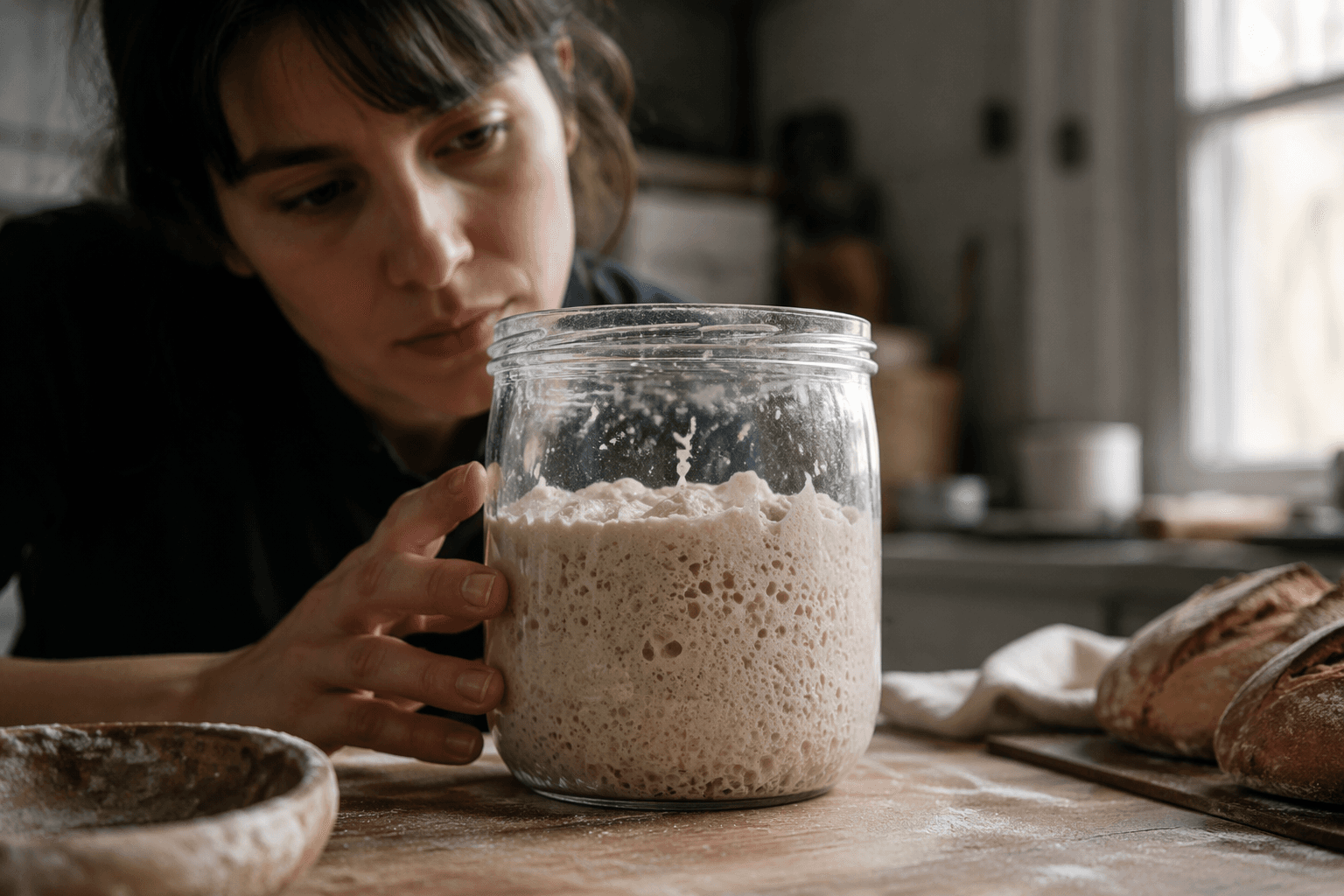
A mature sourdough starter is a stable, living fermentation system where yeast and lactic acid bacteria work together. Serious Eats updated its sourdough science piece on January 27, 2025; if you know what is living in the jar, you can troubleshoot bread by reading the jar’s behavior instead of guessing.
What is living in the jar
Think of a starter as a tiny kitchen ecosystem. The yeasts make carbon dioxide, which inflates the dough, while lactic acid bacteria shape much of the acidity and contribute to the flavor compounds that make sourdough taste like sourdough. Commercial baker’s yeast does one job well, gas production, but a mature starter does more than that because it brings both rise and a broader flavor profile through organic acids and other fermentation byproducts.
A starter that bubbles, expands predictably, and smells balanced is showing you that its microbial community is doing two jobs at once. A starter that smells overly sharp, moves sluggishly, or falls apart quickly is usually telling you something about the balance between the organisms, the feeding schedule, and the conditions you have created.
Why the balance changes bread
The biggest flavor lesson in sourdough is that acidity is not a single note. Lactic acid and acetic acid are both part of the picture, and their balance is one of the most useful things you can learn to read as a baker. A cooler, slower fermentation tends to push the starter in a different direction than a warmer, faster one, so the same flour and water can produce two very different jars depending on how you treat them.
That is why temperature, feeding interval, and hydration are not background details. They are the controls that shift rise strength, aroma, and flavor profile, and they help explain why one starter springs up beautifully at room temperature while another prefers a slower rhythm in the fridge. If a loaf tastes too sharp, too mild, or lacks lift, the answer may be in how you are managing the starter long before the dough goes anywhere near the oven.
What the research says about a healthy starter
Starter performance is about ecology, not folklore. A 2025 MDPI review on the role of lactic acid bacteria in sourdough nutritional quality placed LAB at the center of what sourdough does well, while a 2024 Applied Sciences study found an ideal fermentation time of 72 hours at 25 C for the LAB and yeasts in that experiment. A 2025 ScienceDirect paper found two sourdough starter types with viable lactic acid bacteria above 7 log CFU/g and metabolic stability over 16 weeks.
CSU Extension treats starter care as managing an ecosystem of microscopic yeast and bacteria. A starter does not need to be constantly replaced to stay useful. It needs the right conditions to keep the community healthy enough to keep baking.
How to feed with intent
Feeding ratios are really a way to steer that ecosystem. Common home-maintenance ratios include 1:1:1, 1:2:2, and 1:3:3, and bakers use them to match temperature and starter strength. If your kitchen runs warm or your starter is racing through its food, a larger feed can slow the cycle; if you want a quicker turnaround at room temperature, a smaller feed can keep it moving on schedule.
This is where visible behavior becomes your best troubleshooting tool. Watch for how long the starter takes to rise, how much volume it gains, and how the aroma changes over the feeding cycle. Predictable rise is a sign that the microbial community is in rhythm, while a starter that looks active one day and flat the next may need a different feed ratio, a cooler spot, or a less frantic schedule.
The old myth that sourdough is automatically “health food” because it is fermented falls apart here too. Fermentation does not make every loaf identical, and it does not make every starter better by age alone. What matters is the health and balance of the community you are actually maintaining, which is why a fresh, well-managed starter can outperform one that is old but out of balance.
Why this craft is older than the jar on your counter
Sourdough is one of bread’s oldest technologies, not a modern workaround for store-bought yeast. Fermentology places sourdough culture in breadmaking for about 6,000 years, from the Fertile Crescent through the end of the 19th century, and BBC Travel’s 2022 history piece traced that nearly 6,000-year span across the globe.
The microbiome framing surged into the public conversation during the pandemic era, when home baking exploded and science writers started paying closer attention to the starter itself. ASM published “The Sourdough Microbiome” on June 26, 2020, and ASBMB Today followed with “Microbial secrets of sourdough” on August 22, 2020. More recent work includes Elizabeth Landis and colleagues’ eLife paper on sourdough starter microbiomes and a Syracuse University news item from September 27, 2024 about a tool designed to improve taste and texture while probing microbiome complexity.
This article was produced by Prism’s automated news system from verified source data, official records, and press releases, then run through automated quality and moderation checks before publishing. The system is built and supervised by the people who set the standards it runs under. Read our full AI policy.
Did this article answer your question?