2026 Southwest Park Reservation and Fee Changes: What Travelers Need to Know
Grand Canyon, Bryce Canyon, Zion, and Rocky Mountain are the parks to watch. New nonresident fees, fee-free day limits, and timed-entry rules can change a Southwest loop fast.
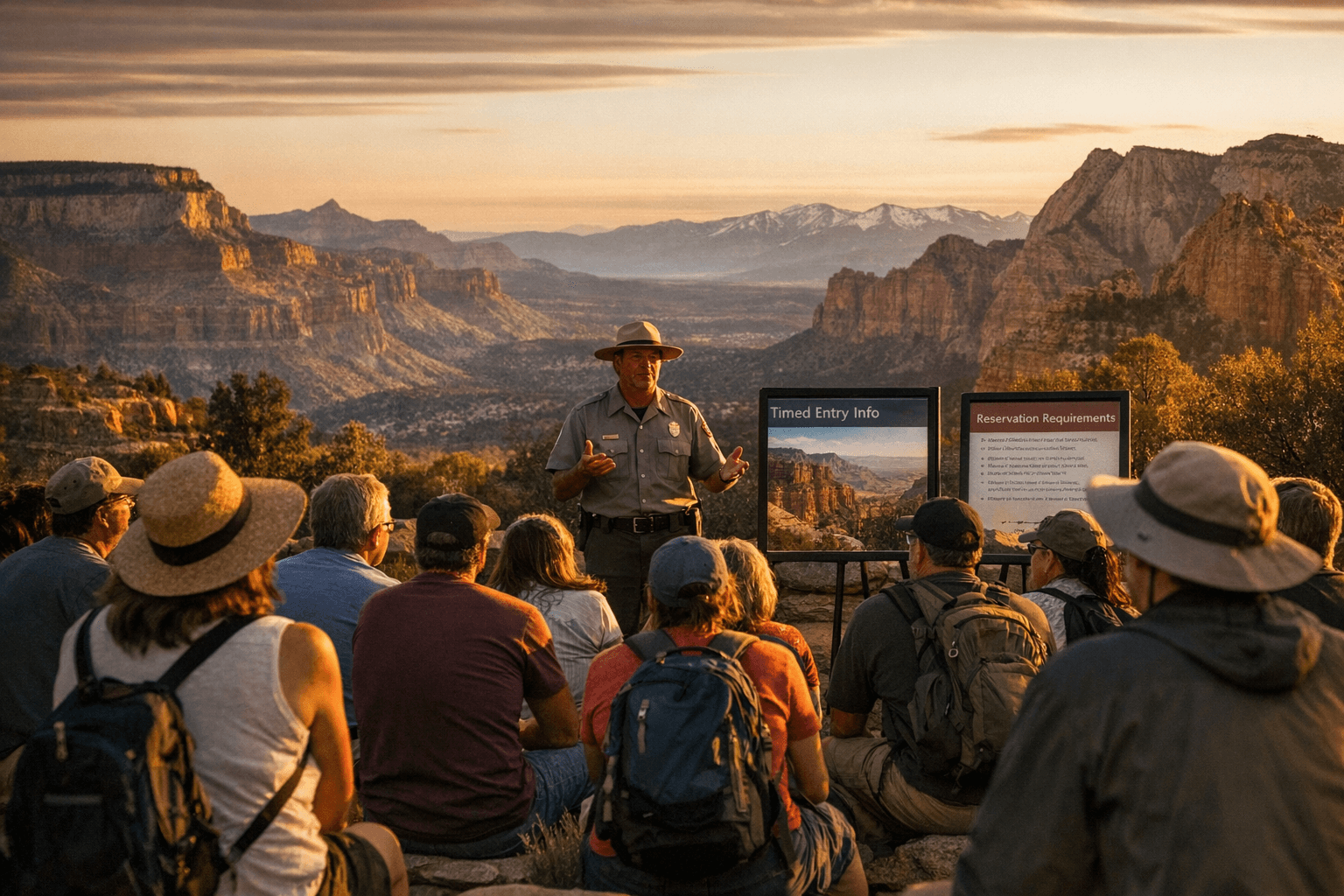
Grand Canyon, Bryce Canyon, Zion, and Rocky Mountain are the names that can reshape a Southwest trip before you ever hit the trailhead. A new update hub pulls the 2026 reservation, timed-entry, and fee changes into one place, and that matters because some parks now require both an entrance fee or pass and a separate reservation, vehicle permit, shuttle ticket, or tour ticket.
Fees and passes now change the math
The Department of the Interior announced the 2026 access and fee changes on November 25, 2025, with implementation beginning January 1, 2026. The rollout also ties into new digital America the Beautiful passes and updated annual-pass artwork, but the practical effect is simpler: the cost of a Southwest park loop can rise fast if you are traveling as a nonresident or visiting several high-demand parks in one stretch.
The new nonresident America the Beautiful annual pass costs $250. That matters for road trips because all valid America the Beautiful and park-specific annual passes now cover the entrance fee and the nonresident fee for the pass holder and passengers in a private vehicle or on two motorcycles, or for the pass holder plus three additional adults where fees are charged per person. If you ride, that two-motorcycle coverage is one of the most useful changes in the new rules.
The sharpest surprise for many travelers is that the fee-free entrance days in 2026 are for U.S. citizens and residents only. Nonresidents do not get the free-entry benefit on those days and instead pay the normal entrance and nonresident fees. The 2026 fee-free dates are:
- February 16
- May 25
- June 14
- July 3 to 5
- August 25
- September 17
- October 27
- November 11
That schedule gives U.S. travelers several low-cost windows, but it also means international visitors need to budget differently even on the days that usually draw the biggest crowds.
The parks where the surcharge hits hardest
The National Park Service says the nonresident surcharge is $100 per person age 16 and older at 11 of the most visited national parks. For Southwest travelers, the biggest headline names are Grand Canyon, Bryce Canyon, and Zion, but the full list reaches beyond the region:
- Acadia National Park
- Bryce Canyon National Park
- Everglades National Park
- Glacier National Park
- Grand Canyon National Park
- Grand Teton National Park
- Rocky Mountain National Park
- Sequoia & Kings Canyon National Parks
- Yellowstone National Park
- Yosemite National Park
- Zion National Park
That list is the budgeting warning sign for anyone stringing together a multi-park itinerary. A loop that looks manageable when you price in one or two stops can change sharply once the nonresident surcharge is added at several gates.
Where reservations are still light, and where they are not
The access rules are not the same from park to park, which is exactly why a one-stop planning hub is useful. National Park Service access updates announced across 2026 show how quickly the rules can diverge, even on the same style of road trip. Arches, Yosemite, Zion, and Rocky Mountain all sit in very different categories now, so the best plan is to treat each stop as its own system rather than assume one pass or one reservation will work everywhere.
Arches National Park will not require advanced timed-entry reservations in 2026. That makes a Moab stop easier to build into a flexible drive if you are moving through eastern Utah and want to keep the itinerary open. Yosemite National Park will also not require a timed reservation system in 2026, which removes one of the biggest prebooking hurdles from a classic western park trip.
Zion National Park is even simpler on the access side: no ticket, permit, or reservation is needed to enter the park or ride the shuttle. The park fee still applies, though, so the day is not fee-free just because the shuttle does not need a separate booking. For travelers who remember past summers of strict reservations and tickets, that is a meaningful reset.
Rocky Mountain is still the big timed-entry planning stop
Rocky Mountain National Park is the outlier in this group. It will keep timed-entry reservations in 2026 beginning May 22 and running through October 12, with separate access types for general timed entry and Bear Lake Road access. That split matters because Bear Lake Road has its own pull on day plans, photo stops, and hiking access, and it is exactly the kind of detail that can upend a spontaneous arrival.
The National Park Service says the timed-entry strategy was finalized in May 2024 and is intended to protect resources, maintain visitor experience, improve safety, and support daily operations. For travelers, that means Rocky Mountain still rewards advance planning while the other big-name stops in this list are comparatively easier to enter without an extra booking step.
How to use the hub before you leave home
The real value of the new update hub is that it turns scattered announcements into a single planning checklist. It is built for the exact problem Southwest road trippers face: one park may need only a pass, another may need a pass plus a timed-entry reservation, and another may require a shuttle or tour ticket even after you have paid to enter.
A quick pre-trip check should look like this:
- Confirm whether your park needs only an entrance fee or pass, or also a reservation, permit, shuttle ticket, or tour ticket
- Check whether you are traveling on a fee-free day and whether that day applies to your travel status
- Build the nonresident surcharge into the budget if you are visiting one of the 11 affected parks
- Verify the exact access rules on the official park page or Recreation.gov before you depart
For 2026 Southwest travel, the winning move is to plan each park on its own terms. The biggest surprise is not just that some gates cost more, but that the same annual pass, reservation system, or free day can mean something very different from one park to the next.
This article was produced by Prism’s automated news system from verified source data, official records, and press releases, then run through automated quality and moderation checks before publishing. The system is built and supervised by the people who set the standards it runs under. Read our full AI policy.
Know something we missed? Have a correction or additional information?
Submit a Tip