Castleton Tower Preserve Campground Reopens Near Moab Under Historic-Use Permit
After a monthlong closure, the 13-site climbers' campground at Castleton Tower's base near Moab reopened under a historic-use permit secured by Utah Open Lands.
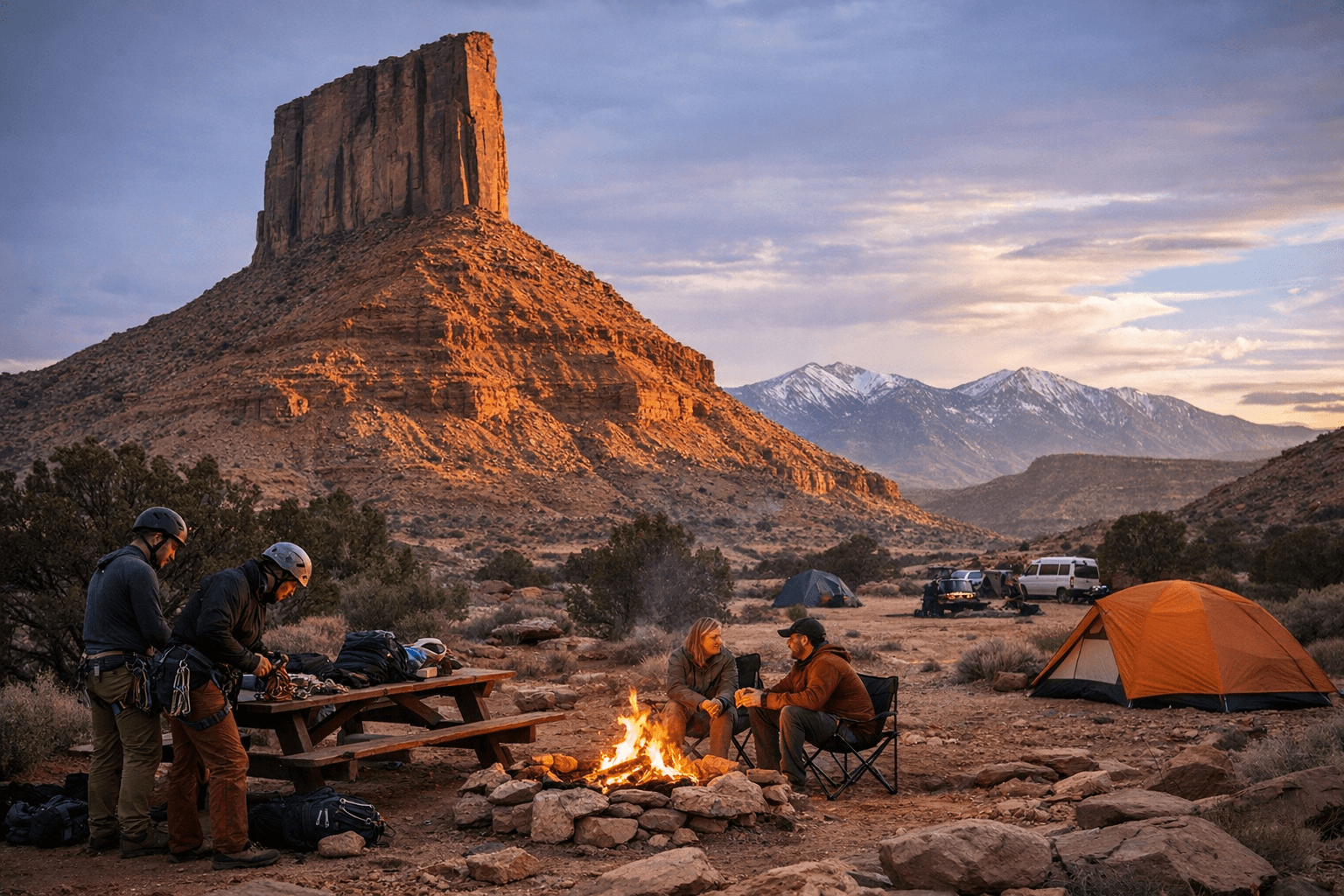
The small climbers' campground at the base of Castleton Tower near Moab got a second chance last week when Utah Open Lands secured approval from Grand County to reopen the site under a historic-use permit arrangement, ending a closure that had begun the previous month.
Utah Open Lands worked with Grand County to submit historic documentation of the campground's use, which formed the basis for the permit approval. "Fortunately, Utah Open Lands was able to work with Grand County and supply historic documentation regarding its use and today we received approval to reopen under the historic use," the nonprofit announced in a post titled "Castleton Comes Back." The organization also noted it had addressed access issues to support continued sustainable maintenance of the preserve.
The history behind Utah Open Lands' involvement with this land runs deep. More than two decades ago, when development threatened the base lands beneath Castleton Tower, Utah Open Lands led a campaign to protect the site through what it described as "the cooperative efforts of the local community, climbers and responsible businesses." The Utah Open Lands Conservation Association currently owns the land.
With the reopening comes a firm reminder: only 13 campsites exist on the preserve, and the terms of the historic-use permit must be followed. Utah Open Lands was direct about the stakes: "The privilege of camping and using the area depends on the continued good condition of the land."
The conservation rules are non-negotiable. Ground campfires are prohibited because, as Utah Open Lands explains, they sterilize the soil and harm plants. Bring a fire pan or a camp stove. Building stone fire rings or burning wood collected from the preserve is also banned. Off-road vehicles are not allowed on the preserve at all. Utah Open Lands frames all of it under a Leave No Trace ethic, noting that the preserve is protected for its scenic, wildlife, and ecological values alongside its recreational ones.
The campground itself is primitive and tent-only. There is no water and no restrooms on-site, so plan accordingly. The site lists as free on The Dyrt, though confirming current fee status directly with Utah Open Lands before your trip is worth the two-minute call. Crowding is a real factor: the campground draws climbers targeting Castleton Tower itself, and weekends and peak season can fill those 13 sites fast. Campers who have logged time here in April, May, and October report that May is a standout, with spring color across the canyon country. Fall earns similar praise. Summer heat in Grand County can be punishing, and shade at the base of a sandstone tower is limited.
The tower itself remains the draw. Castleton is one of the most recognizable desert spires in the American Southwest, a 400-foot Wingate sandstone needle above the Porcupine Rim country east of Moab. Having a campsite at its literal base rather than driving in each morning is the kind of access that climbers and hikers have valued here for decades, which is exactly why Utah Open Lands made the case for historic use in the first place.
This article was produced by Prism’s automated news system from verified source data, official records, and press releases, then run through automated quality and moderation checks before publishing. The system is built and supervised by the people who set the standards it runs under. Read our full AI policy.
Did this article answer your question?