Colorado mountains face severe drought, travelers warned of low water
Low snowpack pushed Colorado’s mountains into a severe drought, and river, raft, and campground conditions are already set to change. Visitors were warned to expect warmer, thinner water all summer.
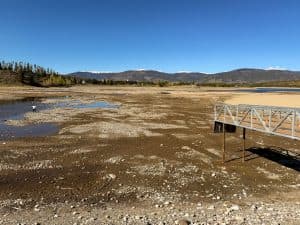
Summer in the Colorado mountains is starting to look different. After a winter of record-low snowpack, water managers warned that rivers, reservoirs and campground conditions across the high country could all run leaner than travelers expect, with lower flows, stressed fisheries and more pressure on local water supplies.
At a May 8 meeting, managers from Summit County, the Yampa River region, the Fairplay area and Lake and Park counties urged conservation and said the mountains sat in the “nasty bullseye” of widespread drought. Their message was blunt: this is not just about a dry backcountry. It is about the downstream chain reaction that reaches streamflows, lake levels, rafting windows and the way campers, anglers and hikers experience the season.
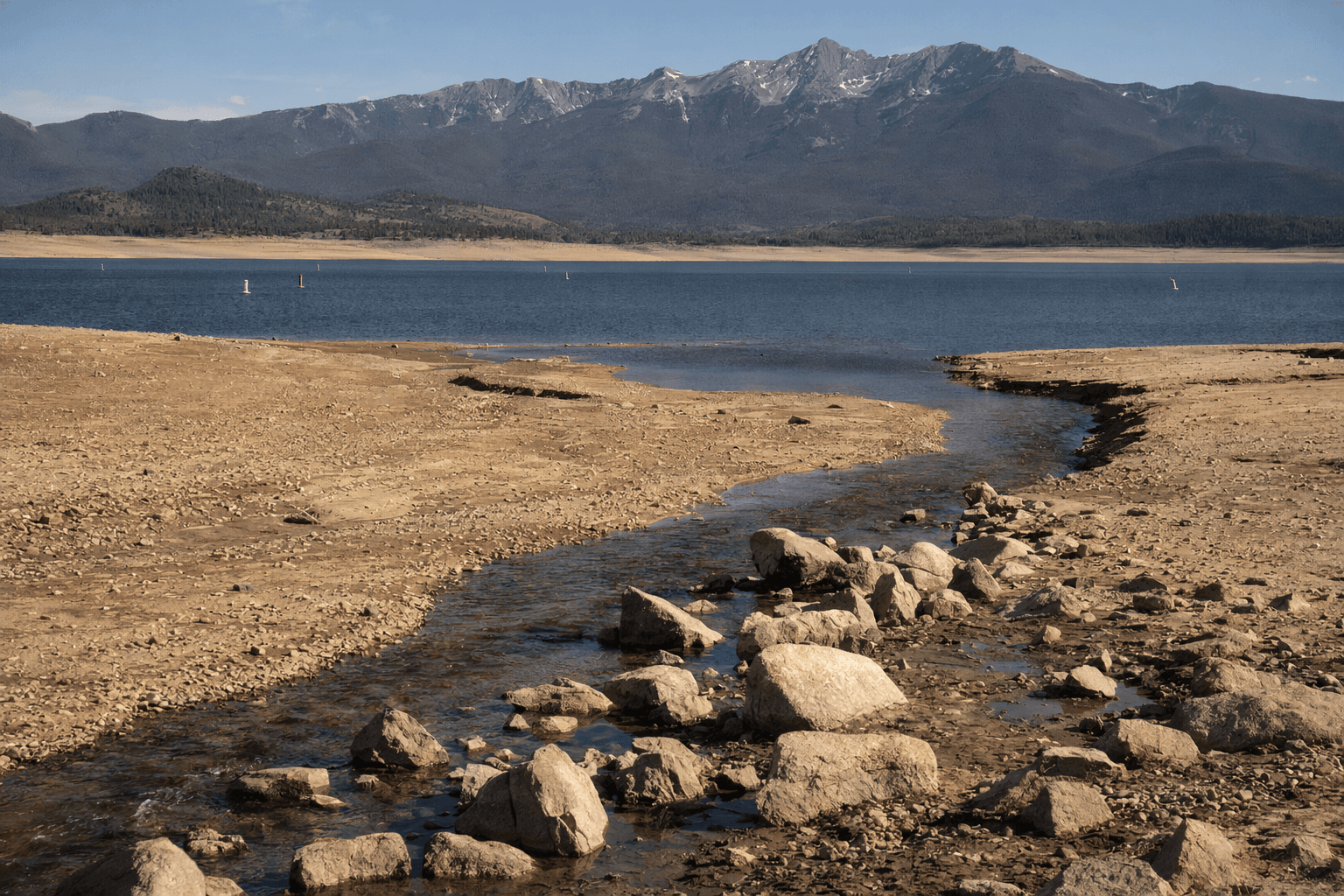
The warning matched state and federal drought data that had been building for months. Governor Jared Polis activated Colorado’s Drought Task Force and Phase 2 of the state’s Drought Response Plan on March 17, citing record-breaking warmth and low snowpack. The Natural Resources Conservation Service said Colorado’s statewide snow water equivalent was 55% of normal on February 10, with below-normal precipitation across every major basin, then reported on March 1 that many SNOTEL sites and snow courses were at or near record lows.
The picture grew worse in the state’s headwaters. NRCS said the Corral Creek snow course in the Colorado Headwaters basin measured 6.4 inches of snow water equivalent on March 1, or 56% of median, ranking in the 3rd percentile and standing as the second lowest reading in the site’s 31-year record. By April 1, the Rio Blanco snow course in the White-Yampa-Little Snake basin had reached the lowest observed value in its 87-year period of record.

By May 1, all 86 Colorado forecast points tracked by NRCS were at or below the 13th percentile, with a median percentile rank of 2. Several Colorado Headwaters forecast points were at lowest on record, including Colorado River near Cameo, which carried a forecast departure of 1.49 million acre-feet and ranked 1 out of 73 years. The statewide snowpack dashboard showed Colorado at 15% of median as of May 13.
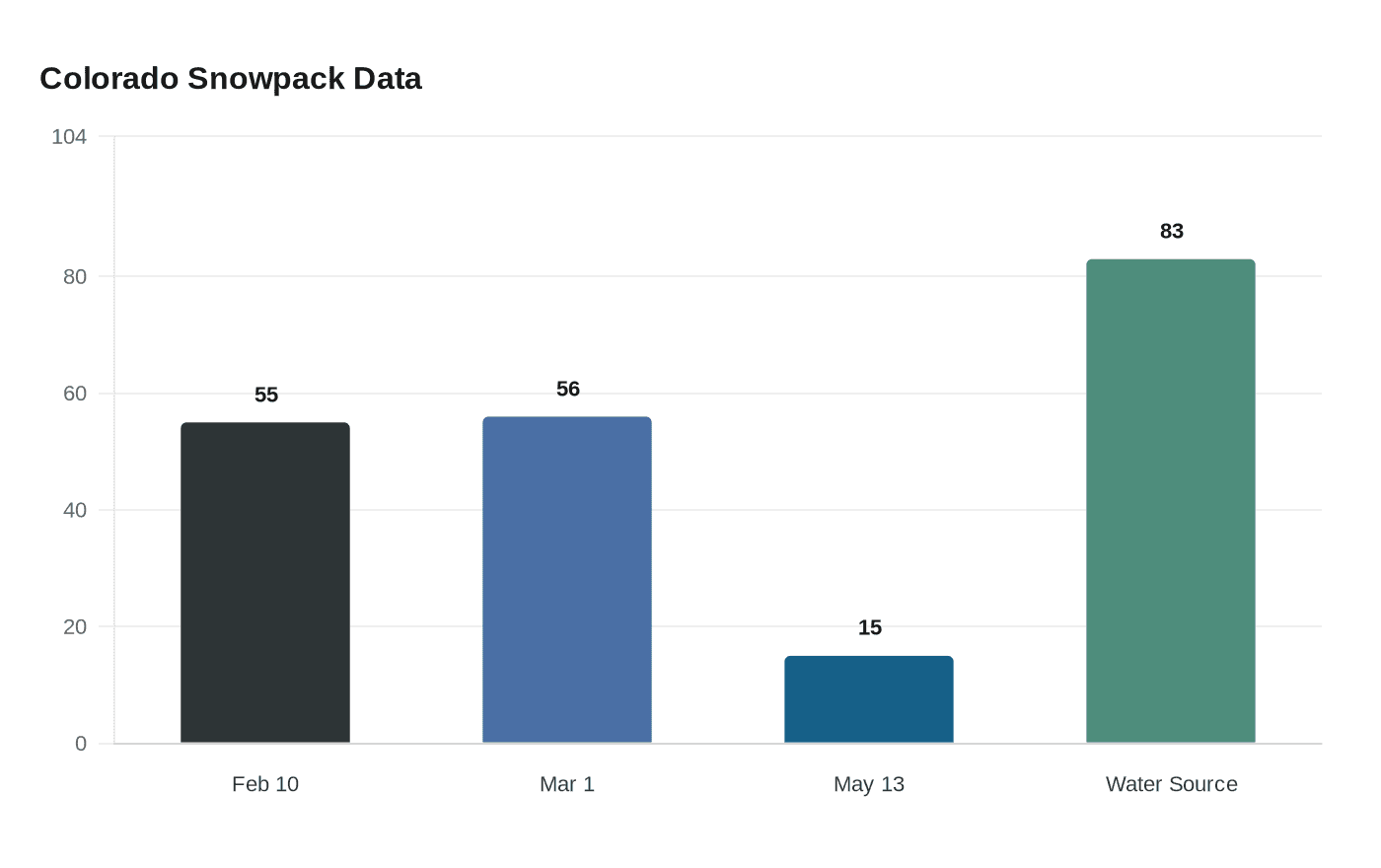
For travelers, the practical read is simple. The Colorado Water Conservation Board says 83% of the state’s water originates as snow or rain, so a thin snow year reshapes more than the charts. It can leave rivers warmer and lower, shorten boating windows, tighten fishing conditions and force local managers to reconsider how much water they can spare for everyday use. The state’s Water Supply Outlook Report, published monthly from January through June and used by water managers, recreationists, researchers and reservoir operators, now points toward a summer when the usual mountain playbook no longer applies.
This article was produced by Prism’s automated news system from verified source data, official records, and press releases, then run through automated quality and moderation checks before publishing. The system is built and supervised by the people who set the standards it runs under. Read our full AI policy.
Did this article answer your question?