Colorado Parks and Wildlife Suspends Search for Uncollared Wolf in Rio Blanco County
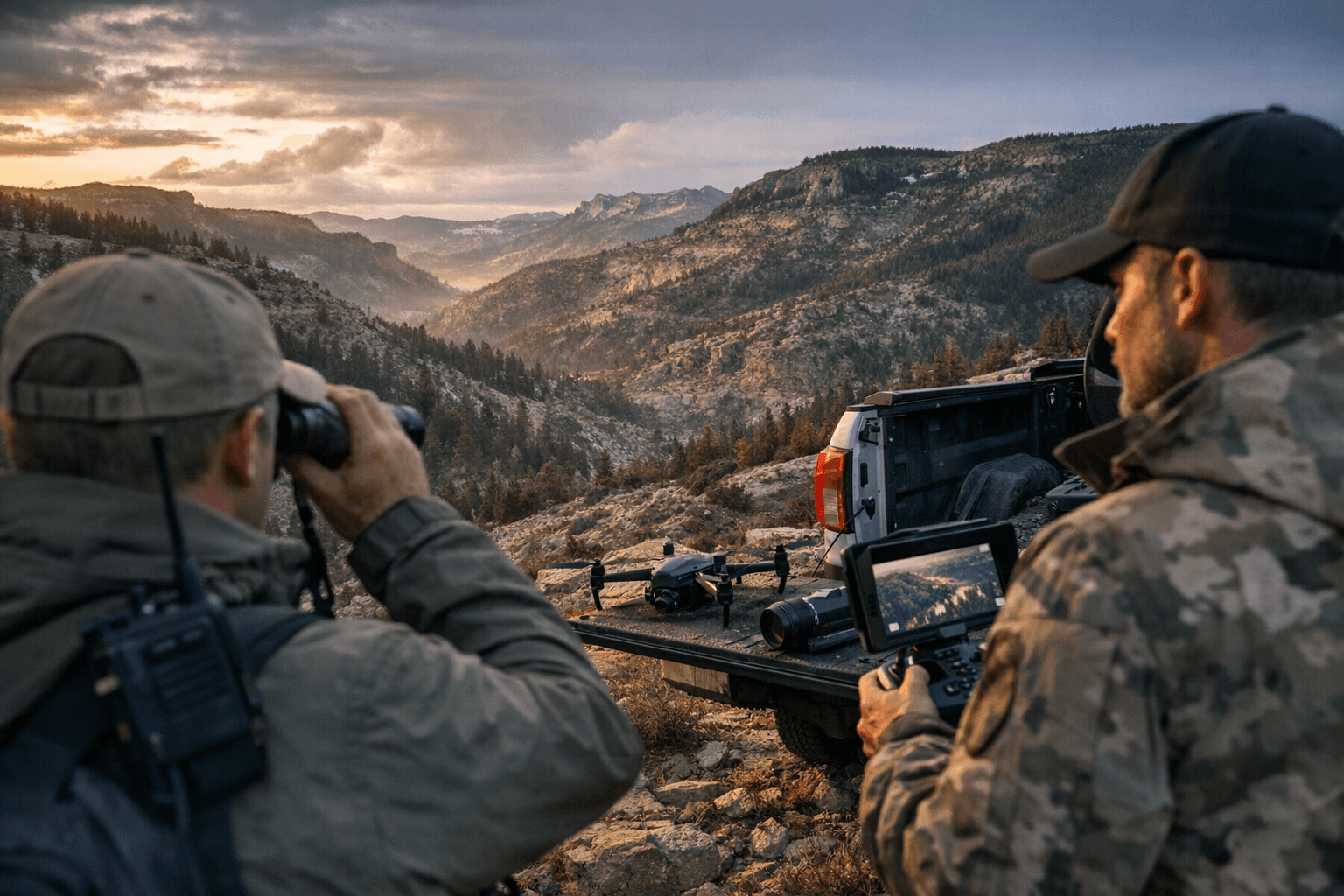
CPW's 30-day search using drones and thermal imaging failed to find the wolf, with Director Laura Clellan citing bare ground and rugged terrain.

Colorado Parks and Wildlife has suspended its effort to lethally remove an uncollared wolf in Rio Blanco County after a 30-day search using drones and thermal imaging turned up nothing, the agency announced March 12. The operation ran from January 24 to February 22 and was triggered by chronic depredation linked to the same animal.
"With no snow on the ground in the area and challenging terrain, we are choosing to suspend this effort," CPW Director Laura Clellan said in the agency's news release. Bare ground undermined the thermal imaging advantage that snow cover would have provided, making detection across the area's difficult terrain effectively impossible.
The January search was not the first attempt. On August 16, 2025, CPW and USDA APHIS Wildlife Services deployed a team to Rio Blanco County after the uncollared wolf was determined responsible for six depredations in late July and August. The team located the wolf and fired, but dense vegetation and rough terrain prevented recovery of any body. CPW and Wildlife Services spent six days systematically gridding the area before discontinuing that effort. The Denver Gazette reported CPW believed the August shot hit the animal, though CPW's official account emphasized only that the team was unable to confirm a kill or recover remains.
The Coloradoan separately obtained records indicating CPW attempted another removal operation in November 2025, suspended by early December. CPW spokesperson Luke Perkins told the Coloradoan the agency does not produce reports on suspended removal efforts and does not comment on ongoing operations.
The January 24 search began the same day CPW's depredation tracker recorded a confirmed wolf attack on 11 sheep in Rio Blanco County. That attack followed six depredations in the summer of 2025, which the Denver Gazette described as six livestock animals killed across four separate incidents.
CPW had been working with affected producers since the first depredation on July 20, 2025. The agency conducted site assessments earlier that year and provided individualized recommendations for non-lethal tools. After that initial incident, CPW coordinated with local woolgrowers associations to provide around-the-clock range rider coverage and opportunistic hazing of the wolf. "We are grateful to the producers who have been working with us at every step since depredations began in the area in July of 2025 and who have deployed multiple forms of nonlethal conflict mitigation techniques," Clellan said.
The removal decision was made in consultation with the U.S. Fish and Wildlife Service and under the authority of the USFWS 10(j) rule, which governs management of experimental wolf populations. CPW said all wolf management decisions are evaluated individually against the Colorado Wolf Restoration and Management Plan and applicable law. The agency was clear that suspending the search does not close the door on future lethal action if depredation continues.
Wolf advocacy groups had publicly called for CPW to suspend the effort in the weeks before the announcement. The Colorado Wolf & Wildlife Center referred to the animal as the "orphaned Copper Creek pup," though CPW has not officially confirmed the wolf's identity or pack affiliation. Whether the uncollared wolf targeted in the January operation is the same individual from the August 2025 attempt remains an open question in CPW's official record, even as advocacy groups and some reporting have treated them as the same animal.
CPW and Wildlife Services continue monitoring Rio Blanco County for signs of wolf activity.
Know something we missed? Have a correction or additional information?
Submit a Tip