Colorado River Crisis Deepens as Low Snowpack Threatens Reservoir Levels
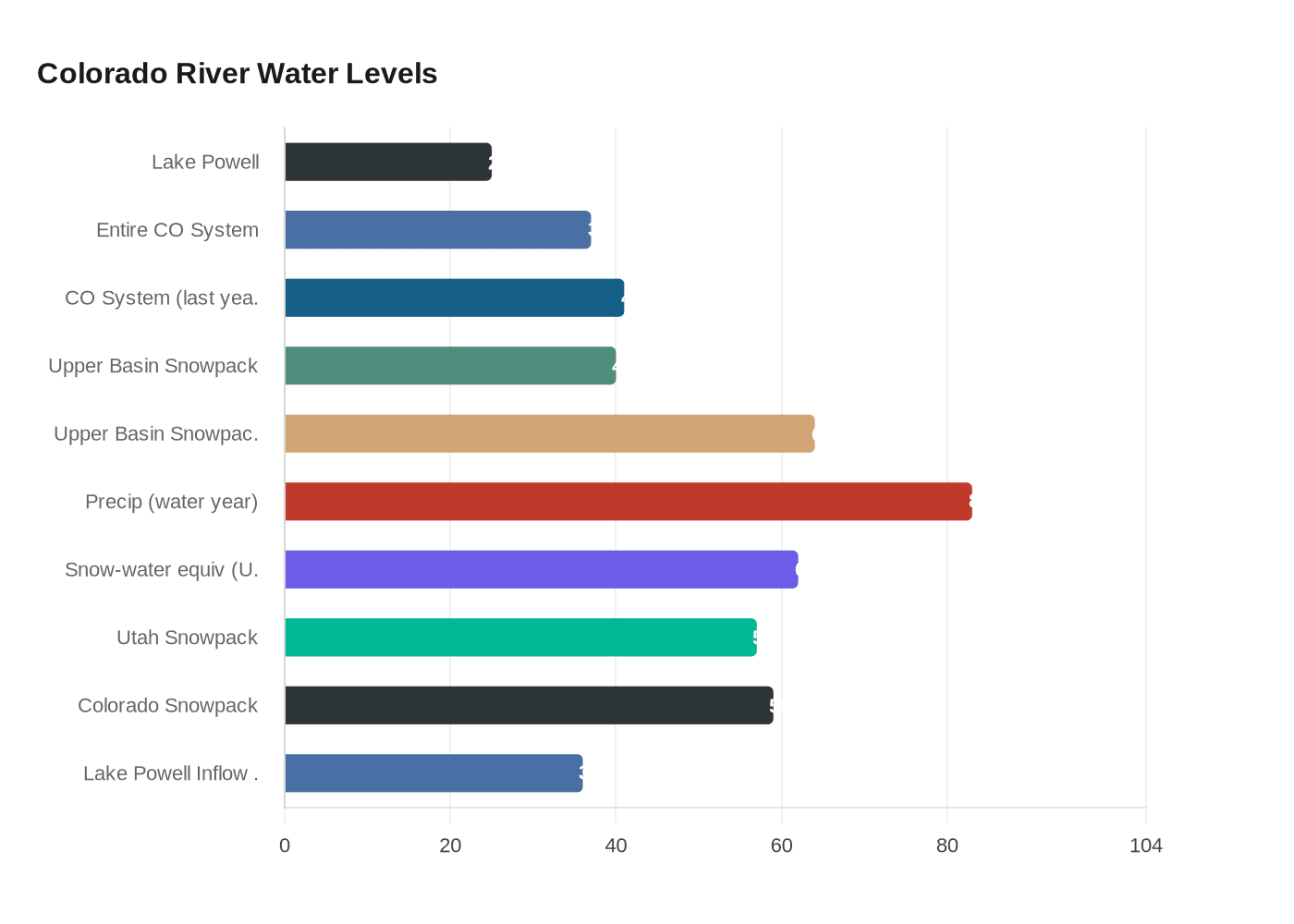
Lake Powell is just 25% full and snowpack across the Upper Colorado Basin has crashed to 40% of normal, putting your next river trip in serious jeopardy.
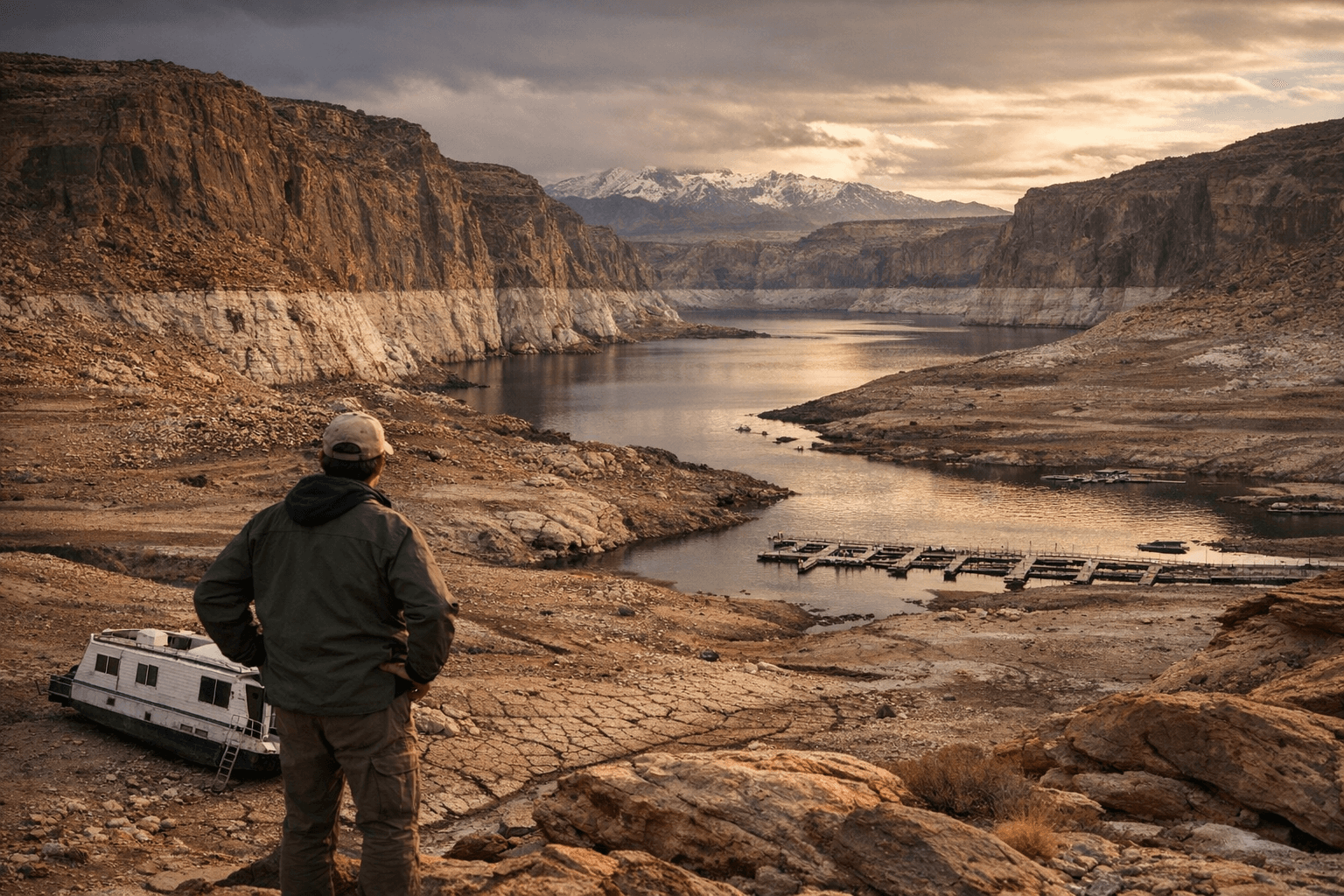
Lake Powell is sitting at just 25% full, and the snowpack that is supposed to refill it has essentially collapsed. The entire Colorado River system currently holds about 37% of its total capacity, down from 41% this time last year. For anyone planning a float trip, a lake paddle, or even a drive through the canyon country this spring and summer, the water picture is bleak and getting worse.
The reason comes down to a winter that Jennifer Pitt, Colorado River Program Director for the Audubon Society's Western Water program, described plainly in her March 20 bulletin: "The winter of 2025-2026 has not been kind to the Colorado River. Record-warm temperatures day after day across the mountains that feed the river have led to record-low snow levels." Her conclusion on what comes next was equally direct: "All indications are that spring snowmelt feeding the river will be scant."
The numbers back her up. The Upper Basin snowpack as of last week stood at just 40% of normal, a sharp drop from 64% the prior week, with water year precipitation tracking at 83% of normal. Across the entire Upper Colorado River Basin, the snow-water equivalent sits at 62% of normal, with Utah and Colorado both recording their lowest snowpacks on record, at 57% and 59% respectively. Federal forecasters are now predicting that inflows into Lake Powell will reach just 36% of average. In Reclamation's most probable scenario, Lake Powell could drop to minimum power pool by December of this year, with the worst-case scenario putting it there by August.
The hydrology crisis is landing at the worst possible moment for river governance. The Bureau of Reclamation released its Post-2026 Operational Guidelines and Strategies for Lake Powell and Lake Mead as a Draft Environmental Impact Statement in January 2026, because several major reservoir management agreements, including the 2007 Colorado River Interim Guidelines and the 2019 Drought Contingency Plans, are all set to expire at the end of this year. A 45-day public comment period on that Draft EIS closed on March 2.
Audubon submitted a formal comment letter on the Draft EIS, joining conservation partners to weigh in on what comes next for Reclamation's consideration. Pitt's bulletin noted that "dozens of comments were submitted by the Colorado River Basin states, water users, and other stakeholders making their case with Reclamation that their water uses need to be protected at the expense of others." Audubon's own position cut deliberately across those competing claims, emphasizing "the need to stabilize the Colorado River system from its headwaters to its delta, a unique, basinwide perspective that urges Reclamation to manage risks for people and nature rather than deferring hard decisions until emergency conditions force action."
The stakes of that framing are hard to overstate for anyone who adventures on this river system. The Colorado River supplies water to more than 40 million people across seven states and supports hydropower generation at nine federally operated facilities, while also serving 30 Tribal Nations, two Mexican states, and about 5.5 million acres of irrigated farmland. The impacts do not stop at Lake Powell: water released from there flows downstream to Lake Mead, the nation's largest reservoir and a critical supply for Nevada, Arizona, and California.
The historical framing Pitt offered in her bulletin cuts to the heart of the policy challenge: "For much of the last century, Reclamation was a leader in developing the southwestern United States by harnessing the Colorado River and delivering its water across the land. Today, Reclamation must lead in a new way, helping everyone and everything that depends on the Colorado River live with the river we have in a warmer, drier world."
A decision on post-2026 operations is expected before October 1, the start of the 2027 water year. With snowmelt already beginning ahead of the normal April peak and reservoir projections trending downward with each new monthly study, that deadline is carrying more weight than any in the river's modern history.
This article was produced by Prism’s automated news system from verified source data, official records, and press releases, then run through automated quality and moderation checks before publishing. The system is built and supervised by the people who set the standards it runs under. Read our full AI policy.
Did this article answer your question?