Grand Canyon hikes nonresident fees, international visitors pay $100 more
International visitors now pay $120 to $135 per Grand Canyon visit, and a four-person trip can jump by $400 before lodging, food or shuttles.

A Grand Canyon day trip just got a lot pricier for non-U.S. visitors: each traveler age 16 and older now pays the park’s standard entrance fee plus a $100 nonresident charge, pushing a South Rim visit to $120 to $135 per person before food, lodging or transportation.
The National Park Service put the new pricing in place for 11 high-traffic parks, including Grand Canyon, Bryce Canyon, Zion, Yellowstone and Yosemite. For international travelers building a Southwest loop, the math changes fast. A couple entering Grand Canyon now faces $240 to $270 at the gate, while a family of four will spend $480 to $540 just to get in, not counting hotels, rental cars, park shuttles or guided tours.
The timing matters because Grand Canyon is already one of the hardest places in the system to visit smoothly in spring. The South Rim typically gets crowded during spring break, with long entrance-station lines, long shuttle-bus lines, limited parking near the visitor center and heavy traffic at the best-known overlooks. The park also said it does not accept cash, so visitors need a card ready at the entrance.
The new fee also changes pass strategy. U.S. residents can buy the America the Beautiful Annual Pass for $80, while nonresidents pay $250 starting Jan. 1, 2026. A nonresident who is planning Grand Canyon plus another fee-charging park such as Zion or Bryce Canyon may find the annual pass easier to justify than paying the new surcharge at every stop. Passes bought in 2025 continue to work under the old terms.
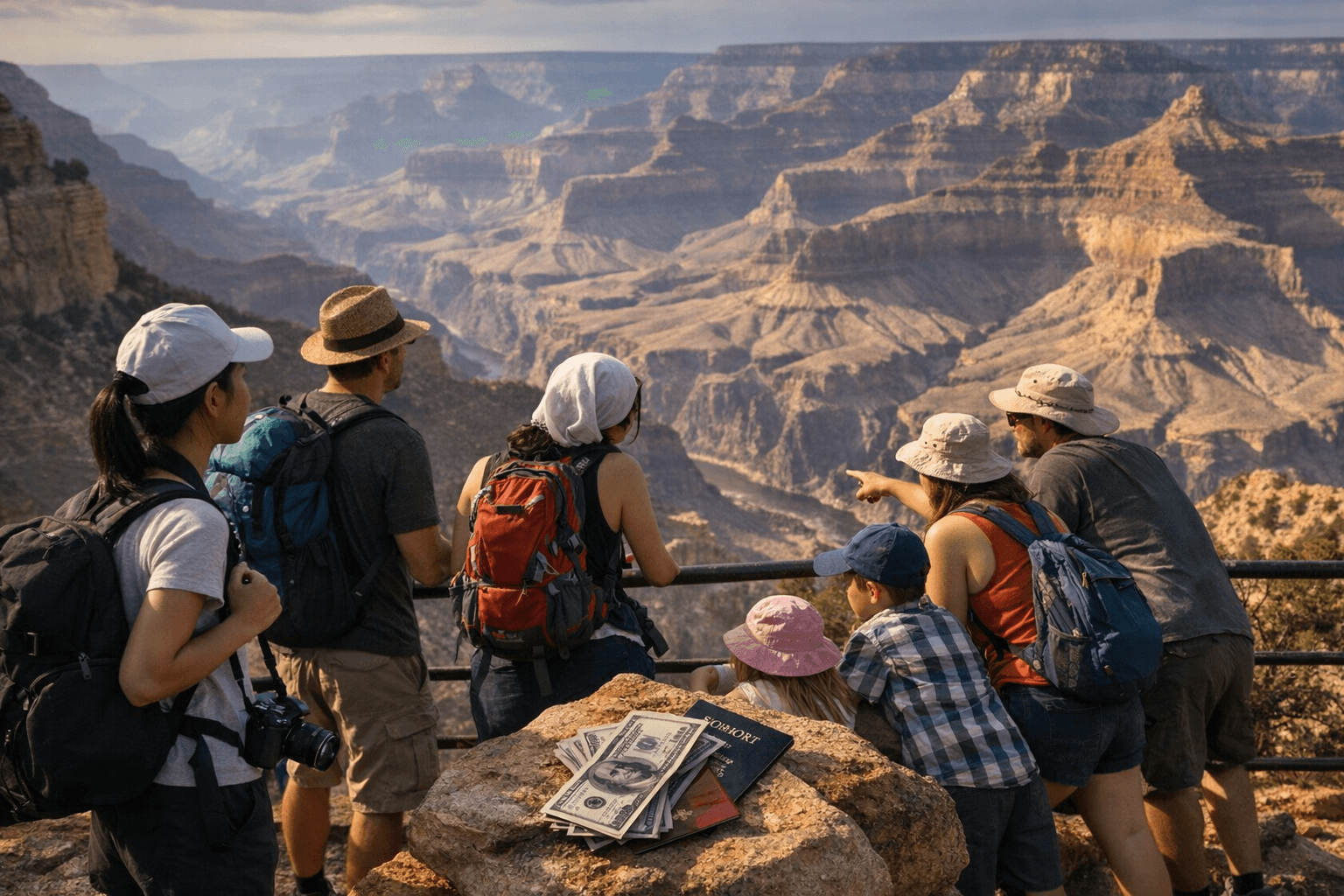
The policy came from a Trump executive order directing the Interior Department to raise revenue and improve the visitor experience through higher nonresident fees at fee-charging parks. The National Park Service says the money is intended to improve infrastructure or enhance access and enjoyment at federal recreation areas. At Grand Canyon, that pitch lands in a busy season already complicated by operations on the ground.
The South Rim remained open in April, but the park had already moved to Stage 3 water restrictions after a pipeline break along the North Kaibab Trail. Grand Canyon implemented water conservation measures on March 30, 2026, then turned off water spigots at Mather Campground and Desert View, closed Camper Services and banned outdoor wood and charcoal fires. With 323 million recreation visits across the National Park Service in 2025, the newest fee line item turns a Grand Canyon stop into a sharper budget test for anyone stitching together a bigger Southwest itinerary.
This article was produced by Prism’s automated news system from verified source data, official records, and press releases, then run through automated quality and moderation checks before publishing. The system is built and supervised by the people who set the standards it runs under. Read our full AI policy.
Did this article answer your question?